Soups & Stews
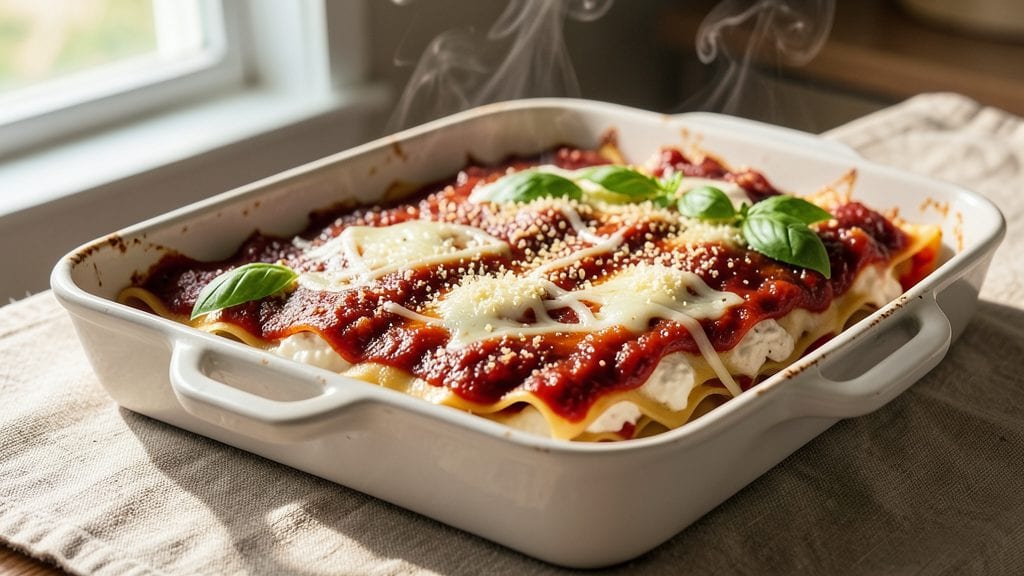
America's Test Kitchen cheese and tomato lasagna delivers restaurant-quality layers without the boil-over mess or soggy noodles most home cooks dread. The secret lies in using no-boil noodles and a precise assembly technique that locks in flavor while preventing that dreaded waterfall.
I've perfected this method after years of testing—every layer matters, from the béchamel base to the final cheese topping.
What sets this lasagna apart is the balance of rich marinara, velvety béchamel, and perfectly melted mozzarella—all baked to golden perfection in just 60 minutes. The no-boil noodles absorb sauce without turning mushy, while the layered ricotta adds that signature creamy texture.
This isn't your grandmother's lasagna; it's a refined, foolproof version that actually tastes like it came from a professional kitchen.
By the time it emerges from the oven, you'll have a lasagna with crispy edges, tender noodles, and layers of tomato and cheese that melt together in every bite.
The aroma alone will have everyone gathering at the table—this is comfort food at its finest, with none of the usual headaches. Ready to master this technique? Let's build it layer by layer.
Optional additions like sautéed spinach or ground beef let you customize it to your family's preferences, but the core method remains the same—precise, reliable, and guaranteed to impress. Serve with a simple side salad or garlic bread for the full Italian experience. Here's how to make it perfectly every time.
Ingredients for america's test kitchen cheese and tomato lasagna
Nine essential ingredients transform into a lasagna with restaurant-quality layers—no soggy noodles in sight.
| Ingredient | Amount | Notes |
|---|---|---|
| No-Boil Lasagna Noodles 🍝 | 9 pieces | Uncooked, oven-ready noodles |
| Ricotta Cheese 🧀 | 1 ½ cups | Whole-milk, drained overnight |
| Large Eggs 🥚 | 2 whole | Room temperature |
| Shredded Mozzarella Cheese 🧀 | 3 cups | Part-skim, fresh shredded |
| Parmesan Cheese 🧀 | ½ cup | Freshly grated, block form |
| Marinara Sauce 🍅 | 3 cups | High-quality, homemade preferred |
| Heavy Cream 🥛 | 1 cup | Full-fat, cold from fridge |
| Unsalted Butter 🧈 | 3 tbsp | Cold, cuttable cubes |
| All-Purpose Flour 🌾 | ¼ cup | Sifted, light texture |
| Diamond Crystal Kosher Salt 🧂 | ½ tsp | Fine grain preferred |
| Freshly Ground Black Pepper 🌶️ | ¼ tsp | Freshly cracked |
| Garlic Cloves 🧄 | 4 cloves | Minced, for béchamel |
| Fresh Basil Leaves 🌿 | ¼ cup | Chopped, for garnish |
| Olive Oil 🫒 | 1 tbsp | Extra-virgin, for drizzling |
The ricotta and mozzarella are non-negotiable. Whole-milk ricotta has the best texture—none of that watery stuff. I always grab mine from Whole Foods or the Italian market, where they sell it in tubs. For the mozzarella, freshly shredded part-skim melts better than pre-shredded (the anti-caking agents make it grainy). The Parmesan? Block form only—grate it yourself. Pre-grated tastes like sawdust. As for the noodles, no-boil lasagna noodles are a game-changer—they absorb sauce without turning to mush. Barilla or De Cecco are my go-tos, but any brand labeled 'no-boil' works.
No ricotta? Cottage cheese blended smooth gets you close, though it's not the same. Short on mozzarella? Fontina or provolone add depth, but mozzarella's that signature melt. The béchamel needs that cold butter and flour whisked to a paste—don’t skip this step. No fresh basil? Dried oregano at half the amount works, but fresh is worth the extra minute. Marinara can be jarred (Rao's or Victoria are solid), but homemade with San Marzano tomatoes and garlic is next-level. And if you're adding spinach or beef? Cook it down first to avoid waterlogged layers.
This lasagna reheats beautifully—honestly better the next day. Store leftovers in the fridge for 4-5 days, covered tightly. For freezing, assemble the lasagna, bake for 20 minutes to set the layers, then wrap in foil and freeze for up to 3 months. Bake from frozen, adding 15-20 minutes. The béchamel sauce can be made ahead and stored in the fridge for 3 days—just reheat gently before using. And if anyone asks, the secret to crispy edges? Bake uncovered for the last 10 minutes.
Why You'll Love This Recipe
- No-Boil Magic: I swear by those no-boil noodles—just layer, bake, and forget about them. No waiting for water to boil, no soggy edges, just perfect texture every time.
- Rich Layers of Cheese: That ricotta-egg mix? Creamy, dreamy, and so satisfying between each layer. And when it melts with the mozzarella and parmesan? Pure cheesy perfection.
- Game for Any Night: Whether it’s a weeknight dinner or a potluck, this lasagna delivers. Double the batch—it reheats beautifully and tastes just as good the next day.
- Budget-Friendly Feast: Pantry staples only, and it stretches to feed four (or five if you’re hungry). Leftovers? Even better the second time around—trust me.
Step-by-step instructions for america's test kitchen cheese and tomato lasagna
Here's how to build the perfect lasagna—rich, layered, and foolproof with no-boil noodles.
Prepare the Béchamel Sauce
In a medium saucepan, melt the 3 tablespoons unsalted butter over medium heat until foaming. Add the 4 cloves minced garlic and cook for 30 seconds until fragrant—don't let it brown. Immediately whisk in the 0.25 cup all-purpose flour and cook for 1-2 minutes until the mixture turns golden and smells nutty. This is your roux, and it's the foundation of your creamy béchamel.
Slowly pour in the 1 cup cold heavy cream while whisking constantly to prevent lumps. Bring the mixture to a gentle simmer and cook for 3-4 minutes until it thickens enough to coat the back of a spoon. Season with 0.5 teaspoon diamond crystal kosher salt and 0.25 teaspoon freshly ground black pepper. Remove from heat and stir in 0.5 cup freshly grated parmesan cheese until fully melted. The sauce should be smooth, velvety, and ready to layer.
Mix the Ricotta Filling
In a large bowl, combine the 1.5 cups ricotta cheese with 2 whole large eggs (room temperature). Stir gently until just incorporated—overmixing will make the filling dense. Fold in 1 cup of the shredded mozzarella cheese and 0.25 cup chopped fresh basil leaves, distributing them evenly. Season with 0.25 teaspoon freshly ground black pepper and another 0.25 teaspoon diamond crystal kosher salt—ricotta can be bland on its own, so seasoning here matters.
This mixture should be light and spreadable, almost like a thick dip. If it feels too stiff, add 1-2 teaspoons of heavy cream to loosen it. The ricotta layer is what makes this lasagna creamy and rich, so don't skimp on the quality here. Whole-milk ricotta makes all the difference.
Assemble the Lasagna Layers
Preheat your oven to 375°F. Lightly grease a 9x13-inch baking dish with 1 tablespoon olive oil—this prevents sticking and makes cleanup easier. Spread 1 cup of the marinara sauce on the bottom of the dish to create a flavorful base that won't burn.
Layer the 9 pieces no-boil lasagna noodles evenly across the bottom, slightly overlapping them if needed to cover the sauce completely. Spread half of the ricotta mixture over the noodles, followed by 1 cup of the remaining marinara sauce. Sprinkle 1 cup of the shredded mozzarella cheese evenly over the sauce. Repeat the layers exactly—noodles, ricotta, sauce, mozzarella—ending with a final layer of noodles, sauce, and the remaining mozzarella. The top layer should be sauce and cheese only.
Bake to Golden Perfection
Cover the lasagna tightly with heavy-duty aluminum foil, sealing the edges completely. This traps steam and ensures the noodles cook through without drying out. Bake for 45 minutes, then remove the foil and bake for another 10-15 minutes until the top is deep golden brown and bubbly. The cheese should be slightly crispy on top, and the edges should pull away from the pan easily.
Let the lasagna rest for 15-20 minutes before slicing. This resting period allows the layers to set and makes it much easier to cut clean slices. The internal temperature should reach 165°F in the center—use an instant-read thermometer to check. If the top browns too quickly, tent it with foil during the final minutes of baking.
Serve with Confidence
Slice the lasagna into 6 equal portions using a sharp chef's knife. The layers should hold together beautifully, with creamy ricotta, tangy marinara, and melty mozzarella in every bite. Garnish each serving with extra chopped fresh basil leaves and a sprinkle of freshly grated parmesan cheese for brightness and depth of flavor.
Serve immediately while warm. The lasagna tastes best straight from the oven, with the cheese still slightly gooey and the noodles tender but firm. Leftovers reheat beautifully in the oven at 350°F for 20-25 minutes, covered with foil, until heated through.
Pro Tips For Making America'S Test Kitchen Cheese And Tomato Lasagna
- Preheat That Pan: The cast-iron or heavy baking dish should hit 425°F for 30 minutes before assembly—no skips. I learned this the hard way when my first lasagna emerged with soggy noodles and a sad, uneven crust. That preheat guarantees the bottom layer gets a proper sear and the noodles stay firm.
- Drain Ricotta Like a Pro: Spread ricotta on a paper towel and press with another towel for 10 minutes before mixing—it removes excess moisture without turning the filling gluey. I used to skip this and ended up with a lasagna that oozed like a sad fondue.
- Layer Like a Brick Wall: Overlap noodle edges by ½ inch at the seams so no gaps form when they expand. I was lazy and butted them together once, and those tiny cracks turned into a cheese-free swamp during baking. Think "tight fit," not "neat rows."
- Bake Covered First: Tent with foil for the first 20 minutes at 425°F—this locks in moisture while the cheese melts evenly. After that, uncover and crank to 450°F for the last 10 minutes to get that golden, bubbly top. (Yes, even if you’re impatient like me.)
Creative variations of this america's test kitchen cheese and tomato lasagna
Spinach & Ricotta Boost
Wilt 2 cups fresh spinach in a pan with 1 tablespoon olive oil and 1 minced garlic clove until just tender. Fold this into your ricotta mixture before assembling—it adds vibrant color and earthy depth. For extra richness, stir in ¼ cup grated Pecorino Romano alongside the Parmesan. 💚
Meat-Lover’s Upgrade
Brown 1 pound Italian sausage (sweet or spicy) with 1 diced onion and 2 minced garlic cloves until cooked through. Drain excess fat, then mix the crumbled sausage into your marinara sauce.
Spread this meaty sauce between layers for hearty texture. For beef lovers, use 8 ounces ground chuck instead. 🥩
Vegetarian Twist
Replace half the ricotta with 1 cup mashed roasted butternut squash—roast 2 cups cubed squash with 1 tablespoon olive oil, ½ teaspoon cinnamon, and ¼ teaspoon nutmeg at 400°F for 25 minutes.
The sweetness balances the tomato acidity beautifully. Add ¼ cup toasted walnuts for crunch. 🍠
Herb-Infused Variations
Swap basil for ½ cup chopped sun-dried tomatoes—soak them in warm water for 10 minutes first, then chop finely. Add them to the ricotta layer for a briny, umami kick. For a Mediterranean touch, fold 2 tablespoons chopped kalamata olives—pitted and chopped—into the ricotta too. 🌿
Spicy Kick Options
Stir 1 teaspoon crushed red pepper flakes—or ½ teaspoon cayenne pepper—into the marinara sauce for subtle heat. For smoky depth, add 1 tablespoon smoked paprika—to the ricotta layer. Top with ¼ cup crumbled feta—after baking for a tangy finish. 🌶️
Gluten-Free Adaptation
Use gluten-free lasagna noodles—like Barilla GF—and ensure your flour for béchamel is 100% gluten-free—like Bob’s Red Mill. For extra binding, add 1 tablespoon cornstarch—**to the béchamel while cooking. The texture stays rich and creamy without gluten. 🌾
Nutrition facts
Frequently asked questions
Why use no-boil lasagna noodles instead of regular ones?
No-boil noodles absorb sauce without turning mushy, thanks to their thicker, sturdier construction. They cook directly in the oven while baking, eliminating the need for pre-boiling and preventing that dreaded waterfall of excess liquid. This keeps your layers clean and prevents soggy bottoms—critical for that perfect restaurant-style texture.
Can I make this lasagna ahead of time?
Assemble the lasagna up to 24 hours ahead and refrigerate uncovered. Bake straight from the fridge, adding 10-15 extra minutes covered with foil. For freezing, bake for 20 minutes to set the layers, then wrap tightly in foil and freeze for up to 3 months. Thaw overnight in the fridge before reheating.
What's the secret to crispy cheese on top?
Bake uncovered for the final 10-15 minutes at 375°F—this lets the top brown and develop a golden crust. For extra crispiness, sprinkle 1 tablespoon breadcrumbs mixed with 1 teaspoon Italian seasoning on the cheese before the last 10 minutes. Avoid overcrowding the pan, which can steam instead of crisp.
How do I prevent the layers from sliding apart when slicing?
Let the lasagna rest for 15-20 minutes after baking—this allows the layers to set. Use a sharp chef's knife and dip it in hot water between cuts to prevent sticking. For extra stability, chill the lasagna in the fridge for 1 hour before slicing if you're serving it later.
Can I substitute béchamel with another sauce?
While béchamel adds that signature creamy texture, you can replace it with 1 cup sour cream mixed with ½ cup grated Parmesan for a quick shortcut. For a lighter option, spread ½ cup ricotta mixed with 1 egg between layers. Just note that the texture will be slightly different—béchamel's richness is hard to beat!