
Breakfast & Brunch
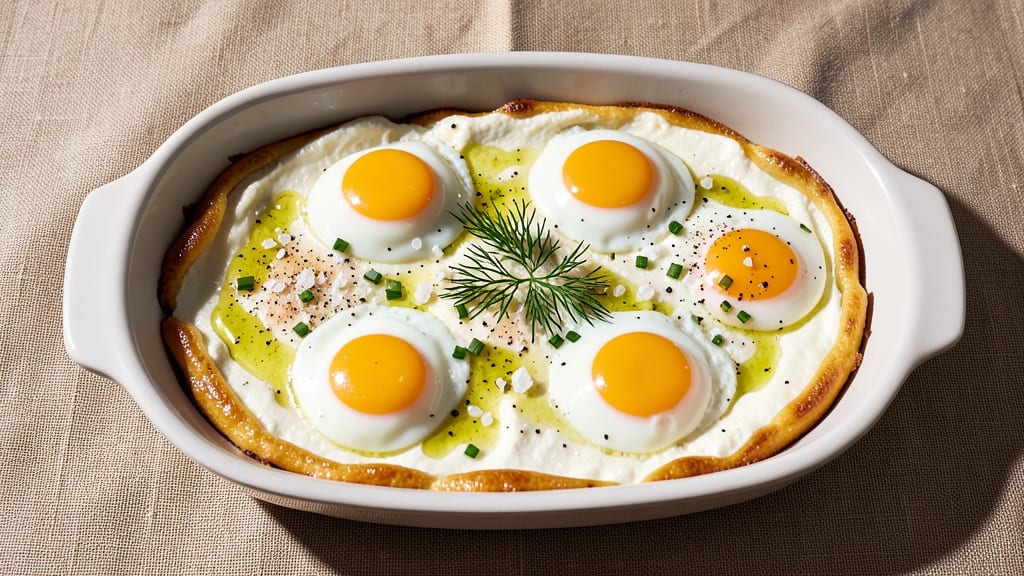
Gordon Ramsay's baked cottage cheese and eggs recipe transforms a simple breakfast into a protein-packed powerhouse with minimal effort. This dish combines creamy cottage cheese with perfectly baked eggs, delivering a restaurant-quality meal that's ready in under 30 minutes.
The secret lies in balancing textures—soft, custardy eggs paired with rich, slightly caramelized cheese—while keeping the cooking process straightforward.
What sets this recipe apart is Ramsay's precision in timing and temperature control, ensuring eggs cook just enough to set without drying out. The dish maintains its vegetarian appeal while delivering substantial protein, making it ideal for meal prep or a quick weeknight breakfast.
No fancy techniques required—just a baking dish, a few simple ingredients, and careful attention to doneness.
The result is a dish that looks as impressive as it tastes: golden eggs nestled in a creamy cheese base, with edges that develop a subtle crispness from the oven.
This recipe proves that breakfast can be both nutritious and indulgent, with every bite offering a perfect balance of protein and flavor. Ready to elevate your mornings?
Perfect for those who want a fast yet satisfying breakfast without sacrificing quality, this method delivers professional results at home. The dish reheats beautifully, making it ideal for meal preppers or anyone who wants to enjoy this hearty breakfast throughout the week.
Let's get started on creating your own protein-packed masterpiece.
Ingredients for baked cottage cheese eggs gordon ramsay
Twelve simple ingredients transform into a restaurant-quality breakfast with creamy textures and golden eggs.
| Ingredient | Amount | Notes |
|---|---|---|
| Large Eggs 🥚 | 4 whole | Room temperature for even cooking |
| Full-Fat Cottage Cheese 🧀 | 16 oz | 2% or higher fat content preferred |
| Extra-Virgin Olive Oil 🫒 | 2 tbsp | For drizzling on top layer |
| Unsalted Butter 🧈 | 1 tbsp | Melted for cheese mixture |
| Diamond Crystal Kosher Salt 🧂 | ½ tsp | Adjust to taste after baking |
| Freshly Ground Black Pepper 🌶️ | ¼ tsp | Freshly cracked for maximum flavor |
| Fresh Chives 🌿 | 2 tbsp | Finely chopped for garnish |
| Red Bell Pepper 🌶️ | ¼ cup | Diced, for texture contrast |
| Garlic Cloves 🧄 | 2 cloves | Minced for flavor base |
| Heavy Cream 🥛 | ¼ cup | For extra creaminess |
| All-Purpose Flour 🌾 | 1 tbsp | For thickening cheese mixture |
| Freshly Squeezed Lemon Juice 🍋 | 1 tsp | Brightens the cheese base |
| Vegetable Oil Spray 🫒 | 1 tbsp | For greasing baking dish |
The cottage cheese selection is critical—full-fat varieties like 2% or 4% create the perfect creamy texture without curdling. Trader Joe's and Whole Foods carry excellent options, or opt for small-batch organic brands when available. Fresh chives should be vibrant green with no wilting, while red bell peppers should be firm and free of soft spots. For the eggs, organic pastured eggs develop richer yolks when baked. The heavy cream adds luxurious mouthfeel, but half-and-half works in a pinch if you're watching fat content slightly. Pre-minced garlic from the jar saves time, though fresh minced offers superior flavor.
No fresh chives? Dried chives at one-third the amount provide a similar aroma, though texture differs. Substitute red bell pepper with roasted cherry tomatoes for a tangy alternative. The lemon juice can be omitted if you prefer a neutral flavor profile, but it prevents the cheese from tasting flat. For a lower-fat version, reduce heavy cream to 2 tablespoons and add 2 tablespoons Greek yogurt instead. The vegetable oil spray can be replaced with butter for greasing, though it may impart a slightly different flavor. All ingredients should be at room temperature before combining to ensure even baking—this is especially important for the eggs.
This dish reheats beautifully—simply cover with foil and warm in a 350°F oven for 10-15 minutes. Store leftovers in an airtight container for up to 3 days, though the texture may become slightly grainier after reheating. For meal prep, bake an extra portion and refrigerate individual servings in ramekins. The baked eggs keep for 2 days in the fridge when stored separately. To maximize flavor, let the dish sit for 5 minutes after baking before serving—this allows the cheese to set properly and the eggs to firm up slightly.
Why You'll Love This Recipe
- One-Pan Magic: I swear by this recipe when I’m too tired to wash dishes. The eggs and cottage cheese bake right in the same dish—no flipping, no fuss—just golden tops and creamy centers that slide out effortlessly. (Yes, even on a Tuesday night.)
- Creamy Crispy Contrast: That full-fat cottage cheese? It’s the secret weapon. The edges get gloriously crispy from the olive oil and butter, while the inside stays rich and velvety—like a hug for your taste buds. Honestly, I’ve never met an egg dish that balances texture this well.
- Breakfast or Brunch Hero: Serve it with toast for a lazy weekend brunch or toss it into a grain bowl for a protein-packed lunch. The recipe’s simplicity means it works just as well for a solo morning as it does for feeding a crowd. (My roommate still asks for seconds every time.)
- Budget-Friendly Protein: Eggs and cottage cheese are cheap, but they feel luxurious here. A single batch stretches for leftovers—reheat with a splash of water to keep that creamy texture, or crumble the cooled mixture into salads. Between us, this recipe saved me $20 last month compared to buying pre-made frittatas.
Step-by-step instructions for gordon Ramsay's protein-packed breakfast
Here's how to execute this high-protein breakfast with precision and efficiency.
Prepare the Cottage Cheese Base
In a mixing bowl, combine the 16 oz full-fat cottage cheese, 1 tbsp melted unsalted butter, 0.25 cup heavy cream, 1 tbsp all-purpose flour, 1 tsp freshly squeezed lemon juice, 0.5 tsp diamond crystal kosher salt, and 0.25 tsp freshly ground black pepper. Use a hand mixer to blend until completely smooth and homogeneous—this ensures an even texture throughout the dish.
Real talk: the lemon juice brightens the richness of the cottage cheese while the flour creates a subtle thickening effect. Mix for about 1 minute until no lumps remain. The mixture should be thick but pourable. If it's too thick, add 1-2 teaspoons of water to reach a spreadable consistency.
Create the Egg Mixture
In a separate bowl, whisk together the 4 whole large eggs until the yolks and whites are fully combined. Add the 0.25 cup diced red bell pepper and 2 cloves minced garlic to the egg mixture and stir gently to distribute evenly. This step ensures the vegetables are incorporated without breaking the eggs.
I like to strain the mixture through a fine-mesh sieve to remove any large bell pepper seeds or garlic pieces that might create texture inconsistencies. This creates a smoother final product while still delivering the intended flavor and color.
Combine and Bake the Mixture
Preheat your oven to 350°F. Lightly spray a 9-inch round baking dish with 1 tbsp vegetable oil spray and spread the cottage cheese mixture evenly across the bottom. Then carefully pour the egg mixture over the cottage cheese layer, spreading it evenly with a spatula.
Bake for 25-30 minutes until the top is set and the center reaches 160°F on an instant-read thermometer. You'll know it's ready when the edges are lightly golden and the center has a slight jiggle that disappears when gently shaken. The dish should have a custard-like texture throughout.
Finish and Garnish
Remove the baking dish from the oven and let it rest for 5 minutes before serving. Drizzle with 2 tbsp extra-virgin olive oil and sprinkle evenly with 2 tbsp finely chopped fresh chives. The chives add a fresh, bright contrast to the rich cottage cheese and eggs.
This dish is best served immediately while still warm. The combination of creamy cottage cheese, fluffy eggs, and bright vegetables creates a perfectly balanced protein-packed breakfast that's ready in under 40 minutes. The lemon juice and chives provide freshness that cuts through the richness, making each bite satisfying and well-rounded.
Pro Tips For Making Baked Cottage Cheese Eggs Gordon Ramsay
- Preheat Pan Properly: I learned this the hard way—cold pans make the eggs stick like glue. Heat your oven-safe skillet (cast iron or stainless) on the stovetop over medium-high for 3-4 minutes first, then transfer it to the oven. The eggs will release effortlessly, and the cheese won’t cling to the bottom like a stubborn toddler.
- Drain Cottage Cheese: Full-fat cottage cheese has liquid, and you don’t want a watery mess. Drain it in a fine-mesh strainer for 10 minutes before mixing—press gently with a spoon to squeeze out excess moisture. Trust me, your eggs will crisp up better without the soggy base.
- Salt the Eggs First: Season the eggs before they hit the pan. A pinch of kosher salt in the egg mixture ensures even distribution—no afterthought sprinkling. The cheese soaks up flavor better when the eggs are already seasoned, not just salted on top like an afterthought.
- Butter the Pan Twice: This isn’t the prettiest method, but it’s the tastiest. Melt 1 tablespoon of butter in the pan first, then wipe it out with a paper towel. Add another tablespoon of cold butter, tilt the pan, and coat the bottom evenly. The eggs will develop a golden crust that’s crispy on the outside, creamy on the inside—no dry edges.
Regional styles of baked cottage cheese eggs gordon ramsay
British Pub Style
In British pubs, this dish often gets a heartier twist by adding crispy bacon lardons (about 4 oz) to the egg mixture. I like to cook the lardons in a pan until crispy, then drain on paper towels before folding them into the eggs.
Serve with a side of Marmite on toast—the salty, umami-rich spread cuts through the creaminess perfectly. The British version also tends to use sharp cheddar cheese mixed into the cottage cheese base for extra depth. 🍳
Southern U.S. Twist
Southern cooks often elevate this dish by adding smoked paprika (about ½ teaspoon) and crumbled bacon to the cottage cheese mixture. I've seen variations where cornbread batter is layered on top before baking, creating a crispy crust.
For extra richness, some recipes call for sharp white cheddar instead of cottage cheese, giving it a cheesy grit. Serve with hot sauce on the side for a spicy kick. 🌶️
Mediterranean Fusion
In Mediterranean regions, this dish gets a bright, herbaceous upgrade. I like to fold fresh dill (about 2 tablespoons chopped) and lemon zest (from 1 lemon) into the cottage cheese base. Top the baked dish with sun-dried tomatoes and kalamata olives before baking.
After serving, garnish with extra dill and a drizzle of olive oil infused with chili flakes. Pair with crusty sourdough bread for dipping. 🌿
Japanese-Inspired Version
For a Japanese-inspired take, swap the red bell pepper for shredded shiitake mushrooms (about ½ cup) and add 1 teaspoon grated ginger to the egg mixture. The cottage cheese base gets a boost of soy sauce (about 1 tablespoon) and mirin (about ½ tablespoon) for umami sweetness.
After baking, top with sesame seeds and thinly sliced scallions. Serve with steamed rice for a complete meal. 🍜
Mexican Street Food Style
Give this dish a Mexican flair by adding diced jalapeños (about 2 tablespoons) and corn kernels (about ½ cup) to the egg mixture. Mix ½ teaspoon cumin and ½ teaspoon smoked paprika into the cottage cheese base.
After baking, top with avocado slices, crumbled cotija cheese, and cilantro. Serve with warm tortillas for scooping up the creamy filling. 🌶️
French Bistro Adaptation
For a French bistro twist, replace the red bell pepper with finely chopped shallots (about 2 tablespoons) and add 1 tablespoon crème fraîche to the cottage cheese mixture.
Garnish the baked dish with chervil and a sprinkle of gruyère cheese before serving. Pair with a bagette and a glass of Chardonnay for a refined breakfast experience. 🍷
Nutrition facts
Frequently asked questions
Why does Gordon Ramsay recommend baking instead of frying these eggs?
Baking creates a gentler, more even cook that preserves the eggs' natural custard texture while letting the cottage cheese develop a subtle caramelized crust. Unlike frying, baking avoids splattering and delivers consistent doneness throughout. The 350°F temperature ensures the eggs reach 160°F safely without drying out—perfect for a protein-rich breakfast that's both healthy and indulgent.
Can I make this recipe ahead of time for meal prep?
Yes! Bake the dish as directed, then store individual portions in airtight containers for up to 3 days. Reheat covered in a 350°F oven for 10-15 minutes until warmed through. For best texture, avoid microwaving—it can make the cottage cheese rubbery. The eggs reheat beautifully while maintaining their creamy consistency.
What's the secret to getting perfectly set eggs without overcooking?
Use an instant-read thermometer to check the center reaches 160°F—this ensures eggs are fully cooked but still custardy. Start checking at 25 minutes if your oven runs hot. For extra insurance, place the baking dish on a middle rack where heat circulates evenly. Overbaking by just 2 minutes can turn eggs rubbery.
Can I substitute Greek yogurt for cottage cheese?
Not ideally—cottage cheese's curds-and-creams texture creates the signature mouthfeel. However, for a smoother version, blend 1 cup Greek yogurt with ½ cup heavy cream and 1 tbsp cornstarch to mimic the thickness. The protein content will be similar, but the flavor won't be identical. For best results, stick with full-fat cottage cheese.
How do I adjust this for a lower-carb version?
Skip the red bell pepper and corn (if using) to reduce carbs. Replace the 1 tbsp flour in the cheese base with 1 tbsp almond flour or psyllium husk powder for thickening. The dish will still be creamy but with fewer carbs. Pair with avocado slices or sugar-free hot sauce to keep it low-carb while maintaining flavor.