
Breakfast & Brunch
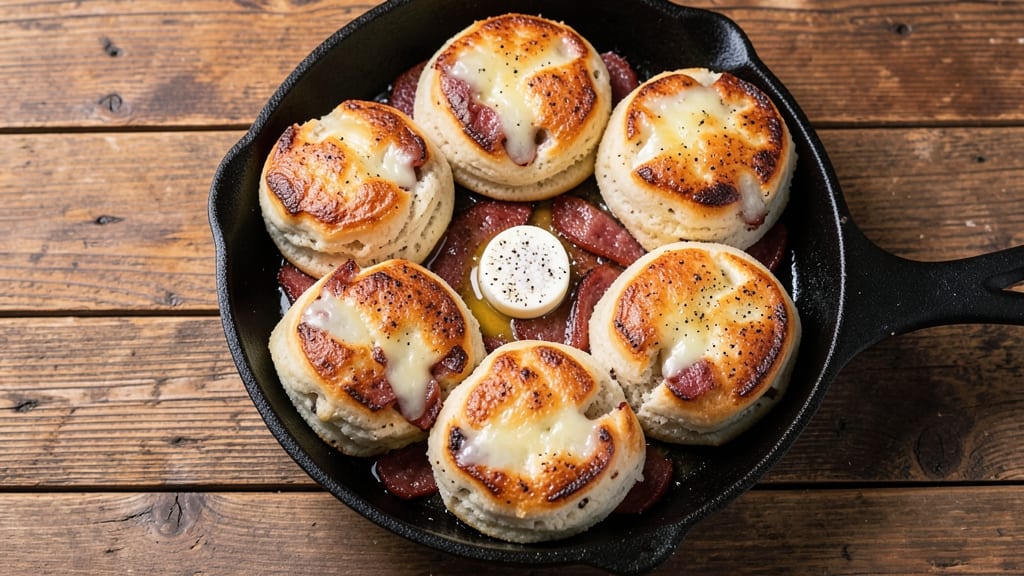
This Bisquick sausage cheese biscuit recipe delivers the perfect balance of flaky layers and savory pull-apart magic in just 30 minutes—no yeast, no fuss, no waiting for dough to rise.
The secret lies in combining Bisquick's foolproof baking mix with crumbled sausage and sharp cheddar, creating a biscuit so tender and flavorful it disappears faster than you can say "breakfast." I've perfected this technique over years of weekend mornings, where the aroma alone wakes up the whole house.
What makes these biscuits truly special is the two-step dough process: first mixing the dry ingredients with cold butter until pea-sized crumbles form, then cutting in the sausage and cheese for even distribution.
This ensures every bite delivers that perfectly crispy exterior and melt-in-your-mouth interior, with sausage bits that stay juicy and cheese that stretches into golden strings when pulled apart. The result? A biscuit so good, it becomes the star of any brunch spread.
By the time you pull them from the oven, you'll have a batch of golden-brown biscuits with layers so delicate they practically dissolve on your tongue. The sausage adds a smoky depth that pairs beautifully with the sharpness of the cheese, while the Bisquick's leavening creates that signature flakiness.
These biscuits are hearty enough to stand alone but also work perfectly with a side of homemade gravy or tangy pickles for dipping.
Whether you're feeding a crowd for Sunday brunch or treating yourself to a lazy weekend breakfast, this recipe delivers restaurant-quality results without the wait. The best part?
You can make the dough ahead and bake it fresh when ready—no stress, no last-minute scrambling. Let's get started on creating your new favorite biscuit recipe.
Ingredients for bisquick sausage cheese biscuit
Twelve ingredients transform into restaurant-quality biscuits with layers so flaky they practically vanish.
| Ingredient | Amount | Notes |
|---|---|---|
| Bisquick Baking Mix 🍞 | 3 cups | Original flavor, not low-fat |
| Sharp White Cheddar Cheese 🧀 | 2 cups | Freshly shredded, block preferred |
| Cooked Smoked Sausage 🥓 | 1 ½ cups | Crumbled, mild or hot variety |
| Unsalted Butter 🧈 | ½ cup | Cold, cubed, European-style preferred |
| Whole Milk 🥛 | ½ cup | Cold, full-fat for richness |
| Diamond Crystal Kosher Salt 🧂 | 1 ½ tsp | Fine grain for even distribution |
| Black Pepper 🌶️ | 1 tsp | Freshly cracked, coarse grind |
| Garlic Powder 🧄 | 1 tsp | Freshly ground preferred |
| Onion Powder 🧅 | 1 tsp | For subtle sweetness |
| All-Purpose Flour 🌾 | ½ cup | For extra flakiness if needed |
| Cornmeal 🌽 | 2 tbsp | For crispy bottoms, fine grind |
The Bisquick is non-negotiable here—original flavor gives the best texture. Bob Evans or Kroger brand are my go-tos, but any boxed baking mix works. For the cheese, sharp white cheddar is key—Kraft 2% or Babybel won't cut it. Grab a wedge from the deli counter and shred it yourself. The sausage? Cook it first—pre-cooked links from Jimmy Dean or Hillshire Farm save time. Cold butter is crucial—Plugrá or Land O'Lakes European Style stays firm longer. If your butter starts melting before mixing, pop it in the freezer for 10 minutes.
No sharp cheddar? Pepper jack at half the amount adds heat, but the flavor won't be the same. Running short on sausage? Swap in cooked bacon bits—just reduce to 1 cup. The cornmeal can be skipped if you're in a pinch, but it makes those bottoms crispier than a biscuit from a Southern diner. For extra flakiness, chill the dough 15 minutes before baking. And if your Bisquick box says 'enriched'? Use it anyway—the flavor difference is minimal. The garlic and onion powders are optional but worth the extra 30 seconds for that restaurant-quality depth.
Make the dough ahead? Wrap tightly in plastic and refrigerate for up to 2 days. For baking, preheat your oven to 450°F—any lower and you lose that golden crust. These biscuits reheat beautifully—5 minutes at 350°F makes them soft again. Store leftovers in an airtight container for 3 days, or freeze the dough balls for up to 3 months. Pro tip: Bake one batch fresh and freeze the rest—nothing beats pulling a biscuit straight from the freezer into a hot skillet.
Why You'll Love This Recipe
- Pantry Magic: I swear by this recipe when my fridge is bare—just Bisquick, a block of cheddar, and whatever sausage I’ve got lurking. No fancy shopping, no last-minute scrambling. Honestly, it’s the kind of meal that makes me feel like a genius for remembering to stock Bisquick.
- Crispy-Creamy Obsession: That first bite? Buttery, golden crust with gooey cheddar oozing into flaky layers—it’s the kind of texture combo that makes you close your eyes. The smoked sausage adds this deep, savory punch that turns a simple biscuit into something dangerously addictive.
- Tailgate or Tuesday: Serve it warm with gravy at a football game (yes, even on a Tuesday night) or pack leftovers for lunch—those biscuits reheat like a dream. Between us, I’ve also used the dough to make breakfast biscuits the next morning. Versatile? Absolutely. Lazy? Even better.
- Leftovers That Don’t Suck: Most biscuit recipes dry out or get soggy, but these? They stay tender for days. I’ll wrap them in foil and freeze them—just reheat in a skillet with a little butter, and boom, you’ve got a 5-minute meal. Budget-friendly? Check. Time-saving? Double check.
Step-by-step instructions for Bisquick sausage cheese biscuits
Here's how to achieve those legendary flaky layers and pull-apart texture without the fuss.
Prepare the Dough Foundation
In a large mixing bowl, combine the 3 cups Bisquick Baking Mix, 0.5 cup All-Purpose Flour, 2 tbsp Cornmeal, 1.5 tsp Diamond Crystal Kosher Salt, 1 tsp Black Pepper, 1 tsp Garlic Powder, and 1 tsp Onion Powder. Mix these dry ingredients together until evenly distributed—you'll see no more than a few flour streaks remaining.
This dry blend is your canvas. The cornmeal creates that signature crispy bottom, while the Bisquick ensures lightness. I like to use a whisk for this step to avoid developing gluten, which would make our biscuits tough instead of tender. Keep the bowl nearby—we'll be adding wet ingredients next.
Incorporate Wet Ingredients and Cheese
Cut the 0.5 cup Unsalted Butter into small cubes and add it to the dry mixture. Using a pastry cutter or your fingers, work the butter into the flour until you have pea-sized crumbles—this is crucial for flaky layers. The butter should be cold but not rock-hard; if it's too firm, let it sit at room temperature for 5 minutes.
Make a well in the center and pour in the 0.5 cup Whole Milk and 2 cups Sharp White Cheddar Cheese. Stir gently with a fork until just combined—you're looking for a shaggy, sticky dough that holds together when pressed. Overmixing here will toughen the biscuits, so resist the urge to fully incorporate everything. The cheese should be distributed evenly but still visible in spots.
Fold in the Cooked Smoked Sausage
Add the 1.5 cups Cooked Smoked Sausage (crumbled) to the dough and fold it in using a spatula. You want the sausage evenly dispersed but still some visible pockets—this ensures every bite has that savory punch. The dough will be sticky, so don't be afraid to get your hands in there. Press it together gently until it forms a cohesive mass.
Here's the thing—don't worry if it looks messy. The magic happens when we bake it. Transfer the dough to a lightly floured surface and gently shape it into a 1-inch thick rectangle. This thickness ensures even baking and those beautiful flaky layers. If the dough cracks, just press it back together—it's normal with this recipe.
Cut and Bake for Maximum Flakiness
Preheat your oven to 425°F while you prepare the biscuits. Using a 2.5-inch round cutter, press straight down (don't twist) to cut out biscuits from the dough rectangle. Place them 1 inch apart on a parchment-lined baking sheet. The cutter should go all the way through the dough—this prevents them from expanding unevenly.
Bake for 12-15 minutes until the edges are deep golden brown and the tops are puffed. You'll see those beautiful layers forming at the edges—that's your signal they're ready. If the tops brown too quickly, tent them loosely with foil for the last 2-3 minutes to prevent over-browning while the centers finish cooking.
Serve Warm with Gravy or Honey Butter
Remove the biscuits from the oven and let them cool on the baking sheet for 2 minutes—this prevents them from falling apart when you transfer them. Serve immediately while they're still warm and flaky. The centers should be soft and pillowy, with crispy edges that give way to the tender interior.
For the ultimate experience, serve with your favorite biscuit gravy or a drizzle of honey butter. The contrast of the savory sausage and cheese with the sweet glaze is pure comfort food perfection. These biscuits are best enjoyed fresh—they lose their flakiness as they cool, so don't wait to serve them!
Pro Tips For Making Bisquick Sausage Cheese Biscuit
- Chill the Dough: Mix your Bisquick, milk, and cheese, then pop the dough in the fridge for 10 minutes before shaping. I used to skip this, and my biscuits always spread like pancakes—now they hold their shape and bake up flaky instead of flat. Works especially well when you’re in a hurry to get them in the oven.
- Shred Cheese Small: Use a box grater or food processor for sharp white cheddar—aim for rice-sized pieces. Larger chunks melt unevenly and create splotchy pockets of goo. The smaller the shred, the more evenly it distributes and melts into a creamy, cohesive bite.
- Don’t Overwork the Dough: Once you add the cooked sausage, mix just until combined—two or three turns of a spoon. Overmixing develops gluten, and your biscuits will turn out tough instead of tender. Think "just enough to see streaks of cheese and sausage," not a smooth batter.
- Preheat Pan on Medium: Cast iron or a heavy skillet on medium heat prevents burning before the bottoms brown. I learned this after watching my first batch turn into crispy-edged hockey pucks. Medium heat gives you time to adjust without scrambling—especially important when you’re juggling cheese and sausage.
Common mistakes when making this dish
Overmixing the Dough
This is the #1 mistake I see—turning the dough into a gummy mess by overworking it. Once you add the milk, stir just until the ingredients come together, not until fully combined. I’ve ruined batches by mixing longer than 10 seconds after the liquid hits the bowl.
The gluten develops quickly, making biscuits tough instead of tender. If your dough feels sticky but holds shape when pressed, stop mixing immediately. 💪
Skipping the Cold Butter Rule
Room-temperature butter is the enemy of flaky layers. When butter melts too soon, it creates steam but no separation, resulting in dense biscuits. Always use cold, cubed butter straight from the fridge.
If your kitchen is warm, chill the cubes on a plate in the freezer for 5 minutes before mixing. Pro tip: Use European-style butter like Plugrá—it stays firm longer than American brands.
Uneven Sausage Distribution
Lumpy sausage pockets lead to some biscuits being bland while others are overpoweringly salty. Fold the crumbled sausage into the dough gently with a spatula, then press the dough into a 1-inch rectangle to ensure even distribution.
If you’re using pre-cooked sausage links, crumble them into pea-sized pieces—no larger than a dime. I’ve learned this the hard way: giant sausage chunks burn before the biscuits finish baking.
Twisting the Cutter
Twisting your biscuit cutter severs the layers, ruining that signature flaky texture. Press straight down with firm, even pressure—no rotation needed. A 2.5-inch round cutter works best, but if you don’t have one, a glass dipped in flour works in a pinch.
The dough should resist slightly at first, then give way cleanly. If it sticks, your cutter isn’t sharp enough or your dough needs more flour.
Baking at the Wrong Temperature
Too low (375°F) = soggy centers. Too high (450°F) = burnt tops before the insides cook. Stick to 425°F for perfect results. If your oven runs hot, reduce to 400°F and add 2-3 minutes to the bake time.
I test doneness by tapping the bottom—they should sound hollow. Overbaking dries them out, while underbaking leaves them gummy.
Ignoring the Resting Time
Skipping the 2-minute rest after baking causes biscuits to fall apart when transferring. The layers need time to set slightly. Let them cool on the baking sheet, then slide them onto a wire rack.
If you’re in a hurry, use a spatula to gently lift them—don’t stack them or they’ll lose their flakiness. Serve immediately for maximum enjoyment; reheating ruins the texture. 🍴
Nutrition facts
Frequently asked questions
Can I make these biscuits ahead of time?
Shape the dough into balls, wrap tightly in plastic, and refrigerate for up to 2 days. For longer storage, freeze the dough balls for 3 months. Bake straight from frozen at 400°F for 15-18 minutes, adding 2-3 extra minutes. The texture stays flaky when reheated briefly at 350°F for 5 minutes.
What if I don't have a biscuit cutter?
No problem! Use a 2.5-inch round glass or even a clean, dry can of the same size. Dip it in flour before pressing straight down—no twisting! For irregular shapes, use a sharp knife and re-dip in flour between cuts. The key is pressing firmly and evenly to maintain those flaky layers.
Can I substitute the sausage with something else?
Yes! Try crumbled bacon (reduce to 1 cup), cooked ham (diced), or even sausage crumbles from the deli section. For a vegetarian option, use shredded rotisserie chicken or mushrooms (sautéed first). Just keep portions to 1.5 cups total to maintain the right texture.
Why are my biscuits dense instead of flaky?
Most likely, your butter wasn't cold enough or you overmixed the dough. Cold butter creates steam pockets for flakiness—always use cubed, refrigerated butter. Also, stop mixing the second the dough comes together (about 10 seconds after adding milk). Overworking develops gluten, which makes biscuits tough.
How do I serve these biscuits for maximum appeal?
Warm biscuits are best served with homemade sausage gravy or a drizzle of honey butter. For a Southern-style brunch, pair with scrambled eggs and pickled jalapeños. Keep them on a wire rack to maintain flakiness—stacking causes soggy bottoms. Serve immediately while they're piping hot!