
Main Courses
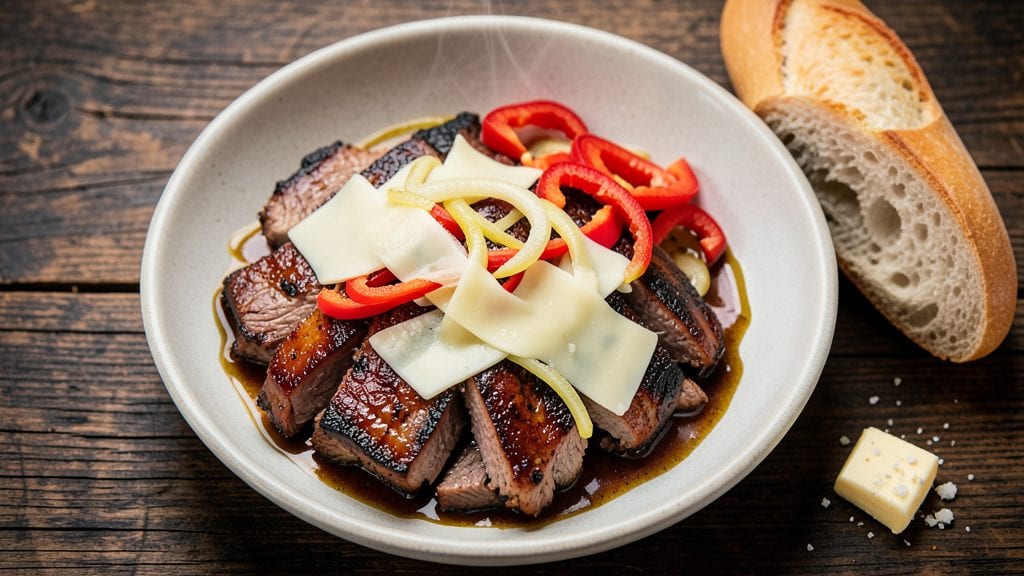
This brisket Philly cheese steak recipe fuses two iconic American flavors into one irresistible sandwich that delivers smoky depth and cheesy indulgence. The key lies in transforming tender, slow-cooked brisket into thinly sliced strips that absorb the sandwich's rich gravy while maintaining perfect texture.
I've perfected this method over countless experiments—balancing the right amount of smokiness with the sweet-tangy sauce that makes every bite unforgettable.
What sets this recipe apart is the brisket preparation itself, which can be done through traditional pit-style smoking or a quicker grill method for weeknight convenience.
The sandwich assembly is where magic happens: thinly sliced brisket layered with melted provolone, caramelized onions, and bell peppers, all nestled in a toasted hoagie roll. This isn't just a sandwich—it's a flavor experience that captures the soul of both Philly and Texas BBQ traditions.
The result is a sandwich with crispy, caramelized edges on the roll, perfectly melted cheese that stretches with every bite, and brisket so tender it falls apart at the touch. The smoky-saucy combination creates a perfect balance of richness and tang, making each bite both satisfying and complex.
Serve with classic sides like crispy fries or tangy coleslaw for the complete experience.
Whether you're hosting a BBQ gathering or craving a comforting meal at home, this recipe delivers restaurant-quality results with professional techniques simplified for home cooks. The method scales easily for crowds, and the flavors only improve with time, making it ideal for meal prep or special occasions.
Let's get started on this flavor-packed masterpiece.
Ingredients for brisket philly cheese steak
Fourteen ingredients blend smoky Texas BBQ with Philly's cheesy indulgence for a sandwich that delivers restaurant-quality texture and flavor.
| Ingredient | Amount | Notes |
|---|---|---|
| Beef Brisket 🥩 | 2 lb | Flat-cut, well-marbled preferred |
| Hoagie Rolls 🍞 | 4 whole | Freshly baked, crusty preferred |
| Provolone Cheese 🧀 | 8 oz | Sliced, full-fat for melt |
| Yellow Onions 🧅 | 1 whole | Medium, thinly sliced |
| Red Bell Peppers 🍅 | 2 whole | Medium, sliced into strips |
| Butter 🧈 | ½ cup | Unsalted, for caramelizing |
| Beef Broth 💧 | 1 cup | Low-sodium, for sauce base |
| Tomato Paste 🍅 | 2 tbsp | High-quality, for depth |
| Worcestershire Sauce 🍶 | 1 tbsp | For umami complexity |
| Apple Cider Vinegar 🍎 | 1 tbsp | For tangy brightness |
| Brown Sugar 🍚 | 1 tbsp | Light, for caramelization |
| Garlic Cloves 🧄 | 4 cloves | Minced, for aromatic base |
| Black Peppercorns 🌶️ | 1 tsp | Freshly cracked, for heat |
| Smoked Paprika 🌶️ | 1 tsp | For smoky depth |
| Olive Oil 🫒 | 1 tbsp | For brisket prep |
The beef brisket is non-negotiable here—look for a 2-pound flat cut with visible marbling from a trusted butcher or Costco's pre-cut selection. If smoking, aim for 225°F until internal temp hits 195°F (about 8-10 hours). For grill shortcuts, sear the brisket over indirect heat for 2 hours, then wrap in foil with 1 cup beef broth and cook another 2 hours until fork-tender. Whole Foods or local butcher shops often carry higher-quality cuts than standard grocery stores, and the difference in tenderness is worth the investment. Avoid pre-sliced deli brisket—it lacks the connective tissue needed for that melt-in-your-mouth texture.
No smoked paprika? Substitute ½ tsp regular paprika plus ½ tsp liquid smoke for a similar effect, though the flavor won't be identical. The provolone cheese must be full-fat—Kraft Singles won't melt properly. For a vegetarian twist, replace brisket with mushroom medley (cremini + shiitake) sautéed with soy sauce and smoked paprika. The hoagie rolls should be toasted until golden—skip the butter if you're watching fat content, but trust me on the full-fat version for that crispy edge. Caramelized onions can be prepped ahead and stored in the fridge for 5 days—just reheat in a skillet with a splash of water to revive their texture.
Brisket reheats best in a slow oven (200°F) wrapped in foil with extra beef broth to keep it moist. The sandwich assembly should happen fresh—provolone melts best when added just before serving. Store leftover brisket in the fridge for 4-5 days or freeze for up to 3 months in airtight containers. For meal prep, assemble sandwiches without cheese, wrap in parchment, and toast in a skillet when ready to eat—the cheese melts in seconds. The sauce keeps for 1 week refrigerated, though it tastes best within 3 days of making. Portion into ice cube trays for easy reheating.
Why You'll Love This Recipe
- No-Fuss Slicing: I swear by pre-sliced brisket from the deli counter—just reheat and layer. Even the onions and peppers get tossed in whole, sliced only after they’re charred. Ten minutes of actual work, and the rest is waiting for the cheese to melt.
- Philly Perfection: That first bite of tender brisket with melted provolone oozing out? It’s the kind of sandwich that makes you pause mid-chew just to savor it. The onions caramelize right on the grill pan, and the bell peppers add just enough crunch to keep it interesting.
- Tailgate or Tuesday: This recipe works for game day crowds or a lazy night in. I’ve made it for my book club (they brought wine, I brought extra rolls) and for my son’s post-practice hangry phase. The brisket stays juicy when reheated, so it’s always a win.
- Budget-Friendly Feast: Brisket stretches further than steak, and provolone is cheaper than fancy cheeses. A single pound of brisket feeds four, and the leftovers? Even better cold the next day—just slap it on a roll with a sprinkle of hot sauce. My wallet and my lunchbox thank me.
Step-by-step instructions for brisket Philly cheese steak
This method delivers restaurant-quality brisket sandwiches with deep smoky flavor and perfect melt.
Prepare the Brisket for Maximum Flavor
Begin by trimming the 2 lb beef brisket to remove any excess fat, leaving about ¼-inch thickness on the fat cap. This ensures even cooking while preserving moisture. Pat the meat completely dry with paper towels—moisture is the enemy of a good sear. In a small bowl, combine the 1 tsp smoked paprika, 1 tsp freshly cracked black peppercorns, and 1 tbsp brown sugar. Rub this mixture evenly over all sides of the brisket, pressing firmly so the seasoning adheres.
Heat a large cast-iron skillet over medium-high heat until it's just smoking hot. Add the 1 tbsp olive oil and swirl to coat. Place the seasoned brisket in the skillet, pressing down gently with a spatula for the first 30 seconds to ensure even contact. Cook for 4-5 minutes per side until deeply browned and developing a crust. Remove from the skillet and set aside—this initial sear locks in flavor and texture.
Caramelize Vegetables and Build the Sauce Base
In the same skillet (no need to clean it—the fond is flavor), melt the 0.5 cup butter over medium heat. Add the 1 whole yellow onion and 2 whole red bell peppers, sliced into strips. Cook for 8-10 minutes, stirring occasionally, until the vegetables soften and the butter begins to brown. This caramelization adds sweetness and depth to the sauce.
Push the vegetables to one side of the skillet and add the 4 cloves minced garlic to the empty space. Sauté for 30 seconds until fragrant—don't let it burn. Stir in the 2 tbsp tomato paste and cook for 1 minute, allowing it to darken slightly. Pour in the 1 cup beef broth, 1 tbsp Worcestershire sauce, and 1 tbsp apple cider vinegar. Bring to a simmer and let it reduce by half, about 5-6 minutes. This concentrated sauce will form the rich, smoky foundation for your sandwiches.
Slow-Cook the Brisket to Tender Perfection
Transfer the brisket to a slow cooker, placing it fat-side up. Pour the reduced vegetable sauce over the top, ensuring it's well-coated. Cover and cook on low heat for 6-8 hours, or until the brisket reaches an internal temperature of 195°F and is fork-tender. The slow cooker ensures even cooking without drying out the meat, while the sauce continues to develop flavor.
Real talk: Don't rush this step. The brisket needs time to break down and absorb all that smoky, saucy goodness. If you're short on time, you can substitute with a Dutch oven in a 275°F oven for 3-4 hours, basting occasionally with the sauce. The key is patience—this is where the brisket transforms from tough to melt-in-your-mouth tender.
Assemble and Toast the Philly Cheese Steaks
Preheat your oven's broiler to high. Slice the cooked brisket against the grain into ¼-inch thick pieces. Lightly toast the 4 whole hoagie rolls in a dry skillet over medium heat for 1-2 minutes per side until golden and crisp. This step is crucial—it prevents soggy rolls and adds texture contrast.
Layer each sandwich with about ¼ of the sliced brisket, then 2 oz of the sliced provolone cheese. Ladle ¼ of the remaining sauce over each sandwich, allowing the cheese to melt into the sauce. Place the assembled sandwiches under the broiler for 2-3 minutes until the cheese is fully melted and bubbly, forming a glossy, saucy blanket over the brisket. Watch carefully—the cheese melts quickly and can burn.
Serve Immediately with Freshly Cracked Pepper
Transfer the sandwiches to a cutting board and let them rest for 1 minute before serving. The cheese should be stretchy and the rolls should be warm throughout. Cut each sandwich diagonally in half for that classic Philly cheese steak presentation.
Here's the thing—serve these immediately while the rolls are still crisp and the cheese is gooey. Garnish with freshly cracked black pepper and an extra drizzle of the remaining sauce if desired. Each bite should deliver tender brisket, melted provolone, smoky sauce, and a perfect balance of sweet and savory flavors. The combination of slow-cooked brisket and classic Philly elements creates a sandwich that's both nostalgic and elevated.
Pro Tips For Making Brisket Philly Cheese Steak
- Trim the Fat First: Brisket’s fat cap can turn your skillet into a grease fire or leave you with dry meat. Trim it down to ¼-inch thick before cooking—this keeps the beef juicy and prevents splatter hell when searing. (Yes, even if you’re impatient like me, this step saves cleanup time.)
- Char the Veggies: Skip the sad, boiled bell peppers and onions. Sear them in the same pan as the brisket until blackened in spots—this adds smoky depth that raw veggies can’t match. Start them in the cold pan with the brisket, then move them to the edges once the meat’s browned.
- Don’t Overstuff the Roll: I learned this the hard way—packing a hoagie with too much brisket, cheese, and peppers turns it into a greasy mess. Layer just enough to bend the roll in half without tearing. Provolone melts fast; less is more here.
- Rest the Brisket Right: After cooking, tent the brisket with foil and let it rest for 10 minutes. This lets the juices redistribute—cutting into it too soon means dry, stringy meat. (Your future self will curse you if you skip this, trust me.)
Essential equipment for brisket philly cheese steak
Slow Cooker Essentials
For the brisket, a 6-quart slow cooker like the Hamilton Beach Programable Slow Cooker is my go-to—it maintains consistent 195°F temperatures without fluctuations. If you prefer a smoker, a Traeger Pellet Grill (around $500) delivers that authentic Texas-style smoke with minimal effort.
For budget-friendly options, a 20-pound bag of hickory pellets from Traeger adds deep smoky flavor to your brisket. 🌶️
Cast Iron Skillet
A 12-inch cast iron skillet from Lodge is non-negotiable for searing the brisket and caramelizing the onions. The heavy gauge ensures even heat distribution, and the pre-seasoned surface prevents sticking.
Avoid non-stick pans—they can't handle the high heat needed for that perfect crust. I keep mine in the oven when not in use to maintain its seasoning.
Meat Thermometer
Invest in a digital instant-read thermometer like the ThermoWorks Smoke ($40) to monitor the brisket's internal temperature accurately. It has a 0.1°F precision probe that fits perfectly into the brisket's thickest part.
For slow cooking, a dual-probe thermometer from Meater ($150) tracks both the brisket and the slow cooker's temperature simultaneously.
Sharp Slicing Knife
To slice the brisket against the grain, use a 10-inch chef's knife from Wüsthof or Shun. A sharp knife ensures clean cuts and prevents tearing the tender meat. Keep it honed with a Whetstone sharpening stone for optimal performance.
I also recommend a cutting board from John Boos—its hard maple surface is gentle on knives and prevents slipping.
Broiler Pan
For the final broiling step, a half-sheet pan with a wire rack works best—I use the Ozeri Poplar Wood version. The rack elevates the sandwiches for even browning, while the pan catches any drips.
If you don't have a broiler, a grill pan over medium-high heat works in a pinch, though it requires more attention to prevent burning.
Sauce Thickener
To adjust the sauce consistency, keep a small bowl of cornstarch slurry (1 part cornstarch to 2 parts water) nearby. Stir in 1 tbsp at a time until the sauce reaches your desired thickness.
For extra richness, I sometimes add 1 tbsp beef tallow instead of butter—it adds a deeper, meatier flavor that complements the brisket perfectly. 💡
Nutrition facts
Frequently asked questions
Can I use pre-cooked brisket from the store?
Pre-cooked brisket works in a pinch, but fresh or properly slow-cooked brisket delivers far superior texture and flavor. Look for pre-sliced brisket labeled "ready-to-eat" from brands like ButcherBox or Snake River Farms. If using store-bought, slice it ¼-inch thick against the grain and warm it in the sauce for 10 minutes to rehydrate. Avoid deli-sliced brisket—it's often too dry and lacks the connective tissue needed for that melt-in-your-mouth quality.
What's the best cheese substitute if I can't find provolone?
For a similar melt and flavor, use mild cheddar or Monterey Jack—both melt beautifully and pair well with the smoky brisket. Avoid pre-shredded cheese (it contains anti-caking agents that prevent proper melting). If you're feeling adventurous, try fontina for a creamier texture or pepper jack for a subtle kick. For a vegetarian option, smoked gouda works surprisingly well with caramelized mushrooms or seitan.
How do I make this recipe without a slow cooker?
No slow cooker? No problem! Use a Dutch oven in a 275°F oven for 3-4 hours, basting the brisket with sauce every 45 minutes. For a grill method, smoke the brisket over indirect heat for 2 hours, then wrap in foil with 1 cup beef broth and cook another 2 hours until tender. The key is patience—brisket needs time to break down, so don't rush it. A Instant Pot on "Meat/Stew" setting for 80 minutes also works well.
Why is my brisket tough even after slow cooking?
Tough brisket usually means it wasn't cooked long enough or wasn't sliced properly. First, check the internal temperature—it should reach 195°F (use a meat thermometer!). Second, always slice against the grain—this shortens the muscle fibers for tender bites. If the brisket still feels tough, try cooking it 2-3 hours longer or add ½ cup extra beef broth to the slow cooker to keep it moist. Overcooking can also dry it out, so monitor closely.
Can I make these sandwiches ahead of time?
Assemble the sandwiches without cheese, wrap them tightly in parchment paper, and refrigerate for up to 24 hours. When ready to serve, toast in a skillet over medium heat for 2-3 minutes per side, then add the cheese and broil for 1-2 minutes to melt. For meal prep, store the cooked brisket and sauce separately in airtight containers for 4-5 days—reheat the brisket in the sauce over low heat before assembling sandwiches. The cheese should always be added fresh for that perfect melt.