
Breakfast & Brunch
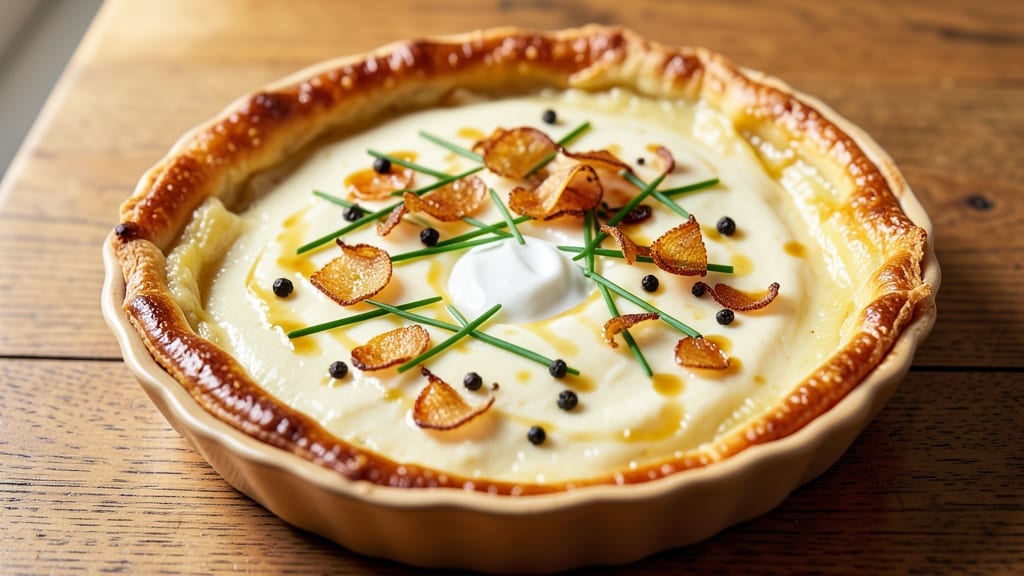
A camembert cheese quiche transforms a classic brunch dish into a decadent masterpiece, where rich, soft-ripened camembert melts into a velvety filling. The secret lies in a perfectly flaky crust and precise egg mixture that balances creamy cheese with subtle herbs.
This recipe delivers restaurant-quality results at home, with every bite offering that signature camembert tang and luxurious texture.
The foundation begins with a flaky crust—buttery, golden, and sturdy enough to hold the weight of the filling without losing its delicate layers. While the crust bakes, the egg mixture gets its depth from camembert’s natural creaminess, enhanced by a touch of Dijon mustard and Gruyère for complexity.
The 375°F oven ensures even baking, with the filling setting just enough to hold its shape while remaining tender.
What makes this quiche exceptional is the way the camembert transforms during baking—its edges caramelize slightly, while the center stays luxuriously soft. A sprinkle of fresh thyme or a drizzle of honey before serving adds brightness, cutting through the richness.
This isn’t just brunch; it’s a foolproof way to elevate any meal with minimal effort.
Perfect for weekend brunches, holiday gatherings, or an impressive weeknight dinner, this quiche pairs beautifully with a crisp green salad or roasted vegetables. The recipe scales effortlessly, making it ideal for feeding a crowd or saving leftovers for lunch. Let’s bake this showstopper together.
Ingredients for camembert cheese quiche
Six essential ingredients craft a restaurant-worthy quiche with velvety camembert filling and signature flaky crust.
| Ingredient | Amount | Notes |
|---|---|---|
| All-Purpose Flour 🌾 | 2 ½ cups | Sifted for optimal texture |
| Unsalted Butter 🧈 | 1 cup | Cold, cubed for flakiness |
| Ice Water 💧 | ⅓ cup | Chilled for crisp crust |
| Diamond Crystal Kosher Salt 🧂 | 1 tsp | For crust seasoning |
| Large Eggs 🥚 | 5 whole | Room temperature preferred |
| Heavy Cream 🥛 | 1 cup | Full-fat for richness |
| Camembert Cheese 🧀 | 1 whole | Soft-ripened, rind removed |
| Gruyère Cheese 🧀 | ½ cup | Freshly grated, nutty flavor |
| Dijon Mustard 🍯 | 1 tbsp | For subtle tang |
| Fresh Thyme Leaves 🌿 | ¼ cup | Chopped, aromatic |
| Extra-Virgin Olive Oil 🫒 | 2 tbsp | For greasing crust |
| Raw Honey 🍯 | 1 tbsp | For drizzling before serving |
The crust demands precision—European-style all-purpose flour yields superior flakiness compared to standard brands. Plugrá or King Arthur are ideal choices, while cold unsalted butter (not melted) creates those coveted layers. For the best results, use a food processor to cut butter into flour until pea-sized crumbs form. If substituting salted butter, omit the kosher salt entirely—crust flavor must remain delicate. The ice water binds the dough without over-developing gluten, ensuring a tender yet sturdy base capable of supporting the weighty filling.
Camembert selection is critical—avoid pre-sliced varieties; whole wheels from specialty cheese shops like Murray's Cheese or Whole Foods deliver superior creaminess. Gruyère must be freshly grated (pre-grated contains anti-caking agents that dull flavor). For a dairy-free adaptation, substitute nutritional yeast and cashew cream*, but texture will differ significantly. The Dijon mustard adds necessary acidity to balance the cheese's richness—Maille brand provides the most authentic flavor profile. Fresh thyme should be harvested just before use; dried thyme at one-third quantity works in a pinch, though aroma will be less pronounced.
Quiche components must be prepped in sequence: crust blind-baked for 15 minutes at 375°F, then filling assembled immediately to maintain temperature. Store crust components (dough and blind-baking weights) in airtight containers for 3 days, while filling ingredients keep 5 days refrigerated. Fully assembled quiche reheats beautifully—cover with foil at 350°F for 15 minutes, then broil 2 minutes for golden browning. Portion leftovers into individual containers to preserve the delicate crust structure, consuming within 4 days*. For make-ahead convenience, prepare crust and filling separately, then assemble just before baking.
Why You'll Love This Recipe
- This quiche handles everything: a lazy Sunday brunch, a quick lunch for guests, or even a dinner when you’re too tired to think. Between us, it’s my go-to when I’ve got a fridge full of eggs and a craving for something impressive but effortless.
- No-Fuss Crust: I swear, the dough comes together in minutes—just flour, butter, ice water, and a pinch of salt. No rolling required, no stressing over perfect circles. That flaky, buttery base? It’s basically foolproof, even if I’m not.
- Rich, Melty Magic: Camembert isn’t just cheese—it’s the star. The moment it melts into the custard, you’ve got that creamy, tangy depth with just a hint of earthiness. Honestly, the first bite makes me want to skip breakfast and eat it again.
- Weeknight Workhorse: This quiche handles everything: a lazy Sunday brunch, a quick lunch for guests, or even a dinner when you’re too tired to think. Between us, it’s my go-to when I’ve got a fridge full of eggs and a craving for something impressive but effortless.
Step-by-step instructions for camembert cheese quiche with flaky crust
Master this technique and you'll achieve a golden, flaky crust with a rich, creamy Camembert filling every time.
Prepare the Flaky Crust
In a large mixing bowl, combine the 2.5 cups all-purpose flour and 1 tsp diamond crystal kosher salt. Cut in the 1 cup unsalted butter using a pastry cutter or your fingers until the mixture resembles coarse crumbs with pea-sized butter pieces remaining. This texture is crucial for achieving flaky layers.
Gradually add the 0.33 cup ice water, one tablespoon at a time, mixing gently with a fork until the dough just comes together. The dough should hold when pressed but not be sticky. Avoid overworking it—this develops gluten and creates a tough crust. Shape the dough into a disk, wrap in plastic, and chill for at least 1 hour or up to 24 hours in the refrigerator.
Roll and Blind-Bake the Crust
On a lightly floured surface, roll out the chilled dough to a 12-inch circle, about ⅛-inch thick. Transfer to a 9-inch pie dish, gently pressing it into the bottom and up the sides. Trim any excess dough hanging over the edge. Prick the bottom all over with a fork to prevent puffing during baking.
Preheat your oven to 375°F. Line the crust with parchment paper, fill with pie weights or dried beans, and bake for 15 minutes. Remove the weights and bake for an additional 5 minutes until the edges begin to golden. This blind-baking step ensures a crisp crust that won't sog under the filling.
Prepare the Camembert Filling
In a medium bowl, whisk together the 5 whole large eggs, 1 cup heavy cream, 1 tbsp Dijon mustard, and 0.25 cup chopped fresh thyme leaves until well combined. Remove the rind from the 1 whole camembert cheese and cut it into small cubes, then combine with the 0.5 cup freshly grated gruyère cheese. Gently fold these cheeses into the egg mixture until just incorporated.
Carefully pour the filling into the pre-baked crust. The mixture should come about ¾ of the way up the sides. For extra richness, brush the crust edges with the 2 tbsp extra-virgin olive oil to enhance browning. This step prevents the crust from becoming soggy and adds to the final presentation.
Bake to Golden Perfection
Transfer the quiche to the preheated 375°F oven and bake for 35-40 minutes until the filling is set and the top is golden brown. The center should be just slightly jiggly—it will continue cooking as it cools. If the edges brown too quickly, cover them with aluminum foil.
Remove from the oven and let the quiche rest for 10 minutes before slicing. This resting period allows the filling to fully set and prevents it from running when you cut into it. Drizzle with 1 tbsp raw honey before serving to complement the creamy Camembert flavors.
Pro Tips For Making Camembert Cheese Quiche
- Chill the Dough: Roll out that pie crust and stash it in the fridge for at least 30 minutes before baking—yes, even if you’re eager. I used to skip this and end up with a soggy bottom, no matter how much butter I used. Cold dough = crispy crust that holds its shape.
- Salt the Butter: Toss that unsalted butter with a pinch of kosher salt (about ¼ teaspoon per ½ cup) before mixing it into the crust. Camembert’s rich and funky, so you don’t want the crust to taste bland—trust me, the salt cuts through the creaminess.
- Blind-Bake the Crust: Weigh down that crust with pie weights or dried beans for 15 minutes before adding the filling—no exceptions. I learned this after one quiche where the camembert melted into a gooey mess instead of staying golden. Pre-baking guarantees a solid base.
- Whisk Eggs Cold: Whisk those eggs straight from the fridge with the cream and camembert—no pre-warming. Warm eggs curdle faster, and you’ll end up with a grainy filling. Cold ingredients blend smoother and set cleaner. (And yes, I’ve ruined quiches by skipping this.)
Common mistakes when making your camembert cheese quiche
Overbaking the Crust
One of the most common mistakes is overbaking the crust, which turns it tough and dry. I’ve seen this happen when people blind-bake too long or forget to remove the weights early. The crust should be golden but still tender—if it’s browned to a deep amber, it’s overdone.
For a perfect result, bake the blind-baked crust for just 15 minutes with weights and 5 minutes without at 375°F. 🌡️
Underestimating Cheese Ripeness
Using pre-sliced or overly ripe camembert can ruin the texture of your quiche. The cheese should be soft but not runny—think of it like a ripe avocado.
I recommend using a whole wheel from a specialty shop like Murray’s Cheese, as pre-sliced varieties often contain stabilizers that alter the melting behavior. If your camembert is too soft, chill it for 30 minutes before cubing.
Skipping the Resting Period
Cutting into the quiche too soon is a surefire way to end up with a runny filling. The eggs need time to fully set after baking. Always let your quiche rest for 10 minutes before slicing—this allows the filling to firm up and the juices to redistribute.
I’ve learned this the hard way when impatient guests dug in early and ended up with a soupy mess. 💡
Uneven Filling Distribution
Pouring the filling unevenly can create cold spots that won’t set properly. The filling should be spread evenly to ¾ of the way up the sides of the crust. I use a spatula to gently smooth the top, ensuring no thick or thin spots.
If you notice the filling pooling in the center, tap the pie dish gently on the counter to redistribute it before baking.
Ignoring Temperature Fluctuations
Quiches are sensitive to temperature changes, especially when moving from oven to counter. If the oven isn’t fully preheated to 375°F, the crust may cook unevenly, and the filling might not set properly.
I always let my oven preheat for 15-20 minutes before baking. Also, avoid opening the oven door too often—each time you do, you risk losing heat and extending bake time.
Overmixing the Filling
Gently folding the cheese into the egg mixture is key—overmixing can create air pockets and a grainy texture. I use a rubber spatula to fold just until the cheeses are incorporated, being careful not to overwork the eggs.
If you notice the filling looks lumpy, don’t worry—it will smooth out during baking. The goal is a velvety, creamy texture, not a scrambled egg consistency. 🥚
Nutrition facts
Frequently asked questions
Can I substitute camembert with another soft cheese?
While camembert delivers that signature creamy, tangy flavor, you can substitute with brie or triple cream cheese for similar richness. For a sharper taste, try fontina or havarti, but reduce baking time by 2-3 minutes since they melt faster. Avoid overly wet cheeses like goat cheese—they can make the filling too runny.
How do I make this quiche ahead of time?
Prepare the crust and filling separately, then assemble just before baking. Store unbaked components in airtight containers for 3 days (crust) or 5 days (filling). For leftovers, refrigerate for up to 4 days and reheat at 350°F covered with foil for 15 minutes. Never freeze the fully baked quiche—it makes the crust soggy.
Why did my quiche filling turn out grainy?
Overmixing the filling or using pre-shredded cheese (which contains anti-caking agents) causes graininess. Always fold cheeses gently into the egg mixture and grate fresh Gruyère. For extra smoothness, blend the camembert cubes with the eggs for 10 seconds before adding Gruyère. The filling should look slightly lumpy before baking—it'll become creamy during cooking.
Can I make this quiche without a pie crust?
Yes! For a crustless version, use a 9-inch oven-safe skillet and bake the filling at 350°F for 25-30 minutes instead of 375°F. Reduce the heavy cream to ½ cup and add 1 tbsp cornstarch to thicken. Top with toasted breadcrumbs for texture. This works best for smaller servings (4-6 slices).
What's the best way to reheat slices?
Wrap individual slices in foil and warm at 350°F for 8-10 minutes until heated through. For microwave reheating, cover with a damp paper towel and heat for 30 seconds on 50% power. Avoid direct microwave heating—it makes the crust rubbery. A quick broil for 2 minutes after oven reheating restores crispness.