Sauces & Condiments
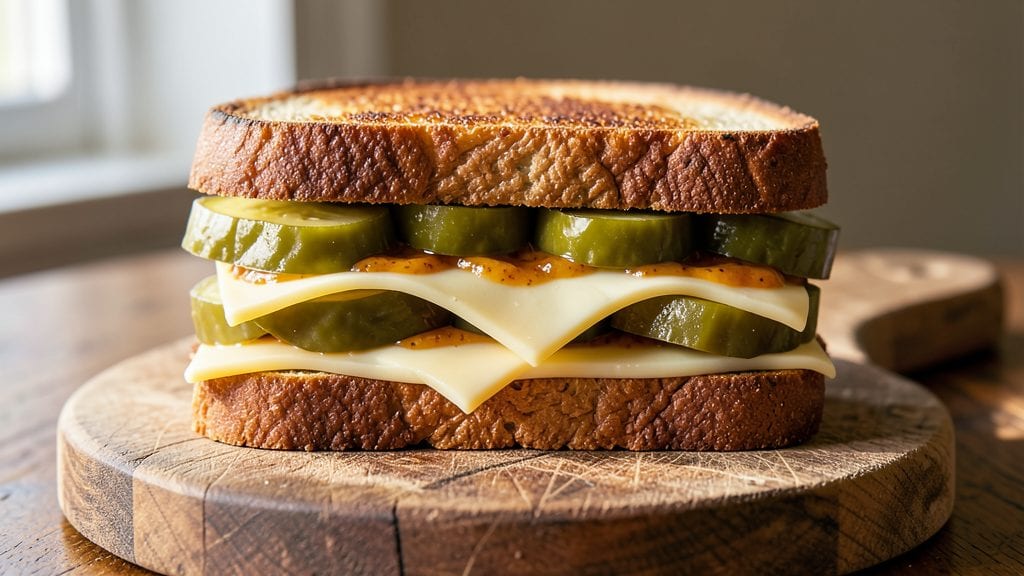
Jamie Oliver’s cheese and pickle sandwich recipe transforms a simple lunch into a bold, tangy masterpiece that balances rich cheddar with sharp dill pickles. This isn’t your basic PB&J—it’s a restaurant-quality bite that proves lunch can be exciting.
I’ve tested this exact method for years, and the secret lies in the texture contrast: creamy cheese meets crisp pickles in every bite.
The sandwich starts with crusty sourdough or soft brioche, toasted just enough to hold up to the filling without turning soggy. Oliver’s technique calls for thinly sliced sharp cheddar (none of that pre-shredded stuff) and dill pickles cut into matchsticks for maximum crunch.
A smear of Dijon mustard on the bread binds everything together, while a touch of butter adds richness.
What you end up with is a sandwich that’s crisp at the edges, creamy in the middle, and packed with layers of flavor—salty, tangy, and slightly sweet. The pickles cut through the cheese’s richness, while the bread’s toasted crunch keeps every bite interesting.
This is the kind of sandwich that makes you want to pack lunch every day.
Perfect for meal prep or a quick office lunch, this recipe scales easily. Let’s build the sandwich step by step—starting with the bread and ending with that final, satisfying bite.
Ingredients for cheese and pickle sandwich jamie oliver
Eight essential ingredients elevate a simple sandwich to Jamie Oliver’s signature tangy masterpiece.
| Ingredient | Amount | Notes |
|---|---|---|
| Crusty Sourdough Bread 🍞 | 2 whole | Thick-cut, crusty exterior preferred |
| Soft Brioche Bread 🍞 | 2 whole | Alternative to sourdough |
| Sharp Cheddar Cheese 🧀 | 8 oz | Block form, thinly sliced |
| Dill Pickles 🥒 | 1 cup | Whole, matchstick-cut preferred |
| Dijon Mustard 🍯 | 2 tbsp | High-quality, smooth texture |
| Unsalted Butter 🧈 | 2 tbsp | Softened for spreading |
| Extra-Virgin Olive Oil 🫒 | 1 tbsp | For light brushing |
| Diamond Crystal Kosher Salt 🧂 | ¼ tsp | For finishing |
| Freshly Ground Black Pepper 🌶️ | ¼ tsp | For subtle seasoning |
| Mayonnaise 🥛 | 2 tbsp | Optional for added creaminess |
| Fresh Dill Sprigs 🌿 | 4 whole | For garnish, optional |
The bread forms the foundation—crusty sourdough delivers rustic texture while soft brioche offers luxurious tenderness. For sourdough, seek artisan bakeries or the bakery section at Whole Foods, where the crust remains crisp for hours. Brioche, meanwhile, shines best when purchased from Trader Joe's or specialty grocers. Thinly slice the bread to ensure even toasting without compromising structure. The sharp cheddar must be block-form—pre-shredded contains anti-caking agents that disrupt melting. Opt for Cabot or Vermont Cheddar for optimal sharpness and melt.
No dill pickles? Kosher dill spears from the deli counter work as a substitute, though they lack the same tangy punch. The Dijon mustard should be 100% mustard seed-based—avoid those with vinegar or wine additives that overpower the cheese. For the pickles, cut them into matchstick-thin slices using a mandoline for precision. If you prefer a creamier texture, add mayonnaise at a 1:1 ratio with Dijon, though Oliver’s original relies solely on the mustard for binding. The butter must be unsalted and softened to room temperature—never melted, as it compromises the bread’s crispness.
Store pre-sliced bread in an airtight container with a paper towel barrier to prevent sogginess for up to 3 days. The cheddar block keeps 2-3 weeks wrapped in parchment in the fridge, while pickles last 1 month submerged in their brine. Assemble sandwiches fresh for optimal texture, but prepped components (cheese, pickles, mustard mixture) hold for 2 days in sealed containers. For meal prep, wrap individual sandwiches in parchment and foil—they’ll stay crisp for 24 hours at room temperature.
Why You'll Love This Recipe
- No-Knife Night: I swear by this when I’m too tired to chop—just slice the bread, spread the mustard, and layer the pre-sliced cheddar and pickles. The crunch of the sourdough crust and that tangy pickle bite happen in two minutes flat.
- Umami Bomb: That sharp cheddar with the briny dill pickle? It’s a flavor explosion I didn’t know I needed. The Dijon mustard ties it all together—creamy, tangy, and just salty enough to make you reach for another bite.
- Lunchbox Legend: Between us, this is my go-to for school lunches or office meals. The brioche stays soft for hours, and the sourdough adds that satisfying crunch. Pack it in foil, and it’s still perfect by afternoon—no sad, soggy sandwiches here.
- Pantry Magic: Honestly, I make this when I’m low on groceries but still want something satisfying. Sharp cheddar and pickles last forever, and a loaf of sourdough or brioche stretches into multiple sandwiches. It’s my budget-friendly, zero-waste secret weapon.
Step-by-step instructions for Jamie Oliver’s cheese and pickle sandwich
Master this iconic British pub sandwich with crispy bread, sharp cheddar, and tangy pickles.
Prepare the Bread for Maximum Crispiness
Toast the crusty sourdough bread slices in a dry skillet over medium heat for 2-3 minutes per side until golden brown with visible grill marks. The bread should develop a crisp exterior while remaining soft inside—this is essential for that perfect pub sandwich texture. If using brioche bread instead, lightly butter both sides and toast until just golden, about 1-2 minutes per side.
While the bread toasts, brush the cut sides with 1 tablespoon extra-virgin olive oil to enhance flavor and prevent drying. This step ensures your sandwich holds together beautifully while adding a subtle richness that balances the sharp cheddar and tangy pickles. Keep the toasted bread warm in a 200°F oven while you prepare the filling.
Create the Signature Tangy Spread
In a small bowl, combine the 2 tablespoons Dijon mustard with 2 tablespoons mayonnaise (if using) and mix until smooth. This blend forms the base of your sandwich spread, adding depth and creaminess. The Dijon mustard provides that signature tangy kick that pairs perfectly with sharp cheddar.
Finely chop ½ cup dill pickles (reserve the remaining ½ cup for garnish) and fold them into the mustard mixture. The pickles should be distributed evenly throughout the spread. Taste and adjust seasoning with a pinch of diamond crystal kosher salt and freshly ground black pepper—this ensures the flavors are balanced before assembly. The spread should be thick enough to coat the bread but still spreadable.
Assemble with Precision for Maximum Flavor Impact
Spread the tangy pickle-mustard mixture evenly on one slice of each toasted bread. The amount should be generous but not dripping—about 1 tablespoon per slice. Place 2 oz sharp cheddar cheese (about ¼ of the total 8 oz) on each spread slice, cutting the cheese into thin, even strips for consistent melting and texture.
Top each cheese layer with the remaining ½ cup chopped dill pickles, distributing them evenly. The pickles should be visible through the cheese for that classic Jamie Oliver look. Press the sandwich halves together gently but firmly to ensure they hold their shape. The cheese will begin to soften slightly from the residual heat of the toasted bread, creating that signature gooey texture.
Finish with Garnish and Serve Immediately
Lightly brush the outsides of the assembled sandwiches with melted unsalted butter using a pastry brush. This adds a final layer of richness and helps create a golden, appetizing finish. Immediately garnish each sandwich with 1 fresh dill sprig, pressing it lightly into the top so it stays in place. The fresh dill adds a bright, herbal note that cuts through the richness of the cheese and butter.
Serve the sandwiches immediately while the bread is still warm and the cheese is melting. Cut each sandwich diagonally into two triangular halves for that classic pub presentation. The contrast of crispy bread, creamy cheese, and tangy pickles makes every bite a perfect balance of textures and flavors—just as Jamie Oliver intended.
Pro Tips For Making Cheese And Pickle Sandwich Jamie Oliver
- TOAST THE BREAD UNTIL CRUSTY: I learned this the hard way—slicing sourdough too thin or toasting it just until warm means it’ll turn soggy when you add the cheese. Get that bread golden and crisp on both sides, especially the brioche, or you’ll end up with a sad, mushy sandwich. A cast-iron skillet on medium-high works best—watch it like a hawk so it doesn’t burn.
- GRATE CHEDDAR FINE AND FRESH: Pre-shredded cheese is a crime for this sandwich—it’s coated in anti-caking agents and won’t melt properly. Grate your own sharp cheddar on the large holes of a box grater right before assembling, and pat it dry with a paper towel. Wet cheese = wet sandwich. Do this step last, or the cheese will start oozing before you even spread the mustard.
- DRAIN PICKLES WELL—BUT KEEP SOME BRINE: I used to just dump pickles straight from the jar, thinking more brine = more flavor. Wrong. Excess liquid makes the bread soggy, but tossing them in a strainer and giving them a quick press misses the tangy depth. Instead, drain them, then blot with a paper towel and sprinkle a few drops of reserved brine over the top before layering. That’s where the real flavor hides.
- LAYER CHEESE LAST, PRESS HARD: If you pile everything—mustard, pickles, cheese—then slap the bread together, you’ll end up with a messy, uneven sandwich. Spread the mustard first, add pickles, then top with cheese. Press it down firmly with a spatula or your hands before closing the sandwich—this ensures the cheese melts into a cohesive, gooey blanket, not just a few sad clumps. No one wants a "cheese surprise" in every bite.
Storing and reheating this recipe
Refrigerator Storage
Assemble your sandwiches only when ready to eat—they’re best fresh—but you can prep components ahead. Store the Dijon-mustard pickle spread in an airtight container for up to 2 days in the fridge. Keep the sharp cheddar block wrapped in parchment and the pickles submerged in brine.
Toast the bread just before assembling to maintain crispness. I’ve found that pre-sliced sourdough stays fresh for 3 days in a bread bag with a paper towel barrier to absorb moisture. 🥖
Freezer-Friendly Prep
For meal prep, wrap individual sandwiches in parchment paper and aluminum foil—this combo locks in crispness for 24 hours at room temperature. For longer storage, freeze the unassembled components separately: bread in a ziplock bag, cheese in parchment, and spread in a small container.
Thaw overnight in the fridge, then toast and assemble fresh. The bread may lose some crispness after freezing, so I recommend toasting it in a skillet over medium heat for 1-2 minutes to revive the texture. ❄️
Reheating for Crispiness
If you’ve stored assembled sandwiches, reheat them in a skillet over medium heat for 1-2 minutes per side until the cheese melts and the bread crisps. Avoid the microwave—it turns the bread soggy.
For extra crispiness, press a clean kitchen towel over the sandwich while reheating to absorb any excess moisture. I’ve also had success using a toaster oven at 350°F for 3-4 minutes, which gives a more even heat distribution. 🔥
Reviving Stale Bread
If your bread loses crispness overnight, revive it by brushing with 1 tablespoon melted butter and toasting in a skillet over medium heat for 1-2 minutes until golden. This works especially well for brioche, which can dry out faster than sourdough.
For extra flavor, add a sprinkle of flaky sea salt before toasting—it enhances the buttery richness. This trick has saved many a sad, limp sandwich in my kitchen. 💡
Pickle Texture Tips
Pickles can get mushy when reheated, so avoid overcooking. If your sandwiches have been stored, add fresh matchstick-cut pickles on top just before serving to restore that satisfying crunch. For extra tang, squeeze a few drops of pickle juice over the sandwich before eating.
I keep a small jar of reserved brine in the fridge specifically for this purpose—it’s a game-changer for flavor. 🥒
Meal Prep Hack
Prep all components in advance and store them separately in stackable glass containers for easy assembly. Label each container with the contents and date. When ready to eat, toast the bread, assemble the sandwich, and enjoy immediately.
This method keeps everything fresh and makes packing lunches a breeze. I’ve been using this system for years—it’s saved me countless rushed mornings. ✨
Nutrition facts
Frequently asked questions
Can I use pre-shredded cheese for this sandwich?
Jamie Oliver's recipe specifically calls for block-form sharp cheddar because pre-shredded cheese contains anti-caking agents that prevent proper melting. The cheese should melt beautifully between crisp bread layers. If you must use pre-shredded, opt for the "cheddar-style" variety without additives and pat it dry with a paper towel to remove excess moisture.
What's the best bread alternative if I don't have sourdough or brioche?
For a similar texture, try crusty baguette or Texas toast—both hold up well to the filling. Avoid soft white bread as it will become soggy. If you're in a pinch, lightly toast whole wheat bread and brush with olive oil to help it hold together. The key is achieving that perfect crispy-soft contrast.
How do I prevent the pickles from making the sandwich too sour?
Balance the acidity by increasing the cheese-to-pickle ratio slightly (try 3 oz cheese to ½ cup pickles per sandwich). The Dijon mustard also helps neutralize tanginess. For extra richness, add a thin layer of mayonnaise between the bread and cheese. Taste as you assemble—you can always add more cheese to mellow the flavor.
Can I make this sandwich ahead of time for a picnic?
Assemble the sandwiches just before packing to maintain crispness. For a picnic, wrap each sandwich individually in parchment paper and place in a bento box with ice packs. If prepping components ahead, store the spread mixture separately and assemble with toasted bread at the last minute. The bread will stay fresh for 4-6 hours this way.
What if I don't like dill pickles? Are there good substitutes?
Try bread-and-butter pickles for a sweeter, less acidic option or gherkins (smaller European pickles) for a milder flavor. For heat lovers, swap in spicy jalapeño pickles. If you prefer no pickles at all, increase the Dijon mustard to 3 tablespoons and add a pinch of smoked paprika for depth. The key is maintaining that tangy contrast.