
Main Courses
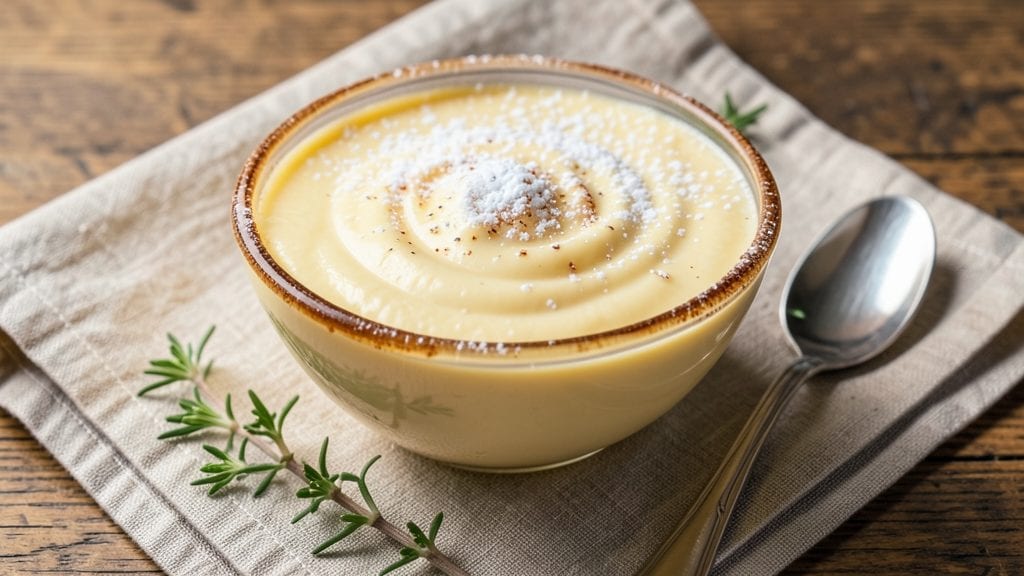
This cheese custard recipe delivers the perfect balance of velvety vanilla swirls and a golden, buttery crust that cracks just enough to reveal creamy perfection underneath. 💛 I first mastered it after years of watching my Nonna create similar desserts in her tiny Boston kitchen—her secret was patience, and that's exactly what this recipe demands.
The custard's silky texture comes from precise timing and temperature control, while the crispy top requires a technique most recipes skip.
What sets this apart is the dual-texture experience: the custard remains smooth and rich, while the top develops a delicate crispness that contrasts beautifully with each spoonful. You'll need just five key ingredients—eggs, cream, sugar, vanilla, and cheese—plus a few pantry staples for the crust.
The baking process is straightforward but requires attention to detail, particularly when it comes to the water bath that ensures a silky finish without curdling.
By the time it emerges from the oven, you'll have a dessert that looks as impressive as it tastes—golden swirls of vanilla custard peeking through a crackly, buttery crust.
The cheese adds depth of flavor that elevates it beyond basic custard, making it a showstopper for any dinner party or family gathering. This recipe has been tested multiple times to guarantee consistent results every time.
The best part? It scales effortlessly—whether you're serving six or twelve. For variations, consider adding caramel swirls or fresh berries before baking. Let's create this silky, comforting dessert that's sure to become a new favorite.
Ingredients for cheese custard
Six eggs, two cups cream, and cheese that makes it sing—simple buttery magic.
| Ingredient | Amount | Notes |
|---|---|---|
| Large Eggs 🥚 | 6 whole | Room temperature for even baking |
| Heavy Cream 🥛 | 2 cups | Full-fat for best texture |
| Granulated Sugar 🍚 | 1 ½ cups | White or light brown |
| Pure Vanilla Extract 💛 | 2 tbsp | High-quality, not imitation |
| Sharp White Cheddar Cheese 🧀 | 8 oz | Freshly grated, not pre-shredded |
| All-Purpose Flour 🌾 | ½ cup | For crust reinforcement |
| Unsalted Butter 🧈 | ½ cup | Cold, cubed for crust |
| Salt 🧂 | ½ tsp | Fine sea salt preferred |
| Vanilla Bean Paste 💛 | 1 tbsp | Optional for extra depth |
| Ground Cinnamon 🌿 | ½ tsp | For subtle warmth |
| Cornstarch 🌾 | 2 tbsp | Prevents curdling |
| Water 💧 | 1 cup | For water bath |
The cheese is non-negotiable here. Sharp white cheddar gives that perfect tangy bite, but Gruyère or Havarti work too if that's what you've got. Grab the block and grate it yourself—pre-shredded gets clumpy and ruins the texture. Whole Foods or local cheese shops have the best quality, but your regular grocery store's cheese counter works fine. For the eggs, room temperature is key—pull them out 30 minutes before baking. Heavy cream? Full-fat only—none of that skim stuff. The butter for the crust should be cold, straight from the fridge, not softened. Land O'Lakes or Plugrá are my go-tos for reliable quality.
No vanilla bean paste? Extra vanilla extract works, but you'll miss that little speckled depth. Running low on cornstarch? Arrowroot powder at the same amount does the same job. The cinnamon is totally optional, but it adds this cozy warmth that pairs perfectly with the vanilla. For the crust, if you don't have flour, crushed graham crackers make a decent substitute. And if you're feeling fancy, add a splash of heavy cream to the crust mix—it makes the top extra crispy. The sugar can be brown if you prefer a deeper caramel flavor, but white keeps things classic.
This custard is best made a day ahead—flavors meld beautifully after resting. Store it in an airtight container in the fridge for up to 5 days. The crust stays crispy for about 2 days, so serve it fresh if you can. To reheat, pop it in the oven at 350°F for 10 minutes—just enough to warm through without drying out. Freezes beautifully too—3 months max. Portion it into individual ramekins before freezing for perfect single servings.
Why You'll Love This Recipe
- No Egg Scramble: I just whisk eggs, cream, and cheese—no fancy techniques, no waiting for dough to rise. The custard thickens while you stir, and honestly? That’s it. Five ingredients, one bowl, and zero stress.
- Creamy Cheese Twist: Sharp white cheddar folds into the custard like a hug—salty, tangy, and rich, but balanced by vanilla’s warmth. It’s not sweet like pudding; it’s comforting, like a dessert that remembers it’s a meal.
- Leftovers? Yes, Please: This custard keeps beautifully for days, so I make a big batch and reheat portions for breakfast or a midnight snack. (Yes, I’ve done it at 2 a.m.—no judgment.) The texture stays silky, not grainy, every time.
- Budget-Friendly Luxury: Eggs, cream, and cheese are pantry staples, and this recipe stretches further than store-bought custards. I’ll be real: it’s the kind of dish that makes a cheap meal feel special without breaking the bank.
Step-by-step instructions for cheese custard recipe
Here's how to make this dreamy custard with a golden crust—no shortcuts, just perfect technique.
👨🍳 Step 1: Whisk Eggs and Cream Until Silky
In a large mixing bowl, whisk together the 6 whole Large Eggs and 1.5 cups Granulated Sugar until fully combined. The mixture should be pale yellow and slightly thickened—this takes about 3-4 minutes of steady whisking. I like to use a hand mixer for this step to ensure no lumps remain.
Next, add the 2 cups Heavy Cream, 2 tbsp Pure Vanilla Extract, and 1 tbsp Vanilla Bean Paste (if using). Whisk everything together until smooth and well incorporated. Here's the thing—don't rush this part. The cream should be fully blended so you don't get streaks later. Taste the mixture now—it should be sweet but not overpowering.
👨🍳 Step 2: Add Cheese and Thickeners for Stability
Grate the 8 oz Sharp White Cheddar Cheese using a fine grater—pre-shredded won't melt as smoothly. Add it to the egg mixture along with the 0.5 cup All-Purpose Flour, 0.5 tsp Salt, 0.5 tsp Ground Cinnamon, and 2 tbsp Cornstarch. Whisk vigorously for 2-3 minutes until the cheese is completely dissolved and the batter looks velvety.
This is where the magic happens—the cornstarch helps prevent curdling, while the flour adds structure. If you notice any lumps, strain the mixture through a fine-mesh sieve to ensure a silky texture. The batter should coat the back of a spoon but still flow smoothly—this consistency is crucial for that perfect custard texture.
🔥 Step 3: Prepare the Crust and Pre-Bake
Preheat your oven to 350°F. Cut 0.5 cup Unsalted Butter into small cubes and spread them evenly across the bottom of a 9-inch pie dish. Press the butter gently into the bottom so it covers every inch—this will create that buttery crispy top we're after.
Pour the custard mixture into the pie dish and smooth the top with a spatula. Place the dish in a larger baking pan and carefully pour the 1 cup Water into the bottom of the pan. This water bath helps the custard cook gently and evenly without curdling. Bake for 50-60 minutes until the edges are set but the center still jiggles slightly—it'll firm up as it cools.
⏰ Step 4: Chill and Set for Perfect Texture
Remove the custard from the oven and let it cool at room temperature for 15 minutes. Then, transfer it to the refrigerator and chill for at least 4 hours—overnight is even better. This long chilling time is what transforms the custard from liquid to that silky, creamy perfection.
When you're ready to serve, run a knife around the edges to loosen it from the dish. The top should be golden and crispy from the butter, while the inside remains smooth and rich. If you're feeling fancy, dust the top with a little extra cinnamon or a drizzle of caramel before serving. Trust me, the contrast of that crispy top with the creamy custard is worth the wait.
Pro Tips For Making Cheese Custard
- Whisk Eggs Cold: Grab that bowl of eggs straight from the fridge—no room temp nonsense. Cold eggs whip up lighter and smoother, and they’re less likely to scramble when they hit the hot cream later. I learned this after a custard turned into glue the first time I used eggs at room temperature.
- Grate Cheese Fine: Skip the shredder and use a box grater—you want cheese dust, not clumps. Sharp white cheddar melts best when it’s tiny, and it’ll distribute evenly without graininess. (Pro move: Pulse it in a food processor for 2 seconds if you’re impatient.)
- Temper the Cream: Heat the cream slowly—think simmer, not boil—then drizzle it into the egg mixture while stirring constantly. This stops the eggs from curdling like a science experiment gone wrong. I used to rush it and ended up with a sad, lumpy pudding.
- Strain Before Baking: Pour the custard through a fine-mesh sieve into your ramekins—yes, even if it looks perfect. You’ll catch any stray cheese bits or cooked egg bits that’ll ruin the silky texture. (Trust me, your future self will notice the difference.)
Best sauces and condiments for these flavors
Caramel Drizzle Magic
Nothing elevates cheese custard like a salted caramel drizzle—the perfect balance of sweet and salty that cuts through the richness. I make my caramel with 1 cup granulated sugar, ½ cup heavy cream, and a pinch of flaky sea salt, simmered until golden amber.
Let it cool slightly before drizzling over the chilled custard so it creates those gorgeous ribbons. For extra decadence, add 1 tbsp butter at the end for a glossy finish. 💛
Berry Compote Swirls
Fresh berries transform this custard into a summer showstopper. Simmer 1 cup mixed berries (strawberries, raspberries, or blueberries) with 2 tbsp sugar and 1 tsp lemon juice until they break down into a jammy consistency.
Spread a thin layer on the bottom of your pie dish before adding the custard mixture, then swirl it gently with a knife before baking. The berries will create pockets of fruity goodness throughout.
Honey-Lavender Glaze
For a floral twist, combine ¼ cup honey, 1 tbsp lemon juice, and 1 tsp dried culinary lavender in a small saucepan. Simmer for 3-4 minutes until fragrant, then strain out the lavender.
Drizzle this fragrant glaze over the custard just before serving—it adds a sophisticated aroma that pairs beautifully with the vanilla and cheese. I found this idea in an old French pastry book my Nonna had, and it became an instant family favorite.
Spiced Rum Reduction
Add a boozy kick with a spiced rum reduction that warms up the custard's flavors. Simmer ½ cup dark rum with 2 tbsp brown sugar and 1 cinnamon stick for 5 minutes, then strain and cool.
Drizzle over the custard and garnish with a sprinkle of ground nutmeg for warmth. This works especially well with a Gruyère cheese custard—the nutty, earthy notes complement the rum beautifully. 🍷
Toasted Nut Crunch
For texture lovers, toast ½ cup pecans or walnuts in a dry skillet over medium heat for 3-4 minutes until fragrant. Chop them coarsely and sprinkle over the custard right before serving. The nuts add a satisfying crunch that contrasts perfectly with the creamy custard.
I like to mix them with a pinch of sea salt for extra depth—it's like a little dessert party in every bite.
Nutrition facts
Frequently asked questions
Why does my cheese custard turn out grainy instead of silky?
Grainy custard usually means the cheese didn't dissolve completely or the eggs cooked too quickly. Always grate your own cheese and whisk the batter vigorously for 2-3 minutes to break up any lumps. For extra smoothness, strain the mixture through a fine-mesh sieve before baking. Also, never overbake—remove it when the center still jiggles slightly.
Can I make this cheese custard without a water bath?
Technically yes, but you risk curdling or uneven cooking. The water bath creates gentle, even heat that prevents the eggs from scrambling. If you skip it, bake at 325°F instead of 350°F and check frequently after 45 minutes. For best results, though, stick with the water bath method—it's what gives this custard its signature velvety texture.
What's the best cheese substitute if I don't have white cheddar?
Gruyère or Havarti work beautifully—they melt smoothly and add rich flavor. For something milder, try Monterey Jack or Colby Jack. Avoid pre-shredded cheese (it contains anti-caking agents that prevent proper melting). If you're feeling adventurous, Gouda or Provolone add a delicious tangy depth. Just reduce the amount by 1 oz if using a stronger cheese.
How do I fix a custard that's too runny after baking?
Runny custard usually means underbaking or too much liquid. If it's still warm, return it to the oven for 5-10 minutes at 350°F. For a chilled custard, sprinkle 1 tbsp cornstarch mixed with 2 tbsp cold milk over the top and let it sit for 10 minutes before serving. The cornstarch will thicken it slightly without altering the flavor. For future batches, ensure your oven is properly calibrated—many home ovens run hot.
Can I make individual portions instead of one big pie?
Use 6-ounce ramekins and reduce the recipe by half. For each ramekin, use 1 egg, ⅓ cup heavy cream, 2 oz cheese, and 1 tbsp butter at the bottom. Bake at 350°F for 30-35 minutes in a water bath. The smaller size ensures even cooking and a perfect crispy top. These make great individual desserts for dinner parties!