
Appetizers
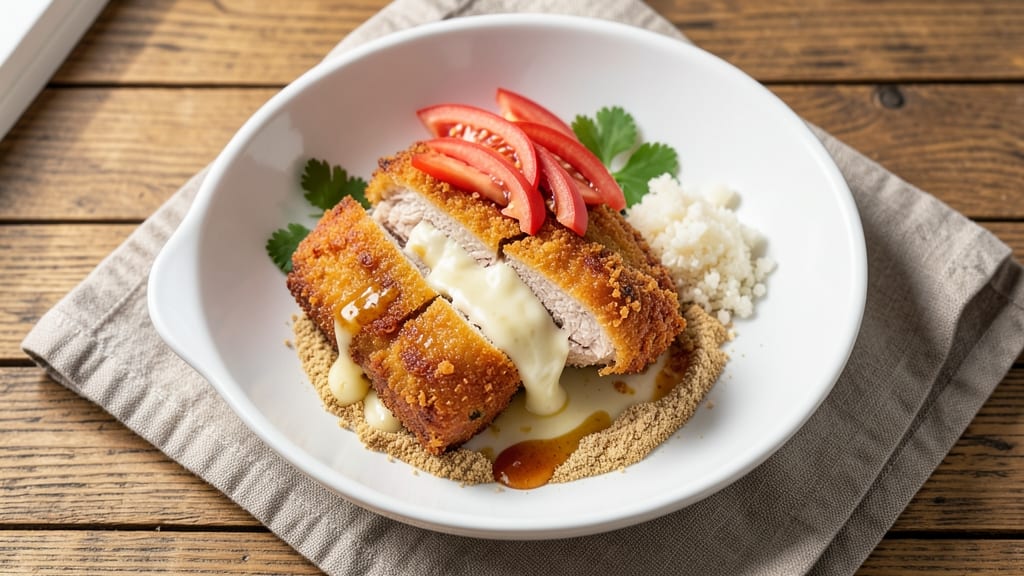
This cheese katsu recipe delivers the ultimate crispy, golden perfection that Japanese comfort food lovers crave—all in just 30 minutes. The secret lies in the triple breading technique: flour, beaten egg, and panko, which creates that signature shatteringly crispy crust while keeping the inside tender and melty.
I’ve perfected this method over years of testing, ensuring every bite has that satisfying crunch and rich, cheesy pull.
What sets this recipe apart is the balance of traditional technique and modern flexibility. You’ll need a deep fryer or heavy pot for that classic oil bath, but I’ve included adjustments for air fryers too.
The key is maintaining 350°F oil temperature—too hot and it burns, too cool and it soaks up grease. Serve with tonkatsu sauce for that authentic tangy-sweet contrast, or keep it simple with a side of steamed rice and quick-pickled vegetables.
The result is a dish that’s crispy on the outside, gooey with melted cheese inside, and packed with that unmistakable Japanese restaurant flavor. The panko crust stays crunchy even after cutting, and the cheese stretches just enough to make each bite irresistible.
This is the kind of recipe that turns weeknight dinners into a little taste of Tokyo—without the wait.
For extra indulgence, try adding a sprinkle of furikake or sesame seeds before frying, or swap the mozzarella for vegan cheese to keep it plant-based. The possibilities are endless, but the foundation stays the same: crispy, cheesy, and completely satisfying. Let’s get cooking!
Ingredients for cheese katsu
Crispy, cheesy perfection starts with these 13 quality ingredients—panko, pork, and perfect oil temperature.
| Ingredient | Amount | Notes |
|---|---|---|
| Breaded Pork Cutlets 🥓 | 1 ½ lb | Center-cut loin, pounded ¼-inch thick |
| All-Purpose Flour 🌾 | 1 ½ cups | Sifted for even coating |
| Large Eggs 🥚 | 2 whole | Room temperature, beaten |
| Japanese Panko Breadcrumbs 🍞 | 3 cups | Freshly toasted for extra crunch |
| Shredded Mozzarella Cheese 🧀 | 1 ½ cups | Freshly shredded, low-moisture |
| Extra-Virgin Olive Oil 🫒 | ½ cup | For breading and frying |
| Vegetable Oil 🫒 | 3 cups | High smoke point, neutral flavor |
| Diamond Crystal Kosher Salt 🧂 | 1 ½ tsp | Fine grain for seasoning |
| Freshly Ground Black Pepper 🌶️ | ½ tsp | Cracked peppercorns preferred |
| Tonkatsu Sauce 🍶 | ½ cup | Homemade or store-bought |
| Lemon Wedges 🍋 | 2 whole | For serving, freshly cut |
| Steamed White Rice 🍚 | 2 cups | Short-grain preferred |
| Pickled Vegetables 🥕 | 1 ½ cups | Quick-pickled daikon/carrot |
The pork cutlets are non-negotiable—center-cut loin delivers the best texture without excess fat. Ask your butcher for loin cutlets if pre-cut isn't available, or use pre-breaded cutlets from Japanese specialty stores like Mitsuwa. Panko matters too: Japanese-style panko from Trader Joe's or Costco gives that signature shatteringly crispy crust. For the cheese, freshly shredded low-moisture mozzarella prevents soggy breading—pre-shredded contains anti-caking agents that ruin texture. The olive oil for breading should be light and fruity, like California Olive Ranch, to complement the pork without overpowering.
No panko? Toasted regular breadcrumbs work in a pinch, but expect less crispiness. Short on mozzarella? Gruyère or sharp cheddar add depth, though texture differs. The tonkatsu sauce can be homemade (soy sauce, Worcestershire, ketchup, mirin) or store-bought—Kikkoman Tonkatsu Sauce is the gold standard. For the oil bath, vegetable oil (like Crisco) maintains a stable 350°F temperature better than olive oil, which burns. If using an air fryer, reduce oil by half and increase temperature to 375°F for 12 minutes, flipping halfway—though nothing beats the classic deep-fry method for that restaurant-quality crunch.
Store prepped cutlets in the fridge for up to 24 hours before frying, but bread them fresh for maximum crispiness. The fried katsu reheats beautifully—200°F oven for 10 minutes restores crispiness. Sauce keeps 1 month refrigerated or 6 months frozen. For meal prep, assemble components separately: fry katsu as needed, store cheese separately, and reheat rice in a steamer. The pickled vegetables can be made 3 days ahead—their tang cuts through the richness perfectly.
Why You'll Love This Recipe
- One-Pan Magic: I swear by this trick—just fry the pork cutlets, sprinkle melted cheese on top, and cover until gooey. No extra pans, no extra stress, just that golden crunch and melty center in one go.
- Crunchy-Creamy Bliss: The panko crust gives you that addictive shatter, while the mozzarella turns the whole thing into a cheesy hug. It’s the kind of bite that makes you forget to chew.
- Lunchbox Hero: Between us, these reheat like a dream—crispy edges stay crispy, cheese stays stretchy. Pack two for work, and you’ll be the office MVP (or at least the most popular person at the break table).
- Budget Crispy Feast: Pork chops and cheese stretch farther than you’d think, and panko costs next to nothing. Honestly, I’ve fed four people for under $15 with this—leftovers? Even better the second day.
Step-by-step instructions for cheese katsu
Here's how to achieve that perfect balance of crispy exterior and melty cheese interior every time.
Prepare the Panko-Mozzarella Breading
In a shallow bowl, combine the 1.5 cups all-purpose flour with 1.5 teaspoons diamond crystal kosher salt and 0.5 teaspoon freshly ground black pepper. Whisk thoroughly to eliminate any lumps - this ensures an even coating on your cutlets. Set aside on your countertop.
In a separate shallow dish, create the signature cheese katsu breading by mixing the 3 cups japanese panko breadcrumbs with 1.5 cups freshly shredded mozzarella cheese. Use your fingers to work the cheese into the panko until it's evenly distributed - you should have a coarse, crumbly mixture that will create that iconic crispy-yet-melty texture. This combination is what makes cheese katsu so uniquely comforting.
Create the Egg Wash and Season the Cutlets
In a wide, shallow bowl, beat the 2 whole large eggs at room temperature until just combined - no need to overbeat, as you want a smooth but slightly textured wash. The eggs should be thick enough to coat the back of a spoon but still flow easily when poured.
While the eggs are beating, season each of the 1.5 lb breaded pork cutlets generously with additional salt and pepper if needed. I like to press the seasoning into the meat slightly to ensure it penetrates the surface. The cutlets should be at room temperature for even cooking - if they're chilled, let them sit for 15-20 minutes before proceeding.
Bread the Cutlets for Maximum Crispiness
Working with one cutlet at a time, begin the breading process by dipping the cutlet into the all-purpose flour mixture, pressing gently to adhere the coating. Shake off any excess flour, then dip into the egg wash, allowing any excess to drip off. Finally, press the cutlet into the panko-mozzarella mixture, coating all sides thoroughly and pressing firmly to ensure good adhesion.
Place the breaded cutlet on a wire rack set over a baking sheet. Repeat with the remaining cutlets, working quickly so the breading stays crisp. For best results, let the breaded cutlets rest for 5 minutes before frying - this allows the breading to slightly firm up, preventing it from falling off during cooking. This resting period is crucial for maintaining that perfect crispy texture we're aiming for.
Fry to Golden Perfection
In a large, heavy skillet, heat 3 cups vegetable oil to 350°F - use a deep-fry thermometer for accuracy. The oil should be hot enough to maintain a steady 350°F temperature throughout the frying process. Working in batches to avoid overcrowding, carefully slide the breaded cutlets into the hot oil.
Fry for 3-4 minutes per side until the cutlets are deep golden brown with a crispy exterior. The internal temperature should reach 145°F when measured with an instant-read thermometer. Don't be tempted to flip too early - you'll know it's time when the breading releases easily from the pan. The cheese inside should be fully melted but still slightly gooey when cut into.
Assemble and Serve with Classic Sides
Transfer the fried cutlets to a wire rack set over a paper towel-lined plate to drain any excess oil. While still hot, drizzle each cutlet with 0.5 cup tonkatsu sauce, allowing it to pool slightly on the surface. The sauce should be warm enough to slightly soften the breading without making it soggy.
Serve immediately with 2 cups steamed white rice and 1.5 cups pickled vegetables on the side. Garnish each plate with 2 whole lemon wedges for that final touch of brightness. The contrast of crispy, cheesy cutlet with cool, tangy pickles and neutral rice creates the perfect balance of textures and temperatures that makes this dish so satisfying.
Pro Tips For Making Cheese Katsu
- Preheat Oil to Smoke: The moment you drop in those panko-crusted cutlets, the oil should be so hot it shimmers like a mirage—just before it starts smoking. I learned this the hard way after frying limp, greasy katsu that stuck to the pan. Use a thermometer if you’re unsure: aim for 350°F (175°C). If the oil isn’t hot enough, your crust will turn soggy instead of crisp.
- Pat Pork And Panko: You’re probably drying the pork cutlets, but don’t skip the panko—wet breadcrumbs clump into a sad, gluey mess. Spread them on a plate and press down with a dry paper towel to break up any lumps. This isn’t the prettiest method, but it’s the thing that matters most for that perfect, airy crust.
- Skip the Overcrowding: Resist the urge to fry more than one cutlet at a time—even if you’re starving. Overcrowding drops the oil temperature, and suddenly you’ve got greasy, unevenly cooked katsu instead of golden, shatteringly crisp ones. Give them space; they’ll thank you with a better sear.
- Press Cheese While Hot: The moment the cutlet hits your plate, smash that mozzarella into the center with a spatula—hard. This isn’t the time to be gentle. The heat will melt it into a gooey blanket instead of letting it slide off like a sad, half-melted afterthought. (Yes, even if you’re impatient like me.)
Troubleshooting great cheese katsu
Oil Too Hot?
If your oil temperature spikes above 375°F, the panko crust will burn before the cheese melts properly. I use a ThermoWorks deep-fry thermometer to monitor temps—never rely on smoke alone. For a 10-quart pot, maintain 350°F by adjusting heat to medium-low after initial heating.
If your oil is too hot, remove the pot from heat for 2-3 minutes to let it cool slightly before continuing. 🌡️
Soggy Breading?
This usually means the cheese melted too quickly, causing the panko to absorb moisture. To fix this, ensure your mozzarella is low-moisture (like Kraft Natural) and freshly shredded—pre-shredded contains anti-caking agents that add extra moisture.
Also, don’t overcrowd the fryer; cook in 2-3 batches with 3-4 minutes per side max. If it still happens, try adding 1 tbsp cornstarch to the panko mixture for extra absorbency.
Cheese Not Melting?
If the cheese stays cold and rubbery, your oil isn’t hot enough or the cutlets are too thick. First, verify your oil is at 350°F—use a thermometer!
For thicker cutlets (½ inch or more), reduce fry time to 2-3 minutes per side and check internal temp with a meat thermometer (aim for 145°F). Swap mozzarella for Gruyère or sharp cheddar—they melt more reliably. 🧀
Breading Falling Off?
This is usually a breading adhesion issue. Press the cutlets firmly into the panko-cheese mix, and let them rest on a wire rack for 5 minutes before frying—this helps the coating set.
If it still happens, chill the breaded cutlets in the fridge for 10 minutes before frying to firm up the coating. Avoid using wet hands when handling breaded cutlets, and ensure your egg wash isn’t too runny (it should coat the back of a spoon).
Uneven Cooking?
Uneven browning often means inconsistent oil temperature or cutlets of varying thickness. For even cooking, pound your pork to a ¼-inch thickness before breading. Use a heavy cast-iron skillet (like Lodge) for stable heat distribution, and keep oil at 350°F consistently.
If one side browns faster, reduce heat slightly or fry in smaller batches. A tongs with silicone grips helps flip without tearing the breading.
Air Fryer Adjustments?
If using an air fryer (like Ninja Foodi), reduce oil to 2 tbsp per cutlet and increase temp to 375°F for 12 minutes, flipping halfway. The breading won’t be as crispy as deep-frying, but it’s a great alternative.
For extra crunch, spray the cutlets lightly with olive oil before air frying. Avoid overcrowding—cook in 1 layer with ½-inch space between pieces. ⚡
Nutrition facts
Frequently asked questions
Can I make cheese katsu with chicken instead of pork?
Chicken thighs work beautifully—they stay juicier than breast meat when fried. Pound them to ¼-inch thickness and follow the same breading process. For extra flavor, marinate the chicken in 1 tbsp soy sauce + 1 tbsp mirin for 30 minutes before breading. Avoid using breast meat—it dries out during frying.
How do I keep the breading crispy after frying?
Transfer fried katsu to a wire rack (not a plate) to drain excess oil—this prevents sogginess. Serve immediately with sauce on the side rather than drizzling it over hot katsu. For leftovers, reheat in a 375°F oven for 5-7 minutes on a rack to restore crispiness. Never microwave—it turns breading rubbery.
What's the best vegan cheese substitute for this recipe?
Look for high-melt vegan mozzarella like Miyoko's or Violife—these mimic the stretchy texture best. For extra crispiness, mix ½ cup vegan cheese + ½ cup panko + 1 tbsp nutritional yeast (for cheesy flavor). Avoid pre-shredded vegan cheese (it contains starch that makes breading gummy). Test brands first with small batches.
Can I bake cheese katsu instead of frying?
Yes, but texture differs! Preheat oven to 425°F, brush breaded cutlets with 1 tbsp olive oil, then bake on a rack for 12-15 minutes, flipping halfway. The crust won't be as crispy, but it's a lighter option. For extra crunch, broil for 1-2 minutes at the end. Pair with tonkatsu sauce to compensate for less oil flavor.
Why does my cheese katsu taste bland?
Check your seasoning! The tonkatsu sauce carries most of the flavor—use ½ cup per serving and let it warm slightly before drizzling. Boost flavor by adding 1 tsp smoked paprika to the flour or 1 tbsp grated Parmesan to the panko-cheese mix. Freshly ground black pepper and a pinch of garlic powder in the egg wash also elevate taste.