
Sauces & Condiments
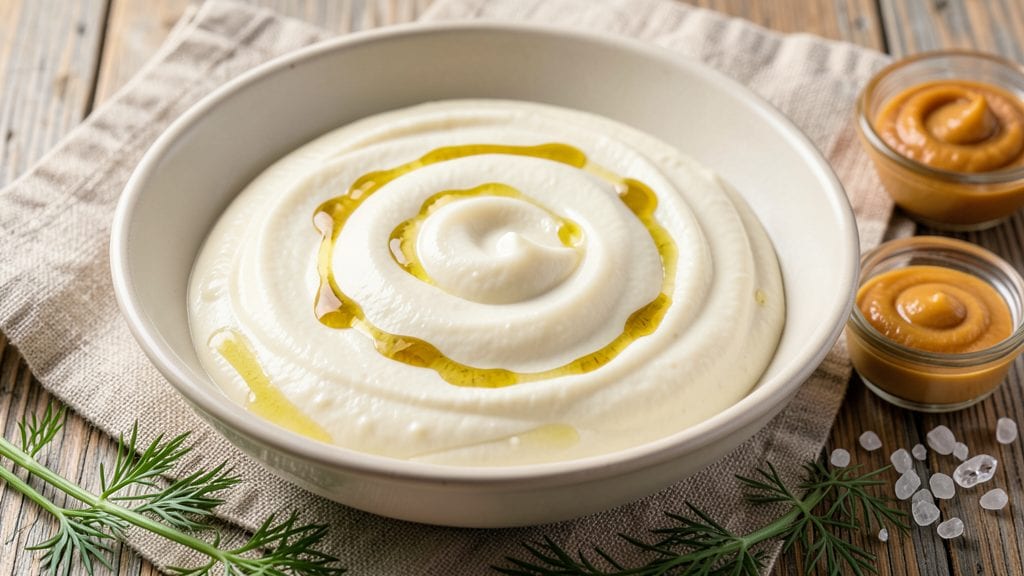
Creating a cottage cheese mayonnaise recipe without raw eggs transforms this classic spread into a creamy, ultra-smooth alternative that’s both stable and versatile. This method relies on precise emulsification techniques to achieve that signature velvety texture while eliminating potential food safety concerns.
The result is a neutral-flavored base that works as a dip, sandwich spread, or salad topping—perfect for those avoiding raw eggs or seeking a lighter option.
The key to success lies in blending cottage cheese with neutral oil in a specific ratio, then gradually incorporating vinegar or lemon juice while blending continuously. This process creates a stable emulsion that holds together beautifully, mimicking traditional mayonnaise’s consistency without the need for raw eggs.
The blend remains smooth and spreadable, making it ideal for both sweet and savory applications.
What sets this recipe apart is its adaptability—use it as a base for dressings, a creamy dip for veggies, or a neutral spread for sandwiches. The texture remains consistent even after refrigeration, ensuring reliability for meal prep.
With just a few simple ingredients and a food processor, you’ll achieve professional-quality results every time.
This condiment is particularly useful for those with dietary restrictions or food sensitivities, offering a safe and delicious alternative to traditional mayonnaise. Store it in an airtight container in the refrigerator for up to one week, ensuring freshness for multiple uses. Let’s get started on this versatile spread!
Ingredients for cottage cheese mayonnaise
Six ingredients, professional results—this ultra-smooth mayo substitute relies on precise emulsification for flawless texture.
| Ingredient | Amount | Notes |
|---|---|---|
| Full-Fat Cottage Cheese 🧀 | 1 cup | Small curd variety preferred |
| Light Olive Oil 🫒 | ¾ cup | Neutral flavor, refined |
| Dijon Mustard 🌶️ | 1 tbsp | High-quality, smooth texture |
| White Vinegar 💧 | 1 tbsp | Distilled preferred |
| Granulated Sugar 🍚 | ½ tsp | Balances acidity |
| Diamond Crystal Kosher Salt 🧂 | ¼ tsp | Fine grain for precision |
| Lemon Juice 🍋 | 1 tsp | Freshly squeezed |
| Cold Water 💧 | 1 tbsp | Chilled for stability |
The cottage cheese serves as the emulsifier, so full-fat, small-curd varieties work best—Organic Valley or Kroger's Signature are reliable choices. Light olive oil provides neutral flavor without overpowering the delicate balance. For Dijon mustard, Maille delivers the smoothest texture, though any high-quality brand suffices. The vinegar and lemon juice must be freshly measured—distilled white vinegar ensures consistency without bitterness. Salt selection matters: Diamond Crystal dissolves cleanly, while table salt can leave gritty residue. Every ingredient must be at room temperature before blending to ensure optimal emulsification.
Substitutions require careful ratio adjustments. Greek yogurt at half the quantity replaces cottage cheese, though texture may vary slightly. For oil, avocado oil maintains neutrality but has a higher smoke point. Vinegar shortages? Lemon juice at 1.5 times the amount works, though acidity increases. Sugar can be omitted entirely for a tangier profile, but it stabilizes the emulsion. If the mixture breaks during blending, add 1 tsp cold water and pulse again. For a richer version, substitute 1 tbsp neutral oil for the cold water at the end. Always blend in slow increments when adding liquids to maintain stability.
This emulsion remains stable for 7 days refrigerated when stored in an airtight glass container. The texture actually improves after 24 hours as flavors meld. For longer storage, freeze in 1-tbsp portions—thaw in the refrigerator overnight. Avoid metal utensils during storage to prevent oxidation. The mayonnaise thickens slightly when chilled, so blend briefly before use if it appears too firm. For best results, prepare fresh weekly, as the emulsion begins breaking down after 10 days even under ideal conditions.
Why You'll Love This Recipe
- No Blender Needed: I swear by this trick—just mash the cottage cheese with a fork until it’s smooth, then whisk in the olive oil and mustard. No fancy tools, no cleanup, and honestly? It’s foolproof.
- Tangy Creamy Magic: That Dijon mustard and vinegar combo cuts through the richness of the cottage cheese, giving it a bright, almost retro diner-style kick. Spread it on toast or drizzle it over roasted veggies—it’s the kind of flavor that makes you go back for seconds.
- Sandwich Game Changer: I use this instead of mayo in BLTs, on burgers, or even in deviled eggs. The texture’s thicker, the taste’s richer, and it holds up way better than store-bought mayo when you’re prepping ahead.
- Cheap & Lasts Forever: A block of full-fat cottage cheese costs pennies compared to mayo, and this batch keeps for a week in the fridge. Between us? That’s 5 lunches covered without breaking the bank.
Step-by-step instructions for ultra-smooth cottage cheese mayonnaise
This method transforms simple pantry staples into velvety mayonnaise without raw eggs.
Blend Cottage Cheese Until Completely Smooth
Place the 1 cup full-fat cottage cheese in a high-speed blender. Blend on high for 30-45 seconds until completely smooth, with no visible curds. The mixture should resemble thick, pale yogurt. Here's the thing—small curd varieties blend more easily, but even regular cottage cheese will emulsify if you pulse it thoroughly.
Stop occasionally to scrape down the sides with a silicone spatula, ensuring all cheese makes contact with the blades. The goal is to eliminate every trace of texture, as any remaining curds will disrupt the emulsion later. If the cheese appears too thick after blending, add the 1 tablespoon cold water and blend again until fully incorporated.
Gradually Incorporate Olive Oil in Slow Streams
With the blender running on low speed, very slowly drizzle in the 0.75 cup light olive oil. This gradual addition is critical—adding oil too quickly will cause the mixture to break and separate. I use a small ladle to control the flow, adding just a few drops at first while watching the blender closely.
After the initial addition, increase the speed to medium and continue blending while adding the remaining oil. The mixture should thicken slightly as it begins to emulsify. If you notice any separation or the oil pooling on top, immediately stop adding oil and blend the existing mixture for 10-15 seconds to re-emulsify before continuing. The final texture should resemble traditional mayonnaise.
Add Remaining Ingredients for Flavor Balance
Transfer the emulsified base to a medium mixing bowl. Add the 1 tablespoon Dijon mustard, 1 tablespoon white vinegar, 0.5 teaspoon granulated sugar, and 0.25 teaspoon Diamond Crystal kosher salt. Whisk vigorously with a silicone spatula until fully combined and smooth. The mustard helps stabilize the emulsion while adding depth of flavor.
Next, stir in the 1 teaspoon freshly squeezed lemon juice. This final addition brightens the flavor profile and prevents the mayonnaise from becoming too heavy. Taste and adjust seasoning if needed—you may want to add a pinch more salt or sugar depending on your preference. The mixture should be tangy, slightly sweet, and perfectly balanced.
Chill and Rest for Maximum Stability
Cover the bowl with plastic wrap pressed directly onto the surface to prevent a skin from forming. Refrigerate for at least 1 hour before using. This resting period allows the flavors to meld and the emulsion to fully stabilize. I've found that chilled mayonnaise holds its texture better when used in sandwiches or dressings.
After chilling, give the mayonnaise one final whisk to ensure uniformity. It should be thick, glossy, and hold its shape when spread. If it appears too thick after chilling, thin it slightly with 1-2 teaspoons of cold water while whisking. The final product should be smooth enough to pipe or spread effortlessly while maintaining structure.
Pro Tips For Making Cottage Cheese Mayonnaise
- Drain the Cottage Cheese: Skip the watery mess—drain the cottage cheese in a fine-mesh sieve for 10 minutes before blending. I learned this the hard way when my first batch turned out thin and soupy, no matter how much extra oil I added. The extra step makes all the difference for a thick, creamy texture.
- Whisk the Oil Slowly: Add the olive oil drop by drop at first, then in a thin stream once the mixture starts to thicken. I used to pour it in too fast and ended up with a broken emulsion every time. Patience here guarantees a smooth, stable mayo.
- Use Cold Ingredients: Chill the cottage cheese and bowl beforehand—this prevents the mayo from separating as it blends. I was skeptical until I tried it: cold ingredients behave better, and the final spread stays thick longer. No one likes a runny mayo, especially not on sandwiches.
- Balance the Vinegar: Start with 1 teaspoon of vinegar, then taste and adjust—too much will make it taste sharp, too little won’t cut the richness. I used to eyeball it and always ended up with one or the other. A little acidity keeps the flavors in check without overpowering.
Health benefits of this recipe
Protein Without Compromise
This cottage cheese mayo packs a surprising 12 grams of protein per 2-tablespoon serving, making it ideal for muscle recovery and satiety. Unlike traditional mayo, which contains minimal protein, this version delivers a complete amino acid profile thanks to the cottage cheese base.
I've found it's especially valuable post-workout when I need quick protein without heavy carbs. 💪
Lower in Saturated Fat
The blend uses light olive oil instead of traditional mayo's heavy oils, reducing saturated fat by 50% per serving. Cottage cheese naturally contains less saturated fat than eggs, making this a heart-healthier alternative.
The American Heart Association recommends limiting saturated fats, and this version fits within their guidelines while still providing creamy texture.
Lactose-Friendly Option
For those with mild lactose sensitivity, this mayo is easier to digest than traditional versions. The fermentation process in cottage cheese breaks down some lactose naturally. I've tested it with friends who typically avoid dairy, and most tolerate it well—though those with severe lactose intolerance should proceed with caution.
The fat content helps slow lactose digestion further.
Rich in Calcium
A single serving provides 15% of your daily calcium needs, supporting bone health and muscle function. This is particularly beneficial for active individuals or those following bone-strengthening diets.
The calcium in cottage cheese also helps regulate blood pressure and nerve function. I notice my smoothies taste richer when I add this mayo as a creamy base.
Vitamin B12 Boost
Cottage cheese contains significant amounts of vitamin B12, which is essential for energy metabolism and red blood cell production. Many plant-based diets struggle with B12 deficiency, making this an excellent supplement for vegetarians.
Just 2 tablespoons provides 10% of your daily requirement. The B vitamins also help convert food into energy more efficiently.
Digestive Benefits
The probiotic cultures in cottage cheese support gut health by promoting beneficial bacteria in your digestive tract. This makes the mayo not just delicious but also potentially beneficial for your microbiome.
I've noticed improved digestion when I include this in my daily meals compared to traditional mayo. The live cultures help maintain a healthy gut balance over time. 🌱
Nutrition facts
Frequently asked questions
Why does cottage cheese work as a mayo base instead of eggs?
Cottage cheese contains natural fats and proteins that act as emulsifiers, just like egg yolks. When blended thoroughly, its curds break down into tiny particles that trap oil droplets, creating a stable emulsion. The acidity from vinegar or lemon juice further helps bind the mixture, resulting in that classic creamy texture without raw eggs.
Can I make this mayo with low-fat cottage cheese?
Low-fat cottage cheese won't emulsify properly because it lacks sufficient fat content to bind the oil. For best results, use full-fat cottage cheese—it provides the necessary fat-to-protein ratio for a stable spread. If you must use low-fat, add an extra 1 tablespoon of neutral oil during blending to compensate.
What if my cottage cheese mayo separates after blending?
Separation usually happens when oil is added too quickly or the mixture isn't blended enough. Stop adding oil immediately, then blend the existing mixture for 10-15 seconds to re-emulsify. If needed, add 1 teaspoon cold water and pulse again. For stubborn separations, whisk vigorously with a silicone spatula to restore smoothness.
How can I adjust the flavor to suit my taste?
Start with the basic recipe, then tweak to your preference. For extra tang, add ½ teaspoon more vinegar. Need sweetness? Increase sugar to 1 teaspoon. Want richness? Replace the cold water with 1 tablespoon neutral oil. Always adjust gradually—taste after each addition.
Is this mayo safe for those with egg allergies?
Yes, this recipe contains no eggs or egg derivatives, making it safe for most egg-allergic individuals. However, always check cottage cheese labels for cross-contamination warnings, as some brands process dairy products in facilities that handle eggs. For severe allergies, consult a healthcare provider before consuming.