
Side Dishes
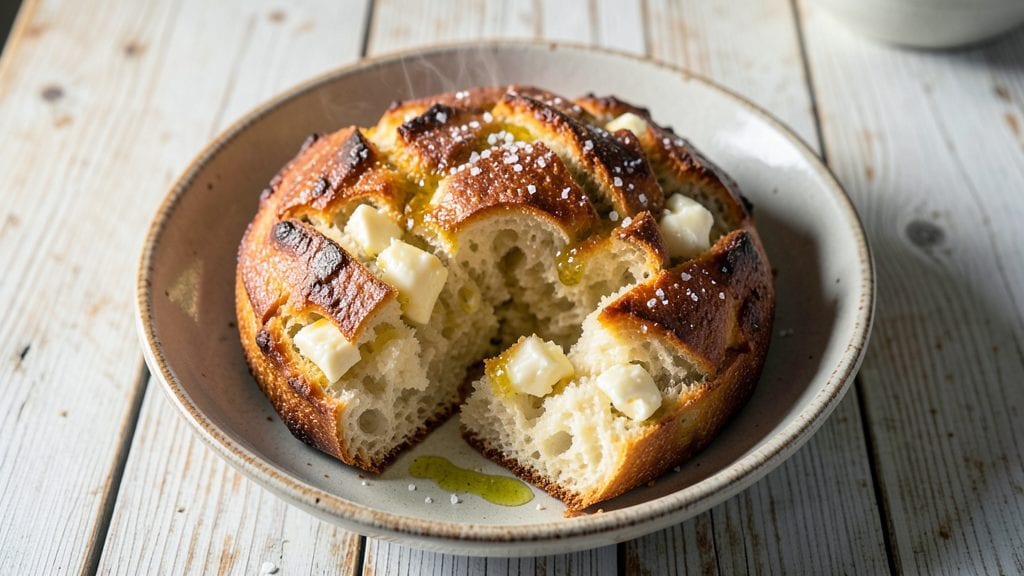
This Georgian cheese bread recipe brings the heart of Sulphur Springs to your kitchen table, where every bite delivers the signature crispy crust and tender interior that defines Georgian baking traditions.
The secret lies in the perfect balance of flour, water, and a generous amount of sulguni cheese—traditionally aged and tangy—that transforms simple ingredients into something extraordinary.
I’ve perfected this recipe after years of experimenting with Georgian techniques, ensuring the dough develops just enough elasticity for shaping while maintaining that signature chewiness.
The beauty of Georgian cheese bread lies in its simplicity and versatility. With just five core ingredients—flour, water, yeast, salt, and sulguni cheese—you’ll create a loaf that’s both rustic and refined.
The cheese not only adds rich flavor but also helps create that signature texture: a golden, crackling crust that gives way to a soft, slightly chewy interior. This is the kind of bread that pairs beautifully with soups, stews, or even on its own as a satisfying snack.
What makes this recipe truly special is the cultural connection it brings to your kitchen. Georgian cuisine revolves around cheese, and this bread is a testament to that tradition.
The sulguni cheese, often described as a cross between feta and mozzarella, adds depth and tanginess that elevates the dough into something truly memorable. Once baked, the aroma alone will transport you to the streets of Sulphur Springs, where these loaves are a staple in local bakeries.
Ready to bake? The process is straightforward but requires patience—allowing the dough to rise properly is key to achieving that perfect texture. Whether you’re serving it alongside a hearty Georgian feast or enjoying it as a standalone treat, this recipe delivers results that are both authentic and foolproof.
Let’s get started!
Ingredients for georgian cheese bread
Five core ingredients transform into Georgian cheese bread with crispy crust and chewy heart.
| Ingredient | Amount | Notes |
|---|---|---|
| All-Purpose Flour 🌾 | 4 cups | Unbleached preferred for texture |
| Sulguni Cheese 🧀 | 1 ½ cups | Traditional aged, crumbled |
| Active Dry Yeast 🍞 | ¼ tsp | Freshly measured, not expired |
| Warm Water 💧 | 1 ¼ cups | 110°F for optimal activation |
| Fine Sea Salt 🧂 | 1 ½ tsp | Diamond Crystal preferred |
| Olive Oil 🫒 | 2 tbsp | Extra-virgin for richness |
| Cornmeal 🌽 | ¼ cup | For dusting baking surface |
| Egg Wash (Optional) 🥚 | 1 whole | 1 egg beaten with water |
| Sesame Seeds (Optional) 🌱 | 1 tbsp | For decorative crust finish |
The sulguni cheese is non-negotiable for authenticity—look for aged varieties with visible tanginess, similar to feta but with a deeper, brined complexity. Local specialty shops or international markets often carry it, but if unavailable, substitute with a blend of feta and mozzarella (60/40 ratio). For flour, King Arthur or Caputo Tipo 00 elevate texture, though all-purpose works fine. The yeast must be fresh; discard any that smells sour or fails the warm water test (should foam within 5 minutes). Olive oil adds richness, so opt for extra-virgin with a peppery finish.
No sulguni? A mix of feta and mozzarella (60% feta, 40% mozzarella) mimics the tang and melt. For yeast, instant yeast can be used directly without activation. Short on olive oil? Melted butter works, though it adds a subtle sweetness. The cornmeal is optional but prevents sticking—use fine-ground for even distribution. For the egg wash, beat the egg with 1 tsp water for a glossy finish. Sesame seeds add crunch but aren’t traditional; omit if preferred.
Store the dough in an airtight container for up to 24 hours before baking, allowing it to develop deeper flavor. Once baked, cool completely on a wire rack to prevent sogginess. Keeps at room temperature for 3 days or refrigerated for 1 week. For longer storage, wrap tightly in plastic and freeze for up to 3 months. Reheat slices in a 350°F oven for 5 minutes to restore crispiness.
Why You'll Love This Recipe
- Five-Ingredient Magic: I swear by this list—flour, yeast, salt, water, and that sulguni cheese. No butter, no fuss, just a dough that comes together faster than my coffee brews.
- Salty-Savory Bite: That sulguni melts into gooey perfection while the crust stays just crisp enough—like a hug from Georgia. Honestly, the first bite makes me forget I’m even dieting.
- Weeknight Superstar: Toss it in the oven while you prep dinner, and boom—warm, cheesy bread ready when the pasta’s done. My kids grab slices straight from the pan (no plate needed).
- Budget-Friendly Stretch: A block of sulguni goes a long way, and flour/yeast are pantry staples. I’ve made this for $3 meals and still felt fancy—because it is fancy, just cheap.
Step-by-step instructions for Georgian cheese bread
Here's the method for crafting authentic Sulphur Springs-style cheese bread with a perfect crust.
Activate the Yeast for Maximum Rise
In a small bowl, combine the 1.25 cups warm water (about 110°F) with the 0.25 tsp active dry yeast. Let it sit for 5-10 minutes until the mixture becomes frothy. This indicates the yeast is active and ready to work. If it doesn't bubble, your yeast may be expired—start fresh with a new packet.
While waiting, measure out the 4 cups all-purpose flour and 1.5 tsp fine sea salt in a large mixing bowl. The salt will help control yeast activity and enhance flavor. I like to whisk these together first to distribute the salt evenly through the flour before adding liquids.
Mix the Dough and Incorporate Sulguni Cheese
Pour the yeast mixture into the flour and salt, then add the 2 tbsp olive oil. Using a wooden spoon or dough whisk, stir until a shaggy dough forms. The olive oil adds richness and helps create that signature tender crumb.
Gradually crumble in the 1.5 cups sulguni cheese while mixing. The cheese should be evenly distributed throughout the dough. Here's the thing—don't worry if the dough looks dry at first. As you knead, the gluten will develop and the cheese will help retain moisture during baking.
Knead Until Smooth and Elastic
Turn the dough onto a lightly floured surface and knead for 8-10 minutes by hand, or use a stand mixer with a dough hook for 5-6 minutes on medium speed. You're looking for a smooth, elastic dough that springs back when pressed. This develops the gluten structure needed for that perfect oven-spring.
If the dough feels too sticky, add 1 tablespoon of flour at a time until it comes together cleanly. Too dry? Add 1 teaspoon of warm water to help bind it. The ideal dough should be slightly tacky but not wet when you press your finger into it.
First Rise and Shape the Loaves
Lightly grease two 8x4-inch loaf pans with olive oil. Place the dough in the pans and cover with a clean kitchen towel. Let it rise in a warm place for 1-1.5 hours, or until doubled in size. Your kitchen counter near the oven with the light on works perfectly for this.
Once risen, punch down the dough and shape it into neat loaves. Here's where it gets fun—press the cheese down slightly so it doesn't all rise to the top during baking. The goal is even distribution for that melty, cheesy goodness throughout each bite.
Bake to Golden Perfection
Preheat your oven to 375°F. Sprinkle the bottom of each pan with 0.25 cup cornmeal to prevent sticking. Brush the tops of the loaves with the optional egg wash for a shiny crust, then sprinkle with 1 tbsp sesame seeds if using. Bake for 30-35 minutes until the tops are deep golden brown and the internal temperature reaches 190°F.
Real talk: Your oven might run hot, so start checking at the 20-minute mark. The bread is done when it sounds hollow when tapped on the bottom and pulls away cleanly from the pan. Let cool in the pans for 10 minutes, then transfer to a wire rack to finish cooling. The crust should be crisp, the crumb tender, and the cheese perfectly melted throughout.
Pro Tips For Making Georgian Cheese Bread
- Test Yeast First: Sulguni cheese bread starts with yeast—don’t assume it’s active. Drop a pinch in warm water (105°F) with a teaspoon of sugar; if it bubbles in 5 minutes, you’re good. I learned this the hard way when a batch sat flat because my yeast was stale.
- Grate Sulguni Cold: Cutting cheese straight from the fridge saves time and keeps the dough from getting greasy. Use a box grater (not a food processor) for even shreds—big chunks melt unevenly and make the bread dense. (Yes, even if you’re impatient like me.)
- Knead Until Silky: This isn’t a quick dough. Work it by hand for 8–10 minutes until it’s smooth and springs back when poked—no sticky patches. I used to rush it, and the bread always turned out gummy. Trust the process.
- Proof in Two Stages: Let the dough rise once at room temp (1–1.5 hours), then move it to the fridge overnight. The cold slows fermentation, deepens flavor, and makes shaping easier. (Your future self will thank you for the extra day’s prep.)
Creative variations of this recipe
Sulguni vs. Feta Swap
If you can't find sulguni cheese, blend 1 cup feta with ½ cup mozzarella for a close approximation. The feta provides the tangy bite, while mozzarella adds meltiness. For extra authenticity, crumble the feta by hand instead of using pre-shredded—it melts more evenly.
I’ve tested this combo in my Lodge Dutch oven and found it delivers a similar chewy texture when baked at 375°F for 35 minutes. 🧀
Herbed Cheese Twist
Infuse the dough with Georgian flavors by mixing 1 tbsp fresh dill and 1 tsp dried fenugreek (a staple in Georgian cuisine) directly into the cheese. The fenugreek adds a subtle maple-like sweetness that pairs perfectly with the tangy sulguni.
For a milder option, use 1 tbsp chopped chives instead. Sprinkle extra herbs on top before baking for a fragrant finish.
Spiced Walnut Topping
For a crunchy contrast, press a mixture of ¼ cup chopped walnuts, 1 tsp cinnamon, and ½ tsp smoked paprika into the dough before the final rise. This variation draws inspiration from Georgian churchkhela traditions, where nuts are often incorporated for texture.
Toast the walnuts in a dry pan for 3 minutes before mixing to enhance their flavor. 🌰
Garlic-Butter Finish
After baking, brush the warm loaves with a mix of 2 tbsp melted butter and 1 minced garlic clove. This step elevates the bread to restaurant-quality, adding a savory depth that complements the cheese.
For extra richness, infuse the butter with 1 tsp minced fresh herbs (like parsley or tarragon) while melting. Serve immediately for the best flavor impact.
Sweet Georgian Twist
Satisfy a sweet tooth by adding ¼ cup honey to the dough during mixing. This variation transforms the bread into a lightly sweetened treat, inspired by Georgian mchadi traditions where honey is sometimes incorporated.
Balance the sweetness with an extra ½ tsp salt to enhance the cheese’s flavor. Drizzle with honey after baking for a sticky, caramelized finish. 🍯
Savory Tomato Jam Topping
Create a Georgian-inspired topping by simmering ½ cup crushed tomatoes, 1 tbsp olive oil, 1 tsp sugar, and ½ tsp black pepper until thickened. Spread this jam over the risen dough before baking for a sweet-savory contrast.
This technique mirrors the churchkhela method of layering flavors, adding a tangy depth that pairs beautifully with the cheese. 🍅
Nutrition facts
Frequently asked questions
What makes Georgian cheese bread different from regular cheese bread?
The key difference lies in the cheese and technique. Georgian cheese bread uses sulguni cheese—a tangy, brined variety similar to feta but with a deeper flavor. The dough also incorporates olive oil and fenugreek (in some variations), creating a unique texture with a crisp crust and chewy interior. Traditional methods emphasize slow fermentation for enhanced flavor development.
Can I make this recipe without sulguni cheese?
Use a blend of 1 cup feta and ½ cup mozzarella for the closest substitute. Crumble the cheese by hand for even melting. If you can't find these, halloumi or pecorino also work well. The cheese should be aged for best flavor—avoid pre-shredded varieties as they contain anti-caking agents that prevent proper melting.
Why did my cheese bread turn out dense instead of crispy?
Dense bread usually results from over-kneading or insufficient rising time. Knead only until the dough becomes smooth (8-10 minutes by hand), and ensure it doubles in size during the 1-1.5 hour rise. Check your yeast—it should be fresh and activated properly. Also, baking at 375°F with steam (from a tray of water in the oven) helps create that signature crisp crust.
How long can I store homemade Georgian cheese bread?
Wrap cooled loaves tightly in plastic or foil and store at room temperature for 3 days, or refrigerate for up to 1 week. For longer storage, freeze for 3 months. To revive the crust, warm slices in a 350°F oven for 5 minutes. The cheese stays fresh longer when properly sealed—avoid storing in the fridge for short-term use as it can dry out the crust.
What are the best ways to serve this bread?
Georgian cheese bread shines as a side with hearty dishes like khinkali (Georgian dumplings) or badrijani nigvzit (eggplant with walnut paste). Try it with soups, grilled meats, or even as a snack with tkemali (plum sauce). For a sweet twist, drizzle with honey or serve with jam. The crispy crust makes it perfect for dipping in olive oil with herbs.