
Appetizers
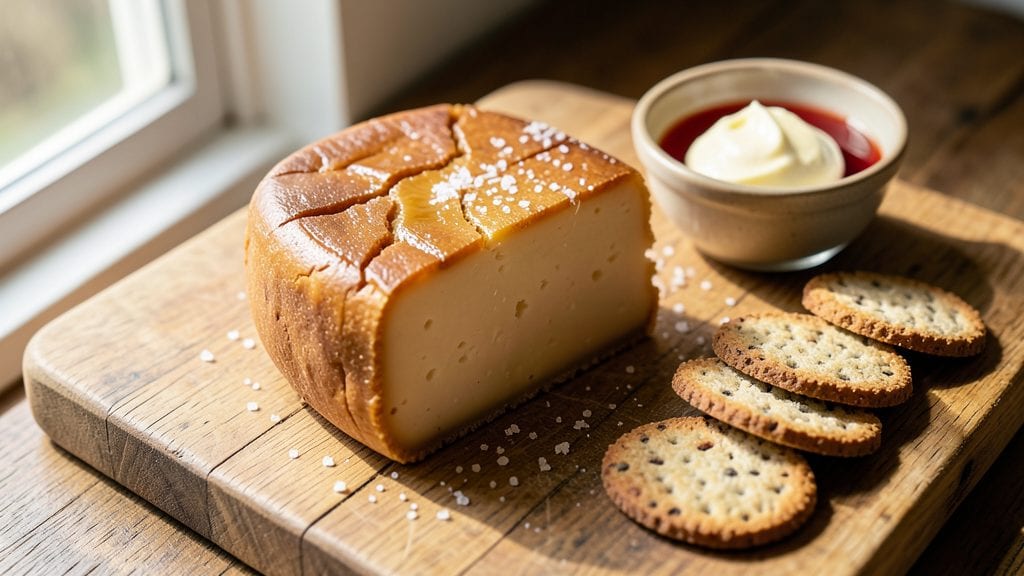
This gjetost cheese recipe introduces you to Norway’s beloved caramelized brown cheese, a sweet, crumbly treasure that transforms simple crackers into a Nordic delicacy. The process is straightforward yet rewarding—melting fresh cow’s milk into a rich, golden spread with a distinct caramelized depth that’s addictively sweet.
I first discovered gjetost during a trip to Bergen, where locals served it with crispbread and cloudberry jam, and it quickly became a staple in my kitchen.
The magic lies in the slow, controlled caramelization of the milk, which develops a rich, buttery flavor with a hint of molasses-like sweetness. Unlike traditional cheeses, gjetost requires no aging—just patience as the milk reduces and thickens into a spreadable, crumbly texture.
This recipe delivers authentic results without requiring specialty equipment, making it accessible for home cooks while staying true to its Nordic roots.
Once complete, you’ll have a batch of gjetost cheese that’s perfect for spreading on rye crackers, pairing with fresh berries, or even incorporating into desserts like cheesecakes. The texture is uniquely satisfying—crumbly yet smooth, with a caramelized aroma that fills your kitchen.
Whether you’re serving it as an appetizer or using it in baking, this cheese brings a touch of Scandinavian charm to any table.
Ready to create something extraordinary? This recipe isn’t just about making cheese—it’s about capturing the essence of Norwegian tradition in your own kitchen. Let’s get started with a method that’s both simple and deeply rewarding.
Ingredients for gjetost cheese
Four cups of milk and a pinch of Nordic tradition transform into this caramelized cheese treasure.
| Ingredient | Amount | Notes |
|---|---|---|
| Fresh Whole Cow's Milk 🥛 | 4 cups | Whole milk for richness |
| Unsalted Butter 🧈 | ½ cup | Cultured butter preferred |
| White Vinegar 🍶 | 2 tbsp | For acidulation process |
| Granulated Sugar 🍚 | ¼ cup | Light brown preferred |
| Diamond Crystal Kosher Salt 🧂 | 1 tsp | Fine grain preferred |
| Rye Crackers 🍞 | 12 whole | For serving and texture |
| Cloudberry Jam 🍓 | ½ cup | Nordic-style preferred |
| Heavy Cream 🥛 | ¼ cup | Optional for richness |
| Fresh Lemon Juice 🍋 | 1 tbsp | Brightens final flavor |
| Ground Cinnamon 🌿 | ½ tsp | For subtle warmth |
| Cardamom Pods 🌸 | 2 whole | Lightly crushed |
| Honey 🍯 | 1 tbsp | For finishing drizzle |
The milk quality matters most—organic whole milk from a local dairy delivers the deepest caramel notes. I always grab mine from Whole Foods or Trader Joe's when possible, but any high-fat milk works. The butter should be cultured (like Plugrá if you can find it) for that authentic tang. For the vinegar, apple cider vinegar adds subtle complexity, but white vinegar works fine. The sugar should be light brown—it caramelizes beautifully and adds that molasses-like depth. If you're feeling adventurous, Norwegian cloudberries can be simmered with the sugar for a true Nordic touch.
No cultured butter? Regular unsalted butter works too, but you'll miss that subtle tang. Running short on vinegar? Lemon juice at double the amount gets you close. The cardamom pods can be swapped for ground cardamom at half the amount, but the whole pods infuse better. For the crackers, Wasa or Ryvita are perfect, but any sturdy rye cracker does the trick. The cloudberry jam? Lingonberry jam is a great substitute if you can't find cloudberries. And if you're feeling extra, a splash of aquavit in the final drizzle adds an authentic Scandinavian aroma.
This cheese keeps beautifully in an airtight container for up to 2 weeks in the fridge, though it's best enjoyed within 5-7 days for peak texture. For longer storage, portion into small jars and freeze for up to 3 months. The caramelized aroma intensifies as it sits, so make extra—it's perfect for spreading on toast, mixing into cookie dough, or even swirling into vanilla ice cream. I always keep a jar in my fridge for spontaneous cracker pairings with cheese and fruit.
Why You'll Love This Recipe
- Pantry Magic: I swear by this recipe because it turns three things I always have—milk, vinegar, and sugar—into something special. No special equipment, no last-minute grocery runs. Just heat, stir, and wait.
- Sweet-Salty Magic: That caramelized sugar crust? It’s the star. The vinegar cuts through the richness of the butter, and the salt? Just enough to make every bite feel like a little Norwegian hug—creamy, tangy, and perfectly balanced.
- Breakfast to Dessert: Honestly, I make this for everything. Spread it on toast when I’m in a rush, use it to sweeten yogurt for my kids, or even melt it over vanilla ice cream when I’m feeling fancy. It’s the ultimate flavor chameleon.
- No-Waste Wonder: Between us, this recipe is my secret for using up that half-empty milk jug before it goes bad. The butter and sugar are cheap staples, and the leftovers? They last for weeks in the fridge, ready to brighten up whatever I’m craving.
Step-by-step instructions for Nordic caramelized sweetness on crackers
Transform simple dairy into rich, caramelized gjetost cheese with just a few precise techniques.
Acidulate and Evaporate the Milk Mixture
In a heavy-bottomed saucepan, combine the 4 cups fresh whole cow's milk and 0.5 cup unsalted butter over medium heat. Stir occasionally until the butter melts completely and the mixture reaches 185°F—this is critical for proper texture development. Here's the thing: you'll notice small curds forming as the milk heats, but don't strain them yet.
Once at temperature, remove from heat and immediately whisk in the 2 tablespoons white vinegar. The mixture will thicken dramatically as it curdles. Let it sit undisturbed for 10 minutes while the acid works its magic. You're creating the foundation for that distinctive caramelized flavor—this step can't be rushed.
Strain and Cook the Curds
Line a colander with cheesecloth or a clean kitchen towel and strain the curdled mixture, pressing gently to extract all liquid. Return the curds to the saucepan and cook over low heat for 30-40 minutes, stirring frequently with a wooden spoon. You're looking for a thick, paste-like consistency that coats the back of the spoon.
During this time, add the 0.25 cup granulated sugar and 1 teaspoon diamond crystal kosher salt, stirring until completely dissolved. The sugar will begin to caramelize slightly, developing that signature gjetost color and flavor. Watch carefully—if the mixture starts to brown too quickly, reduce the heat immediately to prevent burning.
Finish with Cream and Spices
Remove the saucepan from heat and stir in the 0.25 cup heavy cream, 1 tablespoon fresh lemon juice, 0.5 teaspoon ground cinnamon, and the 2 lightly crushed cardamom pods. The cream will lighten the texture slightly while adding richness. Let the mixture cool to 120°F—this prevents the spices from releasing bitterness and allows their flavors to meld properly.
Here's where it gets interesting: the cardamom pods should infuse subtle floral notes without overpowering. If you're using whole pods, remove them after 10 minutes of cooling. For an extra touch, drizzle in the 1 tablespoon honey and stir until fully incorporated. The honey adds a delicate floral sweetness that complements the caramelized depth.
Set and Serve with Crackers
Transfer the cheese mixture to a shallow dish and let it cool completely at room temperature for 2 hours. This allows the sugars to fully caramelize and the texture to set properly. You'll notice the surface develop a glossy sheen and slight crackling—this is your indication that the transformation is complete.
To serve, spread the gjetost cheese generously on the 12 whole rye crackers. Top each with a dollop of the 0.5 cup cloudberry jam for a perfect balance of sweet-tart contrast. The rye crackers provide the perfect textural base, while the jam adds Nordic-inspired brightness that cuts through the richness of the cheese. Store any leftovers in an airtight container in the refrigerator for up to 1 week.
Pro Tips For Making Gjetost Cheese
- Acidify Slowly: Drizzle the white vinegar into the warm milk gradually—about 1 tablespoon at a time—while stirring constantly. I learned this the hard way: dumping it all at once curdles the milk unevenly, and you’ll end up with a lumpy mess that’s impossible to strain properly.
- Use Cold Milk: Chill your whole milk overnight before starting—yes, even if you’re eager to begin. Cold milk curdles more predictably when acidified, and the cheese will develop a smoother, less grainy texture. I was skeptical until I tried it; the difference is noticeable.
- Strain for Hours: Skip the rush—let the whey drain for at least 8 hours, ideally overnight. The longer you wait, the firmer and less watery your gjetost will be. I used to cut corners here, and my cheese always ended up too soft and crumbly.
- Sweeten Last: Hold off on adding sugar until after the cheese has fully drained and is ready to press. If you mix it in too early, the moisture gets trapped, and your gjetost will stay damp instead of achieving that signature caramelized sweetness. Trust the process—your future self will thank you.
Serving suggestions for leftovers
Classic Nordic Spread
Serve your homemade gjetost on Wasa crispbread or Ryvita rye crackers—the sturdy texture contrasts perfectly with the cheese's caramelized richness. I like arranging them on a wooden board with cloudberry jam or lingonberry preserves for that authentic Nordic touch.
The jam's tartness balances the sweetness, creating a harmony that reminds me of my first taste in Bergen. 🌟
Sweet Pairings
Fresh blackberries or raspberries add vibrant color and juicy acidity that cuts through the dense cheese. I often sprinkle the berries with a pinch of flaky sea salt to enhance their natural sweetness.
For an extra Nordic twist, try dried cloudberries—their tart, jammy flavor pairs beautifully with the caramelized notes. 🍓
Savory Contrasts
While gjetost is traditionally sweet, it also works surprisingly well with savory elements. Try pairing it with smoked salmon on brown bread for a Scandinavian open-faced sandwich. The salty fish and buttery bread create a perfect contrast to the sweet, crumbly cheese.
I’ve also used it as a spread for cucumber and cream cheese sandwiches—the sweetness adds an unexpected depth. 🥖
Dessert Applications
Use your gjetost as a topping for vanilla ice cream or panna cotta—its caramelized texture adds a unique crunch. I love swirling it into cheesecake batter before baking for a Nordic-inspired twist.
For a simple dessert, spread it on toasted brioche and drizzle with honey and crushed pistachios for a luxurious finish. 🍯
Coffee and Tea Pairings
Gjetost’s rich, caramelized flavor makes it an excellent pairing with Nordic coffee or chamomile tea. The warmth of the spices in the cheese complements the earthy notes of coffee, while the tea’s floral undertones enhance the cardamom.
I often serve it with a dark roast for a cozy, Scandinavian-inspired afternoon treat. ☕
Gift-Worthy Presentation
For a special touch, package your gjetost in mini glass jars with a ribbon and a sprig of fresh rosemary for gifting. Pair it with a small bag of rye crackers and a lingonberry jam for a complete Nordic spread.
The presentation is as delightful as the flavor—perfect for holidays or housewarming gifts. 🎁
Nutrition facts
Frequently asked questions
What makes gjetost cheese different from other brown cheeses?
Gjetost is uniquely caramelized through a slow milk-reduction process, creating its signature golden-brown color and sweet, molasses-like flavor. Unlike aged brown cheeses, it's made fresh with no aging required—just milk, butter, and controlled heat. The texture is crumbly yet spreadable, with a depth of flavor that's both rich and subtly floral from the cardamom.
Can I use powdered milk instead of fresh milk for this recipe?
No, fresh whole milk is essential for authentic gjetost. Powdered milk lacks the fat content needed for proper caramelization and texture development. The butter in the recipe already provides some fat, but it won't compensate for the lower fat in powdered milk. For best results, stick with fresh whole milk—organic if possible—for maximum richness.
Why did my gjetost turn out too liquidy instead of crumbly?
This usually happens if you didn't cook the curds long enough or used too much liquid during straining. The mixture should thicken to a paste-like consistency that coats the back of a spoon after 30-40 minutes of low heat. If it's still runny, return it to low heat and stir continuously until it thickens. For next time, press the curds more firmly during straining to remove all excess whey.
How can I use gjetost in baking besides just spreading on crackers?
Try incorporating gjetost into cookie dough for a Nordic-inspired twist, or swirl it into cheesecake batter before baking. It also works beautifully as a topping for vanilla ice cream or panna cotta, adding a unique caramelized crunch. For a simple dessert, spread it on toasted brioche and drizzle with honey and crushed pistachios. The possibilities are endless once you get creative!
Is gjetost suitable for vegetarians and vegans?
Traditional gjetost is vegetarian since it's made only from dairy and doesn't contain animal rennet. However, it's not vegan as it contains milk and butter. For a vegan alternative, you could experiment with coconut milk and agar-agar, though the flavor and texture won't be identical. The recipe as written is perfectly suitable for lacto-vegetarians.