
Side Dishes
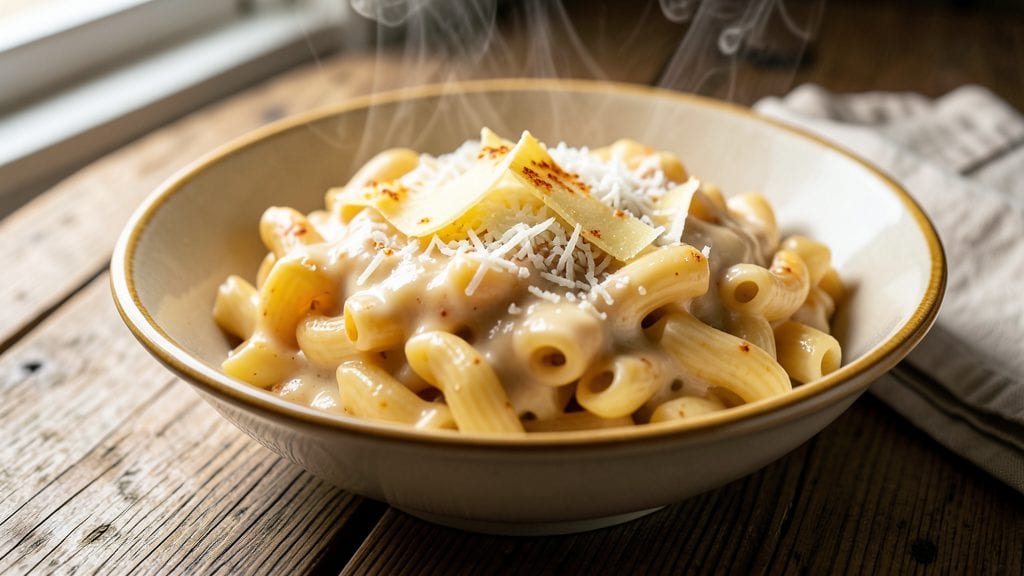
Creating macaroni and cheese with heavy whipping cream transforms a classic side dish into a luxurious, velvety masterpiece that feels like a restaurant special. The secret lies in the perfect balance of sharp cheddar, rich cream, and a touch of butter that creates those signature swirls without breaking the sauce.
I developed this one-pot method after years of testing—no straining noodles, no clumping cheese, just smooth, creamy perfection every time.
What sets this recipe apart is the heavy whipping cream, which adds unmatched richness while keeping the texture velvety rather than greasy. Most recipes rely on milk or half-and-half, but the cream elevates this dish to comfort food status.
The process is straightforward: cook the pasta directly in the pot, then build the sauce with a simple roux before adding the cheese and cream. It takes about 25 minutes total, with minimal cleanup.
By the end, you'll have golden, bubbling macaroni and cheese with deep swirls of melted cheese throughout—no lumps, no separation, just restaurant-quality results. The cream creates a luxurious mouthfeel that makes this dish feel special enough for company but simple enough for weeknights.
Serve immediately for the best texture, or top with crispy breadcrumbs if you prefer a crunchy contrast.
This recipe works equally well as a side dish or a main course, especially when paired with grilled chicken or roasted vegetables. The creamy sauce clings perfectly to the pasta, ensuring every bite is rich and satisfying. Let's make this ultra-comforting dish that'll become a household favorite.
Ingredients for macaroni and cheese with heavy whipping cream
Pantry staples plus a few key upgrades make this creamy mac and cheese feel like a restaurant special.
| Ingredient | Amount | Notes |
|---|---|---|
| Elbow Macaroni 🍝 | 12 oz | Medium or small elbow shape |
| Sharp White Cheddar Cheese 🧀 | 4 oz | Grate yourself for best texture |
| Heavy Whipping Cream 🥛 | 1 cup | Full-fat for ultimate richness |
| Unsalted Butter 🧈 | 4 tbsp | Cold, cut into pieces |
| All-Purpose Flour 🌾 | 2 tbsp | For thickening roux |
| Yellow Onion 🧅 | ½ cup | Diced small, about 1/2 medium |
| Garlic Cloves 🧄 | 2 cloves | Minced, about 1 tsp total |
| Salt 🧂 | 1 ½ tsp | Adjust to taste, kosher preferred |
| Black Pepper 🌶️ | ½ tsp | Freshly cracked preferred |
| Nutmeg 🌿 | ¼ tsp | Freshly grated for depth |
| Milk 🥛 | ½ cup | Whole milk for creaminess |
| Panko Breadcrumbs 🍞 | ¼ cup | Optional, for topping |
| Melted Butter 🧈 | 1 tbsp | For breadcrumb topping |
The sharp cheddar is non-negotiable—Kraft 2% won't cut it here. White cheddar has that clean, tangy bite that balances the cream. I grab mine in blocks from the deli counter and grate it myself (pre-shredded gets clumpy). The heavy whipping cream is the star—Land O'Lakes or Organic Valley are my go-tos, but any full-fat brand works. The butter? Plugrá or Land O'Lakes unsalted—none of that salted nonsense. For the pasta, Barilla or De Cecco elbows hold up best in the creamy sauce without turning mushy.
No sharp cheddar? Pepper jack or Gruyère add great depth. Running out of heavy cream? Half-and-half plus 1 tbsp butter gets you close, but the texture won't be quite as velvety. The flour is just for thickening—all-purpose works fine. Skip the nutmeg? Skip it—this isn't your grandma's mac and cheese. For the onion, yellow or white both work, but red adds a nice color. The breadcrumbs are totally optional—just skip if you're serving this as a main course. Pro tip: Toast the breadcrumbs in butter before adding for extra crunch.
This reheats beautifully—just add a splash of milk to loosen it up. Keeps 3-4 days in the fridge, 2 months frozen. I always double the recipe because it disappears fast. For leftovers, cover with foil to prevent a skin from forming. The best part? It tastes even better the next day once everything melds together.
Why You'll Love This Recipe
- One-Pot Magic: I swear by this recipe because it’s actually one-pot—no extra bowls, no sticky mess. Just toss the elbow macaroni, butter, and flour in the same pan, then pour in the shredded sharp cheddar and heavy cream. Stir, simmer, and boom—done. My counter stays cleaner than my kitchen after a dinner party.
- Velvet Cheese Dream: That heavy whipping cream transforms this into something luxurious—creamy without being greasy, rich without being heavy. The sharp cheddar melts into gooey strands, and the flour roux adds just enough body to make it dangerously good. Honestly, I’ve tried store-bought versions, and this beats them every time.
- Lunchbox Hero: Between us, this is my go-to for meal prep. The texture holds up for days (yes, even reheated), and the kids actually eat it cold straight from the fridge. Pack it in jars or containers—no soggy pasta here. My daughter picks out the biggest pieces of cheddar first, but she’s back for seconds anyway.
- Budget Luxury: Sharp cheddar and heavy cream sound fancy, but this recipe stretches them perfectly. A single block of cheese and a small tub of cream feed my family for three meals, and the elbow macaroni? Cheap as it gets. It’s my secret weapon for nights when I want to feel like I’m serving something special without breaking the bank.
Step-by-step instructions for macaroni and cheese with heavy whipping cream
This ultra-rich version comes together in one pot with velvety swirls you won't believe.
Cook the Macaroni Al Dente
Bring a large pot of water to a rolling boil and add the 12 oz elbow macaroni. Cook until 1 minute before the package directions call for al dente—this ensures it finishes perfectly in the creamy sauce. I like to taste-test a piece here; it should still have a slight bite but be soft enough to chew easily.
While the pasta cooks, add 1.5 tsp salt to the water (it should taste like the ocean). Reserve 1 cup of pasta water before draining—this starchy liquid is your secret weapon for ultra-smooth sauce. Don't rinse the pasta; the starch helps create that signature velvety texture.
Build the Creamy Cheese Sauce
In the same pot (no need to clean it—those pasta starches are flavor gold), melt 4 tbsp unsalted butter over medium heat. Add the 0.5 cup diced yellow onion and cook for 3-4 minutes until soft and translucent. Stir in the 2 cloves minced garlic and cook for 30 seconds until fragrant—don't let it brown or it'll turn bitter.
Reduce heat to low and sprinkle in the 2 tbsp all-purpose flour, stirring constantly for 1-2 minutes to create a roux. This thickens the sauce and removes any raw flour taste. Slowly whisk in the 1 cup heavy whipping cream and 0.5 cup milk, letting the mixture come to a gentle simmer while stirring to prevent lumps.
Add Cheese and Seasonings
Gradually sprinkle in the 4 oz grated sharp white cheddar cheese, stirring constantly until fully melted and smooth. The sauce should thicken noticeably—if it's too thick, whisk in 2-3 tablespoons of reserved pasta water. Season with 0.5 tsp black pepper and 0.25 tsp nutmeg, then taste and adjust the 1.5 tsp salt as needed.
Here's the thing—don't skip the nutmeg. It might seem odd, but it adds that signature depth that takes this dish from good to unforgettable. If you're worried about it being too strong, start with just 0.125 tsp and add more to taste.
Combine and Create Swirls
Add the drained macaroni to the sauce and stir gently to coat. For those signature swirls, here's the trick: use a wooden spoon to create circular motions in the pot, lifting the pasta and sauce together. This incorporates air and creates those beautiful marbled patterns. Work quickly but don't rush—you want even distribution without breaking the pasta.
Let the mixture simmer together for 3-4 minutes on low heat, stirring occasionally. The pasta will finish cooking in the sauce, absorbing all that creamy goodness. You'll know it's perfect when every strand is fully coated and the sauce has that luxurious, melt-in-your-mouth consistency.
Optional Crispy Topping
For that perfect textural contrast, preheat your broiler. In a small bowl, mix the 0.25 cup panko breadcrumbs with 1 tbsp melted butter. Spoon the macaroni into a baking dish and spread it evenly. Top with the breadcrumb mixture, pressing down gently to create an even layer.
Broil for 2-3 minutes until the topping is golden brown and crispy. Watch it closely—it burns faster than you think. The contrast between the crispy top and creamy base is what makes this dish truly special. Let it cool for 2 minutes before serving to let the topping set slightly.
Pro Tips For Making Macaroni And Cheese With Heavy Whipping Cream
- Cook the pasta AL DENTE: DESCRIPTION: Elbow macaroni should have a slight bite—test it 1 minute before the package says "done." Overcooked noodles turn mushy in the creamy sauce, and no one wants that sad, gloppy texture. Drain immediately after cooking and rinse with a splash of cold water to stop the cooking process.
- Shred cheese FINE: DESCRIPTION: Skip the food processor for sharp white cheddar—it loses texture. Use a box grater and shred by hand into small, even pieces. Big chunks melt unevenly, leaving you with a sauce that’s lumpy in some spots and smooth in others. (Yes, it takes 5 minutes, but the result is worth it.)
- Melt butter SLOWLY: DESCRIPTION: Warm the butter over medium-low heat until it’s foamy but not brown—about 3 minutes. If you rush it, the flour will cook too fast and taste raw, or worse, burn. This is the non-negotiable step that keeps your sauce from tasting like flour dust.
- Whisk in cream GRADUALLY: DESCRIPTION: Add the heavy whipping cream to the roux in a thin, steady stream while stirring constantly. Dumping it all at once causes lumps, and no one wants to scrape them out later. A splash at a time ensures a silky, velvety finish—no one will guess you spent 10 minutes fixing lumps.
Common mistakes when making perfect results
Overcooking the Pasta
One of the biggest mistakes is cooking the macaroni to perfection before adding it to the sauce. When you overcook it in boiling water, the pasta becomes mushy and absorbs too much of the creamy sauce, leaving you with a watery mess.
Instead, cook it just 1 minute before al dente—it'll finish cooking in the sauce while maintaining that perfect bite. I always taste-test a piece before draining to ensure it's still firm enough to hold its shape. 🍲
Adding Cheese Too Quickly
Dumping all the cheese at once is a recipe for disaster—it creates clumps that no amount of stirring will fix. Instead, add the 4 oz grated sharp white cheddar gradually while stirring constantly over low heat. This ensures each addition melts completely before the next batch goes in.
I like to use a whisk or rubber spatula to break up any potential lumps immediately. The key is patience—rushing this step ruins the velvety texture we're after.
Skipping the Roux
Many recipes omit the roux step, but this is where the magic happens. The 2 tbsp flour mixed with butter creates a base that properly emulsifies the cream and cheese, preventing separation. Without it, your sauce will either be too thin or break apart when you add the dairy.
Cook the roux for at least 1-2 minutes until it turns a light golden color—this removes the raw flour taste and gives the sauce body. 🔥
Using Pre-Shredded Cheese
Pre-shredded cheese contains anti-caking agents that prevent it from melting smoothly, leading to grainy texture in your mac and cheese. Always grate your own sharp white cheddar using a box grater or food processor. The finer the grate, the better it will blend into the sauce.
I prefer buying blocks from the deli counter—they're fresher and melt like a dream. This simple swap makes all the difference in achieving that silky consistency.
Ignoring Pasta Water
Discarding all the pasta water is another common mistake. That starchy liquid is essential for creating a smooth, cohesive sauce. Reserve 1 cup before draining and use it to thin the sauce if needed.
The starch acts as a natural thickener and helps emulsify the fats in the cream and cheese. If your sauce gets too thick, add the pasta water 1 tablespoon at a time until you reach the perfect velvety consistency.
Overmixing After Combining
Once you've combined the pasta with the sauce, resist the urge to stir vigorously. Overmixing can break the pasta and make the sauce grainy. Instead, use gentle circular motions with a wooden spoon to create those signature swirls.
This incorporates air while keeping the texture intact. Let the mixture sit for 2-3 minutes off the heat before serving—this allows the flavors to meld together beautifully without overworking the sauce. ✨
Nutrition facts
Frequently asked questions
Why does this recipe use heavy whipping cream instead of milk?
The cream creates a luxurious, velvety texture that milk can't match—it adds richness without making the dish greasy. The fat content helps emulsify the cheese better, creating those signature swirls while keeping the sauce smooth and decadent. For a lighter version, you could substitute half-and-half, but the flavor and texture won't be quite the same.
Can I make this mac and cheese ahead of time?
This dish actually tastes even better the next day as the flavors meld together. Store leftovers in an airtight container in the fridge for up to 4 days. To reheat, add a splash of milk or reserved pasta water and warm gently on low heat, stirring until creamy. For freezing, portion into containers and freeze for up to 2 months—thaw overnight in the fridge before reheating.
What's the best way to make it extra crispy on top?
For maximum crunch, toast your breadcrumbs in a dry skillet for 2-3 minutes before mixing with butter. Spread them evenly on top and broil for 2-3 minutes until golden brown. Watch closely—they burn fast! For extra flavor, add a pinch of garlic powder or smoked paprika to the breadcrumbs before toasting. The contrast between crispy top and creamy base is what makes this dish truly special.
Can I use a different type of cheese?
While sharp white cheddar is ideal, you can experiment with other melty cheeses. Gruyère adds nutty depth, pepper jack brings heat, or fontina creates a richer flavor. Just remember to grate it fresh—pre-shredded cheeses contain anti-caking agents that prevent smooth melting. For a vegetarian option, try a mix of cheddar and vegan cheese designed for melting.
How do I fix a sauce that's too thick or too thin?
If your sauce is too thick, whisk in 1-2 tablespoons of reserved pasta water until smooth. For a thinner sauce, add a splash of milk or cream while stirring constantly. The key is to adjust gradually—adding too much liquid at once can break the sauce's emulsion. If you've already added all the pasta water, a small amount of warm milk works well to restore the right consistency.