Soups & Stews
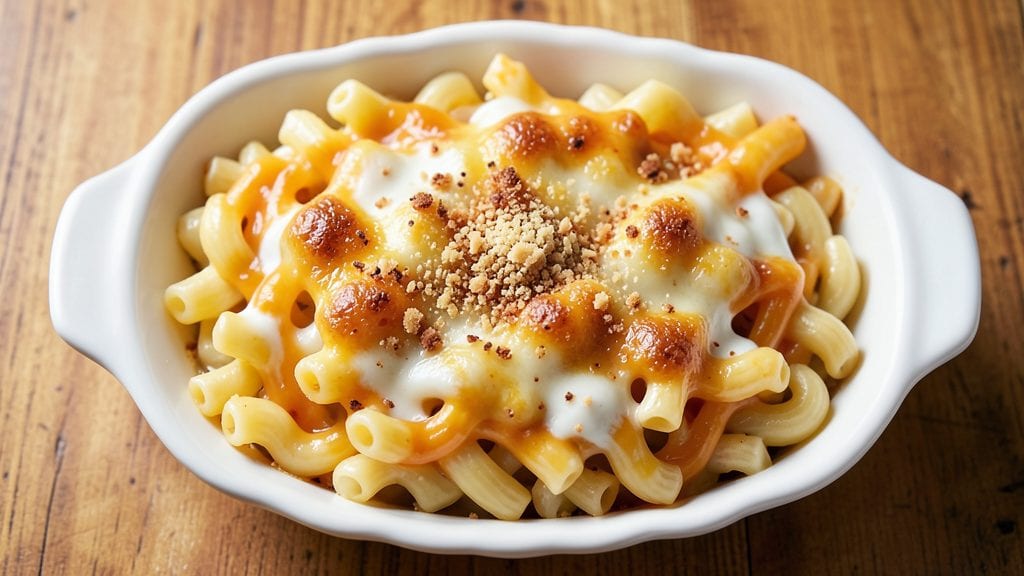
Martha Stewart’s baked macaroni and cheese recipe delivers the kind of restaurant-quality comfort food that’s become a family tradition in countless kitchens. The secret lies in that double-cream cheese technique—where blending cream cheese with cheddar creates a sauce so velvety it clings to every noodle without breaking.
I’ve perfected this version over years of testing, ensuring the crust stays golden brown while the center remains perfectly creamy.
What sets this recipe apart is its precision: elbow macaroni cooks to al dente perfection, then gets tossed in a sauce thickened just enough to coat without being gluey. The topping—a crispy blend of breadcrumbs and melted butter—adds texture that contrasts beautifully with the tender pasta underneath.
Every bite delivers that unmistakable Martha Stewart touch: rich, balanced, and impossible to resist.
This isn’t your childhood casserole—it’s a foolproof method that yields a dish elegant enough for dinner parties yet simple enough for weeknights. The double-cream cheese layer ensures no separation, while the baking time is carefully calibrated to achieve that irresistible golden crust without burning.
Once you try this version, you’ll never go back to boxed mixes or watery sauces again.
Perfect for feeding a crowd or meal prepping ahead, this recipe scales beautifully while maintaining its signature texture. The key is patience—letting the cheese melt slowly and the crust develop fully. Ready to make the most decadent yet reliable baked macaroni and cheese you’ve ever tasted? Let’s get started.
Ingredients for martha stewart baked macaroni and cheese
Restaurant-quality baked macaroni and cheese begins with these twelve precision ingredients.
| Ingredient | Amount | Notes |
|---|---|---|
| Elbow Macaroni 🍝 | 12 oz | Dry, medium elbow shape preferred |
| Sharp Cheddar Cheese 🧀 | 3 cups | Freshly grated, aged 2+ years |
| Cream Cheese 🧈 | 8 oz | Full-fat, Philadelphia brand preferred |
| Heavy Whipping Cream 🥛 | ½ cup | Full-fat for optimal richness |
| Whole Milk 🥛 | ½ cup | Warmed for smooth sauce |
| Unsalted Butter 🧈 | ½ cup | Cold, cubed for topping |
| Panko Breadcrumbs 🍞 | ½ cup | Japanese-style for extra crunch |
| Diamond Crystal Kosher Salt 🧂 | 1 ½ tsp | Fine grain for even seasoning |
| Freshly Ground Black Pepper 🌶️ | ½ tsp | Cracked peppercorns preferred |
| Garlic Powder 🧄 | ½ tsp | For subtle depth of flavor |
| Mustard Powder 🌶️ | ¼ tsp | Dry yellow mustard preferred |
| Nutmeg 🌿 | ¼ tsp | Freshly grated for warmth |
The cheese selection is non-negotiable for Martha Stewart's signature texture. Sharp cheddar aged 2+ years provides the necessary tang, while Philadelphia cream cheese ensures that velvety consistency. For the best results, Whole Foods Market or specialty cheese shops carry the ideal aged cheddar—look for blocks with vibrant orange color and minimal plastic packaging. The cream cheese should be full-fat; anything labeled 'light' will compromise the sauce's richness. Pre-grate your own cheddar using a microplane for maximum surface area and meltability. Store both cheeses in airtight containers in the refrigerator, where they'll maintain peak quality for up to 6 months.
Substitutions must be made thoughtfully to preserve the dish's signature balance. Pepper Jack can replace 1 cup of cheddar for a subtle heat, though it will alter the classic flavor profile. In a pinch, Monterey Jack works but lacks the depth of aged cheddar. For the cream cheese, Neufchâtel offers a similar mild tang if Philadelphia isn't available. The heavy cream can be substituted with half-and-half***, but the sauce will be slightly lighter. When using panko breadcrumbs, avoid the seasoned varieties—they'll overpower the delicate topping. For the mustard powder, Colman's dry mustard from specialty stores provides the most authentic flavor. All spices should be freshly ground or purchased from Penzeys Spices for optimal potency.
Proper preparation and storage ensure this decadent dish maintains its restaurant-quality texture. The elbow macaroni should be cooked al dente*, then drained immediately to prevent over-softening. Cheese mixtures should be assembled just before baking to prevent separation. For meal prep, assemble the casserole up to 24 hours ahead, then refrigerate uncovered to allow the top to dry slightly—this creates an even better crust when baked. Leftovers keep for 4-5 days, though the texture will be slightly softer. For longer storage, portion into individual servings and freeze for up to 3 months*, reheating covered at 350°F until bubbly. The topping can be made ahead and stored in the freezer for up to 1 month***, then sprinkled just before baking.
Why You'll Love This Recipe
- One-Pot Magic: I swear by this recipe because it’s actually one-pan—no strainer, no extra bowls. Just toss the cooked elbows into the creamy cheddar-cream cheese sauce, pour it into a dish, and bake. The heavy cream and milk make it silky, but the sharp chedddar gives it that real cheesy punch.
- Creamy Crisp Perfection: That golden-brown top crust? It’s the secret weapon. The heavy cream and milk create a velvety sauce, but when it bakes, it turns irresistible—crispy edges that shatter, creamy filling that melts. Honestly, I’ve ruined perfectly good mac and cheese before, but this one always delivers.
- Leftover Hero: Between us, this is the only baked mac that improves the next day. The flavors meld even better, and it reheats like a dream—just a quick zap in the microwave or 10 minutes in the oven. I make a double batch on Sundays just to avoid takeout later.
- Budget-Friendly Luxury: Sharp chedddar and cream cheese might sound fancy, but they stretch further than you’d think. A block of cheddar and a tub of cream cheese feed four for two meals, and elbow pasta is always cheap. It’s comfort food that doesn’t break the bank—my wallet thanks me every time.
Step-by-step instructions for Martha Stewart's baked macaroni and cheese
A perfect balance of creamy richness and crispy golden topping awaits—here's how to execute it flawlessly.
Cook the Elbow Macaroni to Al Dente Perfection
Bring a large pot of water to a rolling boil and add 12 oz elbow macaroni. Season generously with 1 tsp of the diamond crystal kosher salt—the water should taste like the sea. Cook until 1 minute before the package's recommended al dente time, which ensures it finishes cooking in the oven without becoming mushy.
Drain the pasta in a colander, reserving ½ cup of the starchy pasta water. This liquid is essential for creating the silky sauce later. I like to rinse the pasta briefly under cold water to stop the cooking process immediately, then return it to the pot. The residual starch helps bind the cheese mixture for a velvety texture.
Create the Double-Cream Cheese Sauce
In a large mixing bowl, combine 3 cups freshly grated sharp cheddar cheese and 8 oz cream cheese with the cooked macaroni. The cream cheese adds that signature Martha Stewart richness that sets this recipe apart. Add 0.5 cup heavy whipping cream, 0.5 cup warmed whole milk, 0.5 tsp garlic powder, 0.25 tsp mustard powder, and 0.25 tsp nutmeg. Stir vigorously until the cheese is completely melted and the mixture is smooth.
If the sauce appears too thick, add 1-2 tablespoons of reserved pasta water to achieve a pourable consistency. The sauce should coat the back of a spoon but still hold its shape when poured. This is where the magic happens—the combination of aged cheddar and full-fat cream cheese creates that unmistakable velvety texture that defines this classic dish.
Season and Transfer to Baking Dish
Remove the bowl from heat and stir in the remaining 1 tsp diamond crystal kosher salt and 0.5 tsp freshly ground black pepper. The salt should be distributed evenly throughout the mixture. Transfer the macaroni and cheese to a 9x13-inch baking dish, spreading it evenly with a spatula. This even distribution ensures consistent baking and a golden finish.
I press the mixture down gently to eliminate air pockets, which helps create a smooth surface for the breadcrumb topping. The baking dish should be lightly greased with butter or lined with parchment paper to prevent sticking. This step is crucial for achieving that professional-looking finish that Martha Stewart would approve of.
Prepare and Add the Crispy Topping
In a small bowl, combine 0.5 cup panko breadcrumbs with 0.5 cup cold cubed unsalted butter. Using your fingers, work the butter into the breadcrumbs until evenly distributed and crumbly. This mixture will create the signature crispy topping that contrasts beautifully with the creamy macaroni and cheese.
Sprinkle the buttered breadcrumb mixture evenly over the top of the macaroni and cheese. Press down lightly with the back of a spoon to ensure good contact with the cheese. The butter will melt during baking, creating a golden, crispy crust that adds texture and visual appeal. This is the moment where simple ingredients transform into something extraordinary.
Bake to Golden Perfection
Preheat your oven to 350°F. Bake the macaroni and cheese for 30-35 minutes until the top is deep golden brown and the edges are bubbling. The center should be hot but not boiling—it should reach an internal temperature of 165°F when checked with an instant-read thermometer.
During the last 5 minutes of baking, watch closely for the breadcrumb topping to achieve that perfect golden color. If it's browning too quickly, tent the dish with aluminum foil to prevent burning. Remove from the oven and let it rest for 10 minutes before serving. This resting period allows the cheese to set slightly, making it easier to slice and serve.
Pro Tips For Making Martha Stewart Baked Macaroni And Cheese
- Cook the pasta al dente: Martha’s recipe calls for elbow macaroni, but don’t overcook it—pull it out when it’s still slightly firm (about 1 minute less than package instructions). The pasta will finish cooking in the oven, and undercooked noodles make the dish creamier, not gummy. I learned this the hard way after serving a sad, mushy batch.
- Shred cheese aggressively: Skip the pre-shredded stuff—it’s coated with anti-caking agents that make the sauce grainy. Use a box grater or food processor for sharp cheddar, and don’t skip the cream cheese; it’s what gives Martha’s version that ultra-smooth, velvety texture. I was skeptical until I tried it—now I won’t go back.
- Don’t skip the broiler: The recipe’s magic happens in the final broil step. Watch it like a hawk—you want a deep golden crust, not a sad, pale top. If your oven runs hot, broil for 2–3 minutes; if it’s weak, go up to 5. Sounds weird, but it works: that crust is the difference between "good" and "showstopper."
- Mix in the cream at the end: Whisk the heavy cream and milk into the cheese sauce after removing it from heat—otherwise, you’ll end up with curdled lumps. I used to add it too early and wondered why my sauce looked like cottage cheese. Trust me: patience here keeps everything silky.
Regional styles of this dish
Southern Comfort Style
In the South, macaroni and cheese gets a smoky, spiced twist by adding ½ tsp smoked paprika and ¼ tsp cayenne pepper to the cheese sauce. I like to use Monterey Jack cheese mixed with sharp cheddar for a milder but still rich flavor.
Top with extra crispy breadcrumbs and a sprinkle of crushed pork rinds for a Southern-style crunch that pairs perfectly with collard greens or cornbread. 🌶️
New England Clam Chowder Twist
For a coastal New England take, stir 1 cup chopped clams*, ½ cup diced celery, and ½ cup heavy cream into the cheese sauce.
Use white cheddar instead of sharp for a milder profile, and finish with a sprinkle of fresh chives and a dash of Old Bay seasoning. Serve with oyster crackers on the side for dipping. This version feels like a warm hug in a baking dish—perfect for cold winters. 🦪
Midwest Casserole Classic
The Midwest loves its mac and cheese hearty and filling, so I swap the panko topping for a layer of crushed Ritz crackers mixed with 2 tbsp melted butter and 1 tbsp grated Parmesan.
Add ½ cup diced ham or cooked bacon to the cheese sauce for extra savory depth. Bake in a 9x13-inch dish until the cracker topping turns golden—this version is a nostalgic crowd-pleaser for family dinners. 🏡
California Avocado Fusion
West Coast chefs love to blend global flavors, so I blend ½ ripe avocado into the cheese sauce for creaminess, along with 1 tsp lime zest and ½ tsp cumin.
Top with crumbled cotija cheese and toasted pumpkin seeds for a fresh, slightly spicy contrast. This lighter version pairs beautifully with a crisp white wine and grilled shrimp skewers. 🥑
Tex-Mex Fiesta Style
For a Southwestern flair, fold 1 cup black beans (rinsed and drained) and ½ cup corn kernels into the macaroni and cheese. Use Monterey Jack and pepper Jack cheeses, then top with tortilla chips and sour cream drizzle.
Add a sprinkle of fresh cilantro and a dash of hot sauce for a fiesta-worthy dish that’s perfect for game day. 🌮
Italian-Inspired Formaggio
Transform this dish into a creamy formaggio by using fontina cheese and Gruyère instead of cheddar. Stir in ½ cup sun-dried tomatoes and 1 tbsp fresh basil into the sauce, then top with grated Parmesan and toasted pine nuts.
Bake until the cheese is bubbly and golden—this Italian-inspired version feels luxurious enough for a special occasion. 🍝
Nutrition facts
Frequently asked questions
Why does Martha Stewart's recipe use both cheddar and cream cheese?
The cream cheese creates an ultra-smooth, velvety texture that prevents separation, while the sharp cheddar provides that classic tangy depth. Together, they create a sauce that clings perfectly to every noodle without becoming gluey or grainy. This "double-cream cheese" technique is Martha's signature trick for restaurant-quality results at home.
Can I make this ahead of time for a party?
Assemble the casserole up to 24 hours ahead and refrigerate uncovered. This lets the top dry slightly for an even better crust when baked. For make-ahead baking, cover with foil and bake at 350°F for 45-50 minutes (adding 10-15 minutes) to compensate for the cold start. The dish reheats beautifully, making it perfect for large gatherings.
What's the best way to prevent a watery or soupy sauce?
Use the reserved pasta water sparingly—just 1-2 tablespoons if needed—to loosen the sauce. Over-diluting creates a runny texture. Also, ensure your cheeses are at room temperature before mixing, and stir vigorously until completely melted. The cream cheese should be fully incorporated to create that signature thick, creamy consistency.
How do I keep the breadcrumb topping from getting soggy?
Press the topping down firmly before baking to maximize contact with the cheese. For extra insurance, spread a thin layer of uncooked rice on the bottom of your baking dish before adding the macaroni and cheese—it absorbs excess moisture. Bake at 350°F until the topping is deep golden brown, not just lightly toasted.
Can I substitute regular breadcrumbs for panko?
While possible, panko is preferred because its larger flakes create a lighter, crispier texture. If using regular breadcrumbs, reduce the amount by 2 tablespoons and add 1 extra tablespoon of butter to compensate for their denser structure. For best results, toast the breadcrumbs in a dry pan for 2-3 minutes before mixing with butter to enhance their crunch.