
Main Courses
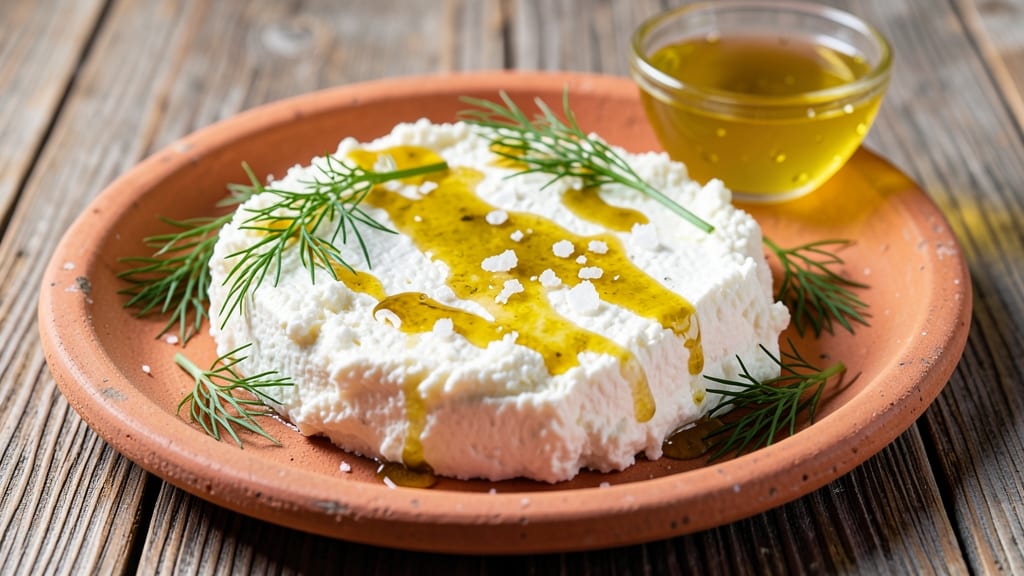
This mizithra cheese recipe transforms a traditional Greek staple into a versatile ingredient that elevates everything from savory pies to creamy spreads. After years of experimenting with Mediterranean cheeses, I discovered mizithra’s unique ability to crumble into delicate, salty flakes—perfect for adding depth to dishes without overpowering them.
The first time I used it in a pie, my students couldn’t believe how much brighter the flavors tasted compared to feta.
What makes mizithra special is its crumbly texture and mild tang, which pairs beautifully with fresh herbs, olive oil, and roasted vegetables. Unlike feta, it doesn’t melt, making it ideal for salads, spreads, or sprinkled over grilled meats.
This recipe focuses on a simple yet foolproof method to prepare mizithra at home, using just a few ingredients and minimal effort—no special equipment required.
By the end, you’ll have a batch of fresh, briny mizithra that’s ready to transform your favorite Greek dishes. Whether folded into a pie crust, blended into a dip, or crumbled over a fresh salad, its unique flavor will leave everyone asking for seconds.
Let’s get started with this traditional yet adaptable cheese.
For those new to Greek cuisine, mizithra works wonders in both classic dishes and modern twists—think stuffed peppers, creamy sauces, or even a quick cheese board. The possibilities are endless, and the process couldn’t be simpler. Here’s how to make it shine.
Ingredients for mizithra cheese
Four simple ingredients transform into crumbly Greek mizithra perfect for salads, pies, and spreads.
| Ingredient | Amount | Notes |
|---|---|---|
| Whole Milk Sheep's Milk 🐑 | 4 cups | Fresh, unhomogenized preferred |
| Lemon Juice 🍋 | ¼ cup | Freshly squeezed, strained |
| Rennet 🧀 | ½ tsp | Liquid rennet or 1 tablet dissolved |
| Sea Salt 🧂 | 1 ½ tsp | Diamond Crystal preferred |
| Extra-Virgin Olive Oil 🫒 | ¼ cup | For finishing, high quality |
| Fresh Dill 🌿 | ¼ cup | Chopped, optional garnish |
| Fresh Oregano 🍃 | 1 tbsp | Chopped, optional garnish |
The sheep's milk is non-negotiable here—local farms or specialty grocery stores like Whole Foods carry it, though it can be hard to find. If you can't source sheep's milk, whole cow's milk works in a pinch, though the texture will be slightly different. Look for milk with visible cream on top, which indicates higher fat content. I've made this with both organic and conventional milk, but organic tends to have a cleaner flavor. The lemon juice should be freshly squeezed—bottled juice lacks the bright acidity needed to properly curdle the milk.
No rennet? 1 tbsp lemon juice plus 1 tbsp vinegar can substitute, though the texture won't be quite as firm. The salt matters—Diamond Crystal kosher salt dissolves more easily than table salt, so don't swap. For the herbs, fresh is best, but dried dill at one-third the amount works if you're in a bind. The olive oil should be extra-virgin and fruity—none of that cheap cooking oil. If you're making this for a pie, you can skip the herbs entirely and just use the salted cheese straight from the mold.
This cheese keeps beautifully—1 week refrigerated in a breathable cheesecloth-lined container. For longer storage, freeze portions for up to 3 months. I like to portion mine into small containers so I can grab just what I need for a salad or pie topping. The texture improves after a day or two as the moisture evaporates, so don't be afraid to let it sit before using. If it gets too dry, just add a splash of olive oil and mix it back together.
Why You'll Love This Recipe
- No Special Tools Needed: I swear by this recipe because it requires nothing fancier than a pot, a thermometer, and a colander. No fancy cheese press or strainer—just a little patience and the magic of sheep’s milk curdling with lemon juice.
- Tangy Creamy Magic: That first bite of fresh mizithra? It’s bright from the lemon juice but still rich, with a texture that’s somewhere between soft ricotta and crumbly feta. Drizzle it with olive oil, and it’s pure satisfaction.
- Works Everywhere: Spread it on crusty bread for a lazy breakfast, crumble it into salads for a salty kick, or blend it into sauces—it disappears into dishes without overpowering. My go-to? Stuffing roasted peppers with it, then drizzling with olive oil.
- Cheaper Than Store-Bought: A batch of this costs me pennies compared to pre-packaged Greek cheeses. Plus, it keeps for days in the fridge, so I make a big batch and use it all week—no waste, just flavor. Honestly, it’s my budget-friendly secret weapon.
Step-by-step instructions for mizithra cheese
Here’s how to transform fresh sheep’s milk into briny, crumbly mizithra—Greece’s beloved cousin to feta.
Acidify the Milk for Coagulation
Pour the 4 cups whole milk sheep’s milk into a heavy-bottomed stainless steel pot and warm it over medium heat until it reaches 90°F. This gentle warmth is crucial—too hot, and the proteins will overcoagulate. Stir occasionally to distribute heat evenly.
Remove the pot from heat and let the milk cool slightly to 86°F. While it’s still warm, slowly whisk in the 0.25 cup lemon juice in a thin stream. The milk will begin to thicken almost immediately, transforming from liquid to a soft, custard-like curd. This acidification step is what kickstarts the coagulation process, and you’ll see the mixture turn opaque and slightly grainy within 5-10 minutes. If it doesn’t thicken, the milk may have been too hot—start over with fresh milk and adjust the temperature more carefully.
Add Rennet and Let Curdle
Once the milk has thickened into a soft curd, return it to medium-low heat and stir in the 0.5 tsp rennet dissolved in 1 tablespoon cool water. The mixture should hold its shape when you gently lift a spoon—it should look like thick pudding rather than liquid. Let it sit undisturbed for 30-45 minutes, covered with a clean kitchen towel, until the curds fully separate from the whey and the mixture resembles a firm, jelly-like mass. You’ll know it’s ready when the curds hold together when you press them between your fingers.
Here’s the thing—patience is key. If you rush this step, the curds will be weak and the cheese will crumble poorly later. The ideal texture is firm but still slightly wobbly, like a well-set panna cotta. Avoid stirring after adding rennet, as this can break the curds and ruin the texture.
Cut and Cook the Curds
Once the curds are fully set, use a long, thin knife or a clean cheese wire to cut them into ½-inch cubes. This step is all about precision—cutting too large will yield a soft cheese, while too small will result in a dry, crumbly texture. Let the curds rest for 5 minutes to firm up slightly before proceeding.
Return the pot to medium heat and gently stir the curds for 15-20 minutes, keeping the temperature between 105-110°F. You’re looking for the curds to shrink slightly and release whey, but they should still hold their shape. If the whey rises too quickly, reduce the heat to low—you want slow, even cooking. The curds should look like small, firm rice grains by the end of this step. If they feel gummy or sticky, they need more time; if they’re too dry, they’ve been overcooked.
Drain and Salt the Curds
Line a colander with a clean, damp cheesecloth and carefully transfer the curds into it, pressing gently to expel as much whey as possible. Let them drain for 10 minutes, then transfer the curds to a clean bowl. Sprinkle the 1.5 tsp sea salt evenly over the curds and fold them gently with a rubber spatula, ensuring the salt distributes evenly. This step is where the briny character of mizithra develops, so don’t skimp on the salt—it’s what sets this cheese apart from milder varieties.
Cover the bowl with plastic wrap and let the curds rest for 1 hour at room temperature. This resting period allows the salt to penetrate fully and the texture to firm up. You’ll notice the curds become drier and more crumbly as they absorb the salt. If they feel too moist after an hour, drain them in the cheesecloth for another 10 minutes to achieve the perfect crumbly consistency.
Finish with Herbs and Oil
After resting, transfer the curds to a food processor or high-speed blender and pulse until they reach a fine, sandy texture—this is the hallmark of authentic mizithra. With the processor running, slowly drizzle in the 0.25 cup extra-virgin olive oil to bind the crumbles slightly and add richness. Stop the processor and fold in the 0.25 cup chopped fresh dill and 1 tbsp chopped fresh oregano by hand, ensuring the herbs are evenly distributed. The oil and herbs should coat the crumbles, giving them a vibrant green fleck and a bright, aromatic finish.
Pack the finished mizithra into an airtight container and refrigerate for at least 24 hours before serving. This resting period deepens the flavors and allows the salt to meld perfectly with the tangy, creamy notes of the sheep’s milk. The cheese will keep in the fridge for up to 2 weeks, though it’s best enjoyed fresh. For a true taste of Greece, serve it crumbled over salads, drizzled with olive oil, or paired with honey and fresh figs.
Pro Tips For Making Mizithra Cheese
- Heat Milk Slowly: Warm the sheep’s milk to no higher than 35°C (95°F)—any hotter and you’ll denature the proteins, making the curds weak and rubbery. I learned this the hard way after a batch of mizithra turned out like sad, dense dumplings instead of the creamy, crumbly cheese I wanted.
- Use Fresh Lemon Juice: Skip bottled lemon juice—it’s pasteurized and won’t cut the milk properly. Fresh juice has the right acidity and enzymes to coagulate the milk cleanly. If you’re skeptical, try it: the curds will firm up faster and look smoother.
- Don’t Rush the Rennet: Stir the rennet into the warm milk gently and evenly—no splashing, no aggressive swirling. Overmixing introduces air, which weakens the curd structure. Let it sit undisturbed for 5 minutes before cutting, even if it feels like nothing’s happening.
- Salt the Curds Cold: Sprinkle sea salt after the curds have drained and cooled to room temperature—adding it hot dissolves it into the whey, leaving your cheese bland. A pinch now, a pinch later: that’s how you get the right balance without overdoing it.
Perfect pairings for mizithra cheese
Greek Salad Perfection
Mizithra transforms a classic Greek salad into something extraordinary. Toss 2 cups chopped romaine, 1 cucumber (sliced), 1 pint cherry tomatoes (halved), and ½ red onion (thinly sliced) with ¼ cup extra-virgin olive oil and 1 tbsp red wine vinegar.
Top with ½ cup crumbled mizithra, ¼ cup Kalamata olives, and 2 tbsp chopped fresh mint. The briny crumbles melt into the salad, creating pockets of salty richness that balance the fresh vegetables perfectly. 🥗
Spanakopita Twist
Replace feta with mizithra in your spanakopita for a lighter, more delicate flavor. Mix 10 oz chopped spinach (blanched and drained) with 1 cup crumbled mizithra, 1 egg, ¼ cup fresh dill (chopped), and 2 tbsp olive oil.
Fold into phyllo dough layers with a butter or olive oil brush between each sheet. The mizithra adds a subtle tang that pairs beautifully with the flaky crust. Bake at 375°F for 30 minutes until golden. ✨
Olive Oil Spread
Blend 1 cup crumbled mizithra with ½ cup extra-virgin olive oil, 1 garlic clove, 1 tbsp lemon juice, and 1 tsp dried oregano until smooth. Spread on toasted baguette slices or use as a dip for crudités.
This spread keeps for 5 days refrigerated and makes an impressive appetizer for gatherings. The mizithra’s crumbly texture adds a delightful contrast to the creamy oil. 🫒
Grilled Meat Topping
Sprinkle mizithra over grilled lamb chops or pork tenderloin in the final minutes of cooking. The cheese melts slightly, creating a salty, herby crust that clings beautifully.
Pair with roasted potatoes and grilled vegetables for a complete Greek-inspired meal. For extra flavor, mix the mizithra with 1 tsp smoked paprika before sprinkling. 🔥
Cheese Board Showstopper
Arrange mizithra alongside aged Gouda, Manchego, and walnuts on a wooden board. Add fig jam, honeycomb, and sliced pears for a sweet-salty contrast.
The mizithra’s crumbly texture and briny flavor make it a standout centerpiece. Serve with dry white wine like Assyrtiko for the ultimate Greek-inspired spread. 💫
Nutrition facts
Frequently asked questions
Can I substitute cow's milk for sheep's milk in this recipe?
The recipe calls for sheep's milk because it creates that authentic briny, crumbly texture mizithra is known for. Cow's milk will work in a pinch, but your cheese will be slightly milder and less crumbly. If you try it, use whole milk and add an extra 0.25 tsp salt to compensate for the milder flavor. The texture will be closer to feta than traditional mizithra.
How do I know when the curds are ready to cut?
Ready curds should look like a firm jelly when you press them between your fingers—they’ll hold their shape but still feel slightly wobbly. If they feel too soft, let them rest 10 more minutes before cutting. Overcooked curds will be dry and crumbly too soon, while undercooked ones will be gummy. The ideal moment is when they’re firm but still slightly translucent at the edges.
What’s the best way to store mizithra for maximum freshness?
Wrap your finished mizithra in breathable cheesecloth and store it in an airtight container in the fridge for up to 2 weeks. For longer storage, portion it into small containers and freeze for 3 months. Thaw overnight in the fridge—never at room temperature. The cheese actually improves after 24 hours as the flavors meld, so don’t rush to use it right away!
Can I make mizithra without rennet?
Yes! If you’re rennet-free, use 1 tbsp lemon juice plus 1 tbsp white vinegar instead. The texture will be softer and less firm, but it’ll still taste delicious. For extra tang, let the acidified milk sit 5 extra minutes before cooking the curds. This method works best for spreads or salads where texture isn’t as critical.
Why did my mizithra turn out too dry or crumbly?
Overcooking the curds or draining them too long causes dryness. Keep the pot at 105-110°F during cooking and drain for only 10-15 minutes total. If it’s too crumbly, lightly mist with 1 tsp olive oil and mix gently. For extra moisture, fold in 1 tbsp plain yogurt before using. The ideal texture should be firm yet slightly moist, like coarse sand.