
Appetizers
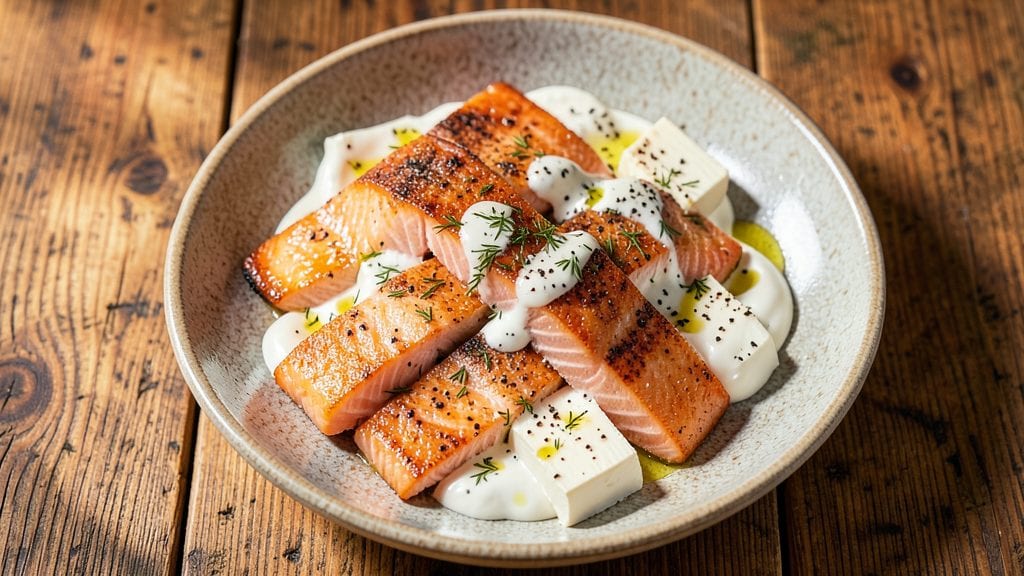
This salmon and soft cheese recipe delivers a perfect balance of crispy pan-seared salmon and velvety soft cheese, elevated by a bright dill dip that ties everything together.
The technique focuses on achieving a golden crust on the salmon while keeping the inside tender, then pairing it with a cheese that melts beautifully—like brie or mascarpone—without overpowering the delicate fish flavor.
I developed this dish after realizing how often restaurant-style salmon appetizers fall short at home, and this method guarantees professional results with minimal effort.
The secret lies in two key steps: degrazing the pan after searing the salmon to capture all those flavorful browned bits, and letting the cheese soften just enough to create a creamy, spreadable texture.
This dish works beautifully as a starter or light main, especially when paired with a simple arugula salad or warm crusty bread. The dill dip adds freshness that cuts through the richness, making every bite feel balanced and restaurant-worthy.
By the time you plate this dish, you’ll have perfectly crispy salmon with a tender center, melted soft cheese that’s still creamy, and a bright dill dip that adds a refreshing contrast.
The visual appeal is just as important as the taste—golden salmon, glossy cheese, and vibrant green herbs create a dish that looks as good as it tastes. This recipe is designed to impress without requiring advanced skills, making it ideal for both weeknight dinners and special occasions.
For extra flair, garnish with fresh dill and a drizzle of olive oil, and serve immediately while the salmon is still warm and the cheese is perfectly melted. The combination of textures—crispy, creamy, and fresh—makes this dish unforgettable. Let’s get cooking!
Ingredients for salmon and soft cheese
Twelve ingredients deliver restaurant-quality crispy salmon and velvety cheese pairing with minimal effort.
| Ingredient | Amount | Notes |
|---|---|---|
| Center-Cut Atlantic Salmon Fillets 🐟 | 4 whole | Skin-on, 6-8 oz each, even thickness |
| Brie Cheese 🧀 | 8 oz | Rounded wheel, room temperature |
| Unsalted Butter 🧈 | ½ cup | European-style, 82% fat content |
| Extra-Virgin Olive Oil 🫒 | 2 tbsp | Lightly flavored, fruity variety |
| Fresh Dill 🌿 | ½ cup | Finely chopped, stems removed |
| Greek Yogurt 🥛 | ½ cup | Full-fat, unsweetened |
| Lemon Juice 🍋 | 2 tbsp | Freshly squeezed, strained |
| Diamond Crystal Kosher Salt 🧂 | 1 ½ tsp | Fine grain, for seasoning |
| Freshly Ground Black Pepper 🌶️ | ½ tsp | Coarsely ground, cracked |
| Garlic Cloves 🧄 | 2 cloves | Minced, for dill dip |
| Arugula 🌱 | 4 cups | Baby leaves, for garnish |
| Crusty Baguette 🥖 | 1 whole | Lightly toasted, for serving |
The salmon selection is critical for achieving that perfect golden crust while maintaining a tender interior. Center-cut Atlantic fillets with even thickness are ideal, as they sear more uniformly than thicker cuts. I source mine from Whole Foods or Trader Joe's, where they're typically pre-portioned for consistency. Look for fillets with vibrant pink color and minimal bruising—this indicates freshness. The Brie should be room temperature when you begin, as cold cheese won't melt properly. For optimal results, remove the cheese from the refrigerator 30 minutes before cooking. The butter should be European-style with 82% fat content, available at specialty grocers or online retailers like Gourmet Food Store—this higher fat content creates superior browning.
Substitutions can be made with careful consideration of texture and flavor balance. For the salmon, wild-caught sockeye or coho work equally well, though Atlantic has a more neutral flavor that pairs better with the rich cheese. If Brie is unavailable, mascarpone or Camembert provide similar creamy textures—just adjust cooking times slightly as they melt differently. The Greek yogurt can be swapped for sour cream at half the quantity, though it will be slightly heavier. For those avoiding dairy entirely, vegan cream cheese works surprisingly well in the dill dip. The olive oil should be lightly flavored to avoid overpowering the delicate salmon flavor—avoid extra-virgin with strong peppery notes. Fresh dill is non-negotiable for the dip, but if you must substitute, tarragon or chives at double the quantity provide a similar freshness, though with different flavor profiles.
Proper storage ensures maximum freshness for each component. The salmon should be used within 2 days of purchase and stored on ice or in the coldest part of your refrigerator. Brie can be stored in its original packaging for up to 1 week, while the butter should remain sealed in its original container. The dill dip components keep separately for 3 days in the refrigerator—combine just before serving to maintain freshness. For the salmon, pat fillets dry with paper towels immediately before cooking to ensure maximum browning. The arugula should be washed and spun dry just before serving to prevent wilting. This dish reheats poorly, so it's best served immediately after preparation when the salmon is perfectly crispy and the cheese is at its creamiest texture.
Why You'll Love This Recipe
- Foolproof Timing: I swear by this—no thermometer needed. The salmon hits that perfect just-done moment when the butter melts into the Brie and the edges turn golden. Ten minutes max, and zero guesswork.
- Rich, Melty Magic: That creamy Brie oozing into the flaky salmon? It’s like a hug for your taste buds. The dill brightens it up so it’s never heavy, just ridiculously satisfying.
- Weeknight or Dinner Party: Same recipe, totally different vibes. Serve it with crusty bread for a lazy night in, or platter it with asparagus and a glass of wine for guests. No stress, all wins.
- Leftover Luxury: The salmon keeps beautifully in the fridge—slice it into salads the next day or melt it into scrambled eggs. Honestly, the second life of this dish is just as good as the first.
Step-by-step instructions for crispy pan-seared salmon with creamy dill dip
Master this technique for restaurant-quality salmon with perfect texture and a velvety dip.
Prepare the Salmon and Seasoning
Pat the 4 whole center-cut Atlantic salmon fillets completely dry with paper towels, including the skin side. This step is critical for achieving crispy skin—any moisture will prevent proper browning. Place the fillets skin-side down on a clean work surface.
In a small bowl, combine the 1.5 teaspoons Diamond Crystal kosher salt and 0.5 teaspoon freshly ground black pepper. Using your fingertips, gently press this seasoning mixture evenly over both sides of each fillet, focusing on the flesh side. Avoid pressing too hard on the skin as you want to maintain its integrity for crisping. Let the seasoned fillets rest at room temperature for 15 minutes while you prepare the dill dip.
Create the Creamy Dill Dip
In a medium bowl, combine the 0.5 cup Greek yogurt, 0.5 cup finely chopped fresh dill, 2 tablespoons lemon juice, and the 2 minced garlic cloves. Mix thoroughly until the dill is evenly distributed and no visible clumps remain. This dip should have a bright green color and a tangy aroma from the lemon and fresh herbs.
Taste the mixture and adjust seasoning if needed—add a pinch more salt if the yogurt tastes bland, or an extra splash of lemon juice if it needs more acidity. Cover and refrigerate while you cook the salmon. The dip will thicken slightly as it chills, but will return to its creamy consistency once served.
Pan-Sear the Salmon to Crispy Perfection
Heat a large skillet over medium-high heat until it's very hot. Add 2 tablespoons extra-virgin olive oil and allow it to shimmer for 30 seconds. Place the salmon fillets skin-side down in the pan, being careful not to overcrowd. Cook undisturbed for 4-5 minutes until the skin is golden brown and crispy, and the edges begin to lift slightly from the pan.
Using a thin metal spatula, carefully flip each fillet and cook the flesh side for an additional 2-3 minutes until it reaches an internal temperature of 125°F. The salmon should be opaque throughout with just a hint of pink in the center. Remove the fillets to a warm plate and tent loosely with foil to keep warm while you prepare the final elements.
Assemble and Serve
Lightly toast the 1 whole crusty baguette by slicing it into 4 even pieces and toasting in a dry skillet over medium heat for 1-2 minutes per side until golden. Arrange the 4 cups baby arugula leaves on serving plates, then place one salmon fillet on top of each portion.
Drizzle the crispy skin side with any rendered butter from the pan (about 2 tablespoons of the 0.5 cup unsalted butter), then add a generous dollop of the creamy dill dip beside each fillet. For presentation, place a small slice of the 8 oz Brie cheese on top of each salmon fillet, allowing it to soften slightly from the residual heat. Serve immediately with the toasted baguette slices on the side.
Pro Tips For Making Salmon And Soft Cheese
- Pat Dry First: DESCRIPTION: Salmon and water don’t mix—literally. Wipe those fillets with paper towels before searing, or you’ll end up with steam instead of a crispy crust. I learned this the hard way when my salmon turned out soggy and sad.
- Use Room-Temp Brie: DESCRIPTION: Cold brie melts unevenly and can turn greasy. Take it out of the fridge 15-20 minutes before using—it’ll slice cleaner and blend better with the salmon’s richness. (Yes, even if you’re impatient like me.)
- Salt the Salmon Early: DESCRIPTION: Season the fillets before cooking and let them sit for 10 minutes. The salt draws out moisture, which evaporates during searing, giving you a deeper flavor and better texture. Skipping this means bland, flaky salmon instead of restaurant-worthy.
- Finish with Butter Slowly: DESCRIPTION: After searing, lower the heat to medium and let that unsalted butter melt gradually—about 30 seconds—so it bastes the salmon instead of burning. Dumping it in hot will turn it into a greasy mess. (Your future self will thank you.)
Flavor customization for these flavors
Herb Variations
Swap out the fresh dill for tarragon or chives to create entirely different flavor profiles. Tarragon adds a subtle anise-like sweetness that pairs beautifully with the salmon's richness—use 1 tablespoon of finely chopped tarragon per fillet, mixed into the dill dip.
For a brighter, more citrusy note, try chives, which work especially well with lemon juice. I find that ½ cup chives (finely chopped) brightens the dip while maintaining its creamy texture. 🌿
Spicy Kick Options
Add a ½ teaspoon of cayenne pepper or 1 teaspoon of hot honey to the dill dip for a subtle heat that complements the salmon without overpowering it. For a smoky-spicy twist, mix ½ teaspoon smoked paprika into the seasoning blend on the salmon fillets.
I also love adding 1-2 thin slices of jalapeño (seeds removed) to the dip for a fresh, mild heat that softens as it rests. 🌶️
Cheese Alternatives
While Brie is perfect, mascarpone creates a lighter, more spreadable texture—use 6 oz instead of Brie and warm it gently in the microwave for 10-15 seconds before serving. For a tangier option, try Camembert, which has a creamier rind that adds depth.
If you prefer a sharper flavor, goat cheese (like chèvre) works beautifully—crumble 4 oz over the salmon just before serving for a bright, tangy contrast. 🧀
Sweet-Tangy Balance
Enhance the dish with a honey-mustard glaze by mixing 1 tablespoon Dijon mustard with 1 teaspoon honey and brushing it lightly over the salmon before searing. This adds a sweet-tangy contrast that pairs perfectly with the creamy cheese.
For extra richness, drizzle 1 teaspoon of balsamic glaze over the Brie before serving—it adds a deep, fruity note that elevates the entire dish. ✨
Umami Boosts
Add 1 teaspoon of fish sauce or ½ teaspoon of soy sauce to the dill dip for a subtle umami depth that complements the salmon's natural flavors. For a more pronounced umami kick, sprinkle ½ teaspoon of furikake seasoning (Japanese seaweed and sesame blend) over the salmon before serving.
I also love adding 1 tablespoon of finely chopped shallots to the dip for a savory, oniony richness that ties everything together. 💫
Seasonal Fruit Pairings
In summer, top the salmon with sliced peaches or nectarines for a sweet, juicy contrast that balances the richness of the cheese. In fall, try roasted figs or sautéed apples with a sprinkle of cinnamon.
For winter, candied citrus segments (like orange or grapefruit) add a bright, tangy note that cuts through the creaminess. Always add fruit just before serving to maintain its freshness and texture. 🍑
Nutrition facts
Frequently asked questions
Can I use frozen salmon for this recipe?
Fresh salmon works best for crispy skin, but you can use frozen fillets if thawed properly. Place frozen salmon in a sealed bag and submerge in cold water for 30 minutes per inch of thickness. Pat completely dry before seasoning—any moisture will prevent crisping. For best results, use salmon that's been previously frozen for 1-2 months rather than fresh-frozen.
What's the best way to store leftovers?
Store the salmon and cheese separately to maintain texture. Keep salmon in an airtight container with plastic wrap pressed directly against the flesh for up to 2 days in the fridge. The dill dip can be refrigerated for 3 days in a sealed container. Reheat salmon gently in a skillet (never microwave) to avoid drying it out. The cheese should be consumed fresh as it doesn't reheat well.
How do I adjust this for a vegetarian version?
Replace salmon with pan-seared portobello mushrooms (sliced ½-inch thick) or grilled halloumi cheese (sliced ½-inch thick). For the latter, brush with olive oil and grill until golden. Use the same dill dip and serve with the Brie or mascarpone on top. The texture contrast remains satisfying while keeping the creamy-cheesy profile intact.
Why did my salmon skin not get crispy?
Most likely, your salmon wasn't dry enough or the pan wasn't hot enough. Pat fillets with paper towels until completely dry (even the skin side), and heat your pan over medium-high heat until it's smoking hot before adding oil. Also ensure you're using center-cut fillets with even thickness—they crisp better than thicker cuts.
Can I make this ahead of time?
Prepare components separately up to 2 days ahead: cook the salmon (it reheats better than you'd think), make the dill dip, and slice the baguette. Reheat salmon gently in a skillet with a splash of water for 2-3 minutes per side. Assemble just before serving to maintain crispiness and freshness of the cheese and herbs.