
Main Courses
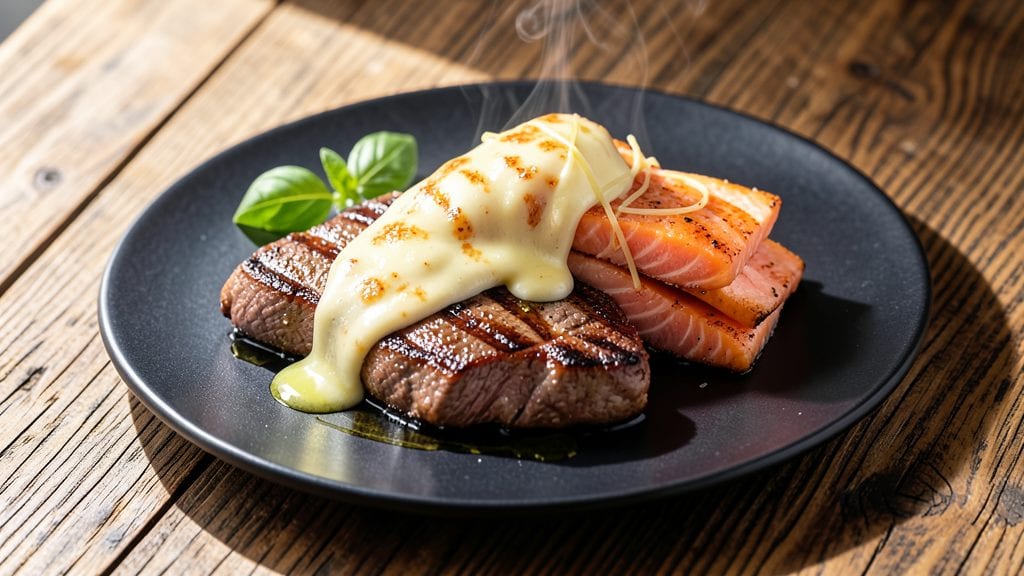
This crispy pan-seared salmon cheese steak recipe combines the best of two worlds—tender salmon fillets and savory steak strips—all blanketed in melty, gooey cheese for a dish that feels indulgent yet balanced.
The secret lies in perfectly searing the proteins first to lock in flavor before adding the cheese, ensuring every bite delivers crispy edges and creamy centers. I developed this recipe after years of experimenting with fusion dishes, and it’s become a regular on my dinner table.
The magic happens in the pan where salmon and steak strips cook just until golden, then finish under melted provolone and mozzarella. This method keeps the proteins juicy while creating that irresistible cheese pull—no soggy sandwiches here.
The dish pairs beautifully with roasted potatoes or a simple arugula salad to cut through the richness, making it hearty enough for a main course but light enough for a weeknight dinner.
What you’ll end up with is a restaurant-quality dish that’s crispy on the outside, tender on the inside, and dripping with melted cheese in every bite. The flavor balance between the salmon’s delicate sweetness, the steak’s savory depth, and the cheese’s gooey richness creates a harmony that’s hard to resist.
This recipe is perfect for feeding a crowd or treating yourself to a satisfying meal.
Whether you serve it as a sandwich, a baked dish, or a platter of crispy steak and salmon topped with cheese, the technique remains the same—just sear, melt, and enjoy. Let’s get cooking!
Ingredients for salmon cheese steak
Pantry staples meet premium proteins for this restaurant-style fusion dish that balances crispy textures with melty cheese.
| Ingredient | Amount | Notes |
|---|---|---|
| Salmon Fillets 🐟 | 2 whole | Skin-on, center-cut preferred |
| Top Sirloin Steak 🥩 | 1 lb | Thinly sliced into strips |
| Provolone Cheese 🧀 | 8 oz | Sliced into 1/4-inch pieces |
| Mozzarella Cheese 🧀 | 8 oz | Shredded, low-moisture |
| Extra-Virgin Olive Oil 🫒 | 2 tbsp | High quality, fruity |
| Butter 🧈 | 2 tbsp | Unsalted, cold |
| Garlic Cloves 🧄 | 4 cloves | Minced, fresh preferred |
| Shallots 🧅 | 2 whole | Minced, or sub with onion |
| Dijon Mustard 🍯 | 1 tbsp | For marinade depth |
| Dry White Wine 🍷 | ¼ cup | Sauvignon Blanc preferred |
| Fresh Thyme Leaves 🌿 | ¼ cup | Chopped, or sub dried |
| Salt 🧂 | 1 ½ tsp | Kosher or sea salt |
| Black Pepper 🌶️ | ½ tsp | Freshly cracked |
| All-Purpose Flour 🌾 | 2 tbsp | For dredging steak |
| Lemon Wedges 🍋 | 2 whole | For serving |
The salmon and steak are the stars here, so quality matters. Look for center-cut salmon fillets with skin intact—they hold their shape better during searing. For the steak, top sirloin is ideal, but flank or skirt work too. Thinly slice it yourself or ask your butcher to do it—pre-sliced steak strips often have uneven thickness. Costco or Whole Foods carry excellent options, but any reputable grocery store's seafood and meat counters will have what you need. The cheese should be fresh provolone and low-moisture mozzarella—pre-shredded mozzarella contains anti-caking agents that prevent proper melting.
No white wine? Substitute chicken broth with a splash of lemon juice—it adds brightness without altering the dish's character. Fresh thyme unavailable? Dried thyme at one-third the amount works, but the flavor won't be as vibrant. For the mustard, Dijon is non-negotiable—it adds that tangy depth. The flour is just for crisping the steak—don't skip it, but don't overcoat the strips either. And if you're feeling fancy, truffle oil instead of olive oil adds a luxurious touch. The salmon marinade can be prepped ahead and stored for up to 4 hours in the fridge.
This dish reheats beautifully—just 5 minutes in a 350°F oven to melt the cheese again. For make-ahead prep, assemble everything except the cheese, refrigerate, then cook and add cheese just before serving. The leftovers keep for 3 days in the fridge, but honestly, it's best enjoyed fresh. Store any unused marinade separately and use within 2 days. The lemon wedges should be added fresh at serving—squeeze them over the top right before eating to brighten all the rich flavors.
Why You'll Love This Recipe
- One-Pan Magic: I swear by this recipe when I’m too tired to scrub a million dishes—just sear the steak and salmon on the same sheet pan, melt the cheeses right on top, and boom. One pan, one spatula, and zero guilt over the sink full of suds.
- Melty, Smoky, Perfect: That combo of provolone’s sharp bite and mozzarella’s gooey pull? It’s the kind of cheesy goodness that makes you close your eyes mid-bite. The olive oil sear on the steak adds this deep, savory crust that cuts through the salmon’s buttery richness—like a flavor hug.
- Game for Any Night: Between us, this is my go-to when I’m craving something hearty but don’t want to fuss. Weeknight dinner? Check. Meal prep for lunches? Double-check. Even my picky teen ate his portion—(yes, even on a Tuesday night).
- Leftovers That Don’t Suck: Honestly, the second day is often better. The cheeses firm up just enough to slice neatly, and the salmon stays moist while the steak gets that perfect reheated tenderness. Pack it in wraps or toss it in a salad—no sad, dry leftovers here.
Step-by-step instructions for crispy pan-seared salmon cheese steak
Master these techniques and you'll achieve perfectly crispy salmon and steak with melty cheese every time.
Prepare the Steak for Maximum Crispiness
Pat the 1 lb top sirloin steak strips completely dry with paper towels—this is critical for that golden crust. In a shallow dish, combine the 2 tbsp all-purpose flour with 1 tsp salt and 0.25 tsp black pepper. Toss the steak strips in this mixture until evenly coated, shaking off any excess. Let them sit for 5 minutes while you prepare the salmon.
The flour creates a protective crust that prevents the steak from drying out while searing. This step also helps the cheese cling better later. If you notice the flour clumping, break it up with your fingers—it should coat the steak like a fine powder.
Sear the Salmon to Golden Perfection
Heat 1 tbsp extra-virgin olive oil in a large skillet over medium-high heat until shimmering. Place the 2 whole salmon fillets skin-side down and cook undisturbed for 4-5 minutes until the skin is crispy and golden brown. Flip carefully and cook for another 3-4 minutes until the flesh flakes easily with a fork.
Don't rush this step—the crispy skin is what makes this dish special. If the salmon releases easily from the pan, it's ready. Remove to a warm plate and tent loosely with foil to keep warm. The internal temperature should reach 145°F when done.
Build the Cheese Sauce Foundation
In the same skillet (no need to clean it—those salmon bits are flavor gold), add the remaining 1 tbsp extra-virgin olive oil and 2 tbsp butter over medium heat. Add the 2 minced shallots and cook for 2 minutes until softened. Stir in the 4 minced garlic cloves and cook for 30 seconds until fragrant—don't let it brown or it'll turn bitter.
Pour in the 0.25 cup dry white wine and scrape up any browned bits from the bottom with a wooden spoon. Let it simmer for 2 minutes until reduced by half. This deglazing step captures all the salmon flavor in the sauce.
Cook the Steak and Finish with Cheese
Increase heat to medium-high and add the floured steak strips in a single layer. Cook undisturbed for 2-3 minutes until golden brown on one side, then flip and cook another 2 minutes. Remove the steak and set aside.
Reduce heat to low and stir in the 1 tbsp Dijon mustard, 0.25 cup chopped fresh thyme leaves, remaining 0.5 tsp salt, and remaining 0.25 tsp black pepper. Sprinkle the 8 oz shredded mozzarella cheese and 8 oz sliced provolone cheese over the sauce. Stir gently until the cheese melts completely, about 1 minute.
Assemble and Serve with Zesty Flourish
Return the steak strips to the skillet and toss to coat in the cheese sauce. Plate the salmon fillets and top each with 2-3 steak strips. Spoon the remaining cheese sauce over the top. Garnish with the 2 lemon wedges and serve immediately while the cheese is still melty and bubbly.
Each bite should deliver crispy salmon skin, perfectly cooked steak, and that irresistible pull-apart cheese combination. The lemon wedges cut through the richness for a perfect balance of flavors. Serve with a simple arugula salad to complement the dish.
Pro Tips For Making Salmon Cheese Steak
- SEAR STEAK FIRST: Hit the sirloin with high heat for 2-3 minutes per side before adding salmon—this locks in juices and gives you that perfect crust while the salmon cooks gently. I used to try to cook both together, and the steak always ended up dry.
- DRY THE SALMON: Pat those fillets thoroughly with paper towels before searing—wet skin means steam instead of a crispy crust. Trust me, the difference is night and day, especially when you’re layering it with melted cheese.
- CHEESE LAYER ORDER: Mozzarella on the bottom, provolone on top—mozzarella melts faster and keeps the provolone from sliding off when you flip. (Yes, even if it feels like overthinking, it’s the thing that matters most.)
- REST THE STEAK: Give that sirloin a solid 5 minutes under foil after cooking—it’s the only way to guarantee it doesn’t turn tough when you slice it. I skip this when I’m lazy, but the dish is noticeably better when I don’t.
Pro cooking tips for this dish
Perfect Searing Technique
For the salmon, use a 12-inch cast iron skillet like Lodge for even heat distribution. Heat the oil over medium-high heat until it shimmers—this should take about 2 minutes. Place the salmon skin-side down and resist the urge to move it for the full 4-5 minutes.
The skin should crisp to a golden brown before flipping. I like to test readiness by gently tugging on the edge—if it releases easily, it's perfect. 🔥
Cheese Melting Secrets
The key to gooey, stretchy cheese lies in temperature control. After cooking the steak, reduce heat to low and add the cheese gradually. Stir constantly for 1-2 minutes until fully melted but not browned.
For extra creaminess, use a mix of low-moisture mozzarella (80%) and provolone (20%)—the provolone adds a sharp, salty depth that balances the richness. A silicon spatula helps scrape up any cheese stuck to the pan without tearing the sauce.
Steak Prep Matters
Thin, even steak strips are crucial for quick, even cooking. Ask your butcher to slice ¼-inch thick strips against the grain for maximum tenderness. Pat them bone-dry with paper towels before dredging in flour—this ensures a crispy crust.
I like to let the floured steak strips rest for 5 minutes before cooking to help the coating adhere better. For extra flavor, add ½ tsp smoked paprika to the flour mixture.
Temperature Control
Use a meat thermometer to check the salmon's internal temperature—it should reach 145°F when done. For the steak, aim for 140°F for medium-rare. If your skillet gets too hot, reduce to medium heat and let it cook slowly to avoid overcooking.
I've found that a thermometer with a probe (like the ThermoWorks Smoke) gives the most accurate readings without piercing the delicate salmon fillets.
Pan Sauce Magic
Never clean your skillet after searing the salmon—those crispy bits are flavor gold! Deglaze with ¼ cup dry white wine and scrape up every bit of browned goodness with a wooden spoon. This creates a rich, flavorful base for the cheese sauce.
For extra depth, add 1 tsp Worcestershire sauce to the sauce before melting the cheese—it adds a savory umami note that complements both the salmon and steak.
Assembly Timing
Work quickly when assembling the final dish. Return the steak to the pan just until heated through—about 30 seconds—then plate immediately. The cheese should be bubbly and stretchy, not dry or rubbery. Garnish with fresh thyme leaves and a squeeze of lemon right before serving to keep everything vibrant.
This dish is best served immediately, but you can hold it for 5-10 minutes if needed while keeping the pan covered.
Nutrition facts
Frequently asked questions
Can I make this salmon cheese steak recipe with frozen salmon?
Fresh salmon is ideal, but you can use frozen fillets if thawed properly. Place frozen salmon in a sealed bag and submerge in cold water for 30-45 minutes until fully thawed. Pat completely dry before cooking—any moisture will prevent crispy skin. For best results, thaw overnight in the fridge to maintain texture.
What if I don't have white wine for deglazing?
No problem! Substitute with ¼ cup chicken broth plus 1 tsp lemon juice for brightness, or use ¼ cup apple cider vinegar for tang. The key is acidity—it helps break down any browned bits and adds depth. For a richer option, try ¼ cup beef broth with a pinch of Worcestershire sauce.
How do I prevent the cheese from getting rubbery?
Use low-moisture mozzarella (80%) mixed with provolone (20%) for perfect melt. Keep heat on low when melting and stir constantly for 1-2 minutes—never let it boil. Add cheese gradually to avoid steaming. For extra creaminess, sprinkle a pinch of salt on the cheese before melting to help it stretch properly.
Can I make this ahead of time and reheat?
Assemble everything without the cheese up to 2 days ahead and refrigerate. When ready to serve, cook the salmon and steak fresh, then add the cheese and melt just before serving. For reheating leftovers, cover with foil and warm in a 350°F oven for 5-7 minutes—the cheese will soften but won't melt perfectly. Fresh is best!
What's the best way to serve this dish?
Serve on a bed of garlic roasted potatoes or a simple arugula salad with lemon vinaigrette to balance the richness. For a heartier meal, add sautéed mushrooms or caramelized onions on the side. The lemon wedges should be added fresh at serving to brighten the flavors. This dish works equally well as a main course or a showstopping appetizer!