Side Dishes
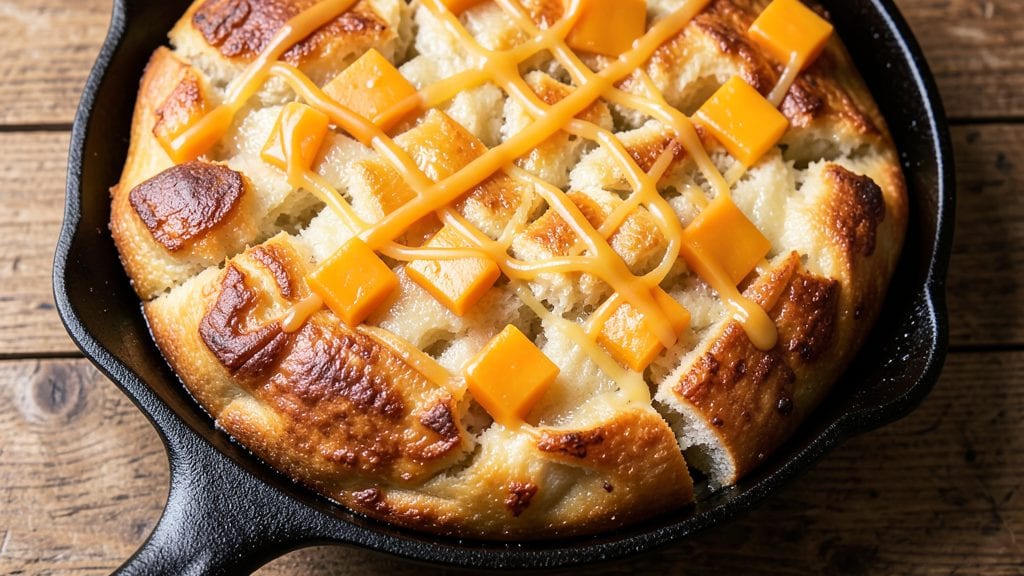
This Amish cheese bread recipe delivers the perfect balance of crispy golden crust and gooey, pull-apart cheese pockets that make every bite irresistible. Inspired by Pennsylvania Dutch traditions, it combines simple ingredients with a technique that ensures a tender interior and a crackling exterior every time.
The secret lies in the right cheese blend and proper dough handling—no fancy equipment needed, just patience and attention to detail.
What sets this recipe apart is its cultural roots, where hearty, comforting breads were staples in Amish households. Using sharp cheddar and a touch of cream cheese creates that signature melty, stretchy texture that keeps everyone reaching for seconds.
The dough rises just enough to form a sturdy yet flexible crown, ready to be baked until golden and crispy.
By the time you pull that first piece from the warm loaf, you’ll experience the magic: crispy edges that shatter slightly, giving way to soft, cheesy layers that melt on your tongue.
This recipe transforms a simple side dish into the star of any meal, whether served alongside soups, chili, or as a standalone treat.
The best part? It’s foolproof for home bakers—no special skills required, just a few key steps to ensure success. Let’s get started on creating a loaf that tastes like a taste of Amish tradition in every bite.
Ingredients for amish cheese bread
Simple pantry staples transform into a golden, pull-apart cheese bread with crispy crown and gooey pockets.
| Ingredient | Amount | Notes |
|---|---|---|
| All-Purpose Flour 🌾 | 4 cups | Sifted for even texture |
| Active Dry Yeast 🍞 | 2 ¼ tsp | Or 1 packet instant yeast |
| Granulated Sugar 🍚 | 1 tbsp | For yeast activation |
| Warm Water 💧 | ¾ cup | 110°F for optimal yeast |
| Unsalted Butter 🧈 | ½ cup | Cold, cubed for dough |
| Sharp Cheddar Cheese 🧀 | 2 cups | Shredded, aged 6+ months |
| Cream Cheese 🧀 | 4 oz | Softened, not melted |
| Large Egg 🥚 | 1 whole | Room temperature |
| Milk 🥛 | ¼ cup | Warm, enhances tenderness |
| Salt 🧂 | 1 tsp | Kosher or sea salt |
| Garlic Powder 🧄 | ½ tsp | For subtle depth |
| Sesame Seeds 🌰 | 2 tbsp | Optional for crust |
| Coarse Salt 🧂 | 2 tbsp | For topping |
| Cornmeal 🌽 | ¼ cup | For dusting pan |
The cheese blend is non-negotiable. Sharp cheddar (like Cabot or Tillamook) aged six months or longer delivers that signature tang, while cream cheese (Philadelphia or store-brand) ensures meltiness. For the best cheddar, check the deli counter at grocery stores like Whole Foods or Wegmans—they often carry blocks with better flavor than pre-shredded. Keep the cream cheese soft but not runny; it should hold its shape when pressed. The butter? Cold cubes create flaky layers, so resist the urge to soften it completely. If you're in a pinch, European-style butter (like Plugrá) works better than margarine for that rich flavor.
No sharp cheddar? Pepper Jack adds heat, or Gruyère for nuttiness—just reduce to 1.5 cups to maintain balance. Out of cream cheese? Substitute ricotta at the same weight, but expect slightly less stretch. The sesame seeds are optional but add texture; poppy seeds or everything bagel seasoning work too. For the dough, if you don’t have instant yeast, proof the active dry yeast in warm water with sugar first—it’ll save your bake. The milk can be swapped for buttermilk (same amount) for extra tang, or warm water if you’re out of dairy. Pro tip: use a kitchen scale for the cheeses if you’re feeling precise—measuring by volume can lead to dry dough.
This dough needs time—plan for at least 2 hours from mixing to baking. Shape it into a round loaf and let it rise until it’s puffy but not doubled; overproofing leads to a dense crumb. For the crispy crown, brush the top with melted butter after baking and sprinkle with coarse salt while it’s still warm. Store leftovers in an airtight container at room temperature for 2 days or freeze for 3 months. To reheat, wrap in foil and warm at 350°F for 10 minutes—no microwave! The best part? It reheats beautifully, making it perfect for meal prep. If you’re serving a crowd, double the recipe and bake in a 9x13-inch pan for an easy sheet-pan version.
Why You'll Love This Recipe
- No-Knead Magic: I swear by this dough—just mix flour, yeast, sugar, and warm water, let it rise overnight, then fold in butter. No standing at the counter, no overworking the dough. It’s the kind of recipe that lets you not stress.
- Buttery Cheese Bliss: That warm, pull-apart texture with melted butter and cheese? It’s like a hug in bread form. The sugar caramelizes just enough to balance the richness, and the butter keeps every bite tender. Honestly, I’ve seen grown men fight over the last slice.
- Weeknight Hero: Slap it together before bed, wake up to risen dough, and bake it fresh in the morning. It’s my go-to for lazy Sundays or when I forget to meal prep. Even my picky teenager grabs a slice straight from the oven—no complaints.
- Budget Stretch: Flour, yeast, and butter are pantry staples, and this recipe stretches them far. Make two loaves, freeze one, and you’ve got a $3 lunch for days. Between us, I’ve fed a crowd of six for under $10 with this and a side salad. Solid math.
Step-by-step instructions for Amish cheese bread
Here's how to create a golden, crispy cheese bread with that signature pull-apart texture.
Activate the Yeast and Prepare the Dough Base
In a small bowl, combine the 0.75 cup warm water (about 110°F), 1 tbsp granulated sugar, and 2.25 tsp active dry yeast. Let it sit for 5-10 minutes until the mixture becomes frothy and bubbly—this confirms the yeast is active. If it doesn't bubble, your yeast may be dead, and you'll need to start over.
In a large mixing bowl, whisk together the 4 cups all-purpose flour, 1 tsp salt, and 0.5 tsp garlic powder. Make a well in the center and pour in the yeast mixture along with the 0.25 cup milk and 1 whole large egg. Mix with a wooden spoon until a shaggy dough forms. The dough will be sticky at this stage, but that's normal.
Incorporate the Cheeses and Knead the Dough
Cut the 0.5 cup unsalted butter into small cubes and add it to the dough. Using your hands or a dough hook attachment on low speed, knead the butter into the dough until it begins to soften and incorporate. Then, add the 2 cups shredded sharp cheddar cheese and 4 oz softened cream cheese, kneading until fully combined and the dough becomes smooth and elastic.
Continue kneading for 5-7 minutes by hand or 3-4 minutes with a dough hook until the dough pulls away from the sides of the bowl and springs back when pressed. The dough should be soft but not sticky—if it's too sticky, add 1-2 tablespoons more flour as needed. Once ready, cover the bowl with a damp towel and let it rise in a warm place for 1 hour or until doubled in size.
Shape and Prepare the Bread for Baking
Preheat your oven to 375°F and lightly grease a 9x13-inch baking dish. Sprinkle the bottom of the dish with 0.25 cup cornmeal to prevent sticking. Punch down the risen dough to release any air bubbles, then transfer it to the prepared baking dish. Press the dough into an even layer, spreading it to the edges of the dish.
Cover the dough again with a damp towel and let it rise for another 30-45 minutes until it puffs up slightly. While it rises, melt 2 tbsp unsalted butter and brush it lightly over the top of the dough. Sprinkle evenly with 2 tbsp sesame seeds and 2 tbsp coarse salt for that classic Amish cheese bread crust.
Bake Until Golden and Crispy
Bake the cheese bread in the preheated oven for 25-30 minutes until the top is deep golden brown and the edges are crispy. The bread should pull apart easily in the center, revealing a gooey, melted cheese interior. If the top browns too quickly, tent the dish with aluminum foil to prevent over-browning while the center finishes cooking.
Remove the bread from the oven and let it cool for 5-10 minutes before serving. The cheese bread will continue to set as it cools, making it easier to pull apart into crispy, cheesy pieces. Serve warm for the best texture and enjoy with a side of marinara sauce or as a hearty appetizer.
Pro Tips For Making Amish Cheese Bread
- Test Yeast First: Skip straight to mixing if you’re unsure about your yeast—it’s a common waste of time. Instead, dissolve 1 teaspoon of sugar in ¼ cup warm water, sprinkle in the yeast, and wait 5–10 minutes for frothy bubbles. If nothing happens, your yeast is dead or your water’s too hot, and you’ll save yourself a sad, flat loaf.
- Butter at Room Temp: Cold butter pockets won’t melt evenly, leaving you with dry, crumbly bread. Take the butter out of the fridge 30 minutes before mixing—it should press easily but not be greasy. I used to rush this, and the cheese bread always tasted underwhelming until I fixed it.
- Don’t Over-Knead: This dough is forgiving, but overworking it makes the bread tough. Knead just until it pulls away from the bowl and springs back when poked—about 5–7 minutes by hand. I learned this the hard way after making a chewy brick instead of the flaky, tender loaf everyone loves.
- Proof Until Puffy: The dough needs time to rise until it’s nearly doubled and jiggly when shaken. Rushing it to the oven too early means a dense, heavy loaf. Cover it and let it rise in a warm spot (like a turned-off oven with the light on) for 45–60 minutes—yes, even if you’re impatient.
Essential equipment for this dish
Dough Tools
You don’t need fancy equipment—just a few basics. A large mixing bowl (I use Pyrex glass for easy cleanup) and a wooden spoon for initial mixing work perfectly.
For kneading, either use your hands (I find this gives better control) or a stand mixer with a dough hook attachment (like the KitchenAid KSM150T on sale for under $100). If mixing by hand, flour your surface well to prevent sticking. 💪
Baking Essentials
A 9x13-inch baking dish is non-negotiable—CorningWare or CeramicSafe brands hold up best to cheese temperatures. Preheat your oven to 375°F using the convection setting if available for even browning.
A lightweight aluminum foil tent helps prevent over-browning while the center cooks. For the crispy crown, a pastry brush (like OXO Good Grips) spreads melted butter evenly.
Cheese Prep Tools
Sharp cheddar is key—use a box grater (not pre-shredded) for better texture. A microplane works for cream cheese if you prefer finer shreds. For measuring, a kitchen scale (like OXO Good Grips) ensures precise cheese amounts.
If you’re in a hurry, a food processor with the shredding blade speeds up prep for 2 cups sharp cheddar in seconds. 🧀
Optional Upgrades
For the ultimate crust, a sesame seed sprinkler (or just a small bowl and spoon) distributes seeds evenly. A digital thermometer (like Thermoworks Smoke) monitors dough temperature—ideal dough should be 75-78°F before baking.
For meal prep, quart-sized freezer bags store leftovers perfectly, while parchment paper lines pans for easy release. ❄️
Budget-Friendly Swaps
Skip the stand mixer? A rolling pin and extra flour help shape the dough. No pastry brush? A paper towel works for butter application. Pre-shredded cheese is fine in a pinch, but add 1 tsp cornstarch per cup to prevent clumping.
For salt, Morton kosher salt is affordable and easy to measure. Every tool has a substitute—just adapt! 💡
Nutrition facts
Frequently asked questions
What makes this Amish-style cheese bread different from regular cheese bread?
The key difference lies in the cheese blend and technique. This recipe uses a mix of sharp aged cheddar (for tang) and cream cheese (for meltiness) that creates signature pull-apart pockets. The dough also gets a longer rise time to develop flavor, and the crust is finished with sesame seeds and coarse salt for that authentic Amish touch. The result is a crispy crown with gooey, stretchy cheese layers.
Can I make this recipe without a stand mixer?
This dough works perfectly by hand. After mixing the wet ingredients with flour, knead on a lightly floured surface for 5-7 minutes until smooth and elastic. The dough should pull away cleanly when pressed. For extra control, use a rolling pin to help shape it into an even layer before baking. The hand-kneaded version often has better flavor development too!
Why did my cheese bread turn out dense instead of crispy?
Dense bread usually means one of three things: over-kneading, underproofing, or too much cheese. First, check your kneading time—5-7 minutes by hand is plenty. Second, ensure the dough rises until it's doubled in size (about 1 hour at room temperature). Finally, if you used more than 2 cups cheese, reduce to maintain the right texture. Preheat your oven to 375°F and use a 9x13-inch pan for proper heat distribution.
How long can I keep leftovers, and how do I reheat them?
Store leftovers in an airtight container at room temperature for 2 days or freeze for 3 months. To reheat, wrap slices in foil and warm at 350°F for 10 minutes—never microwave! The foil traps moisture while the oven gently crisps the edges. For extra crunch, brush with melted butter before reheating. The texture stays best when reheated fresh from frozen.
Can I substitute other cheeses for the sharp cheddar?
Yes! For a milder flavor, try Colby Jack (reduce to 1.5 cups). Want nuttiness? Gruyère works well but use 1.75 cups for similar meltiness. For heat, pepper jack adds spice. Avoid pre-shredded cheese—it contains anti-caking agents that make the bread dry. Always measure by weight if possible for consistent results.