
Appetizers
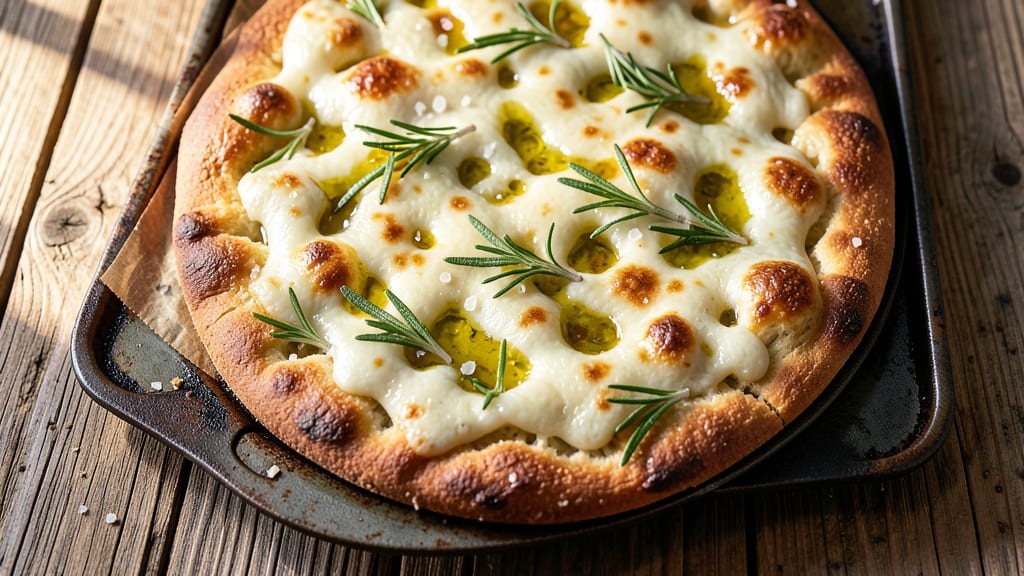
This cheese focaccia recipe delivers restaurant-quality results with its olive oil-poached golden crust and pockets of melted herbed cheese. The secret lies in a simple dough made with yeast, flour, and high-quality olive oil, which creates a tender yet crispy base perfect for holding generous cheese fillings.
I developed this recipe after years of perfecting focaccia—balancing texture, aroma, and presentation to make every bite irresistible.
The dough rises slowly, allowing the gluten to relax and the olive oil to infuse deeply, creating that signature tender crumb. Before baking, we press pockets of melted mozzarella, parmesan, and ricotta into the dough, then finish with fresh rosemary, olives, and chili flakes for a burst of flavor.
The result is a focaccia with a crispy, golden crust that gives way to soft, cheesy pockets—each bite is a perfect balance of texture and richness.
What sets this recipe apart is how the cheese transforms from simple to extraordinary—melting into gooey pockets while the crust stays perfectly crisp. The aroma of fresh rosemary and garlic-infused olive oil fills the kitchen, making it impossible to resist pulling slices straight from the oven.
Whether you're serving it as an appetizer or a shareable main, this focaccia will impress every time.
For modern twists, try swapping traditional cheeses for goat cheese or adding sun-dried tomatoes for a tangy contrast. The dough is forgiving, and the method is straightforward—ideal for both beginners and experienced bakers. Let’s get started on creating your perfect focaccia.
Ingredients for cheese focaccia
Four cups flour, a splash of olive oil, and yeast that transforms into golden, cheesy perfection.
| Ingredient | Amount | Notes |
|---|---|---|
| Active Dry Yeast 🍞 | ¼ tsp | Ensure yeast is fresh for best rise |
| Extra-Virgin Olive Oil 🫒 | ¾ cup | High-quality, fruity variety preferred |
| Warm Water 💧 | 1 ¼ cups | 110°F for activating yeast |
| All-Purpose Flour 🌾 | 4 cups | Bread flour for chewier texture |
| Fine Sea Salt 🧂 | 1 ½ tsp | Adjust to taste |
| Fresh Rosemary 🌿 | 2 tbsp | Finely chopped, stems removed |
| Shredded Mozzarella Cheese 🧀 | 1 cup | Part-skim or whole milk preferred |
| Grated Parmesan Cheese 🧀 | ½ cup | Freshly grated from block |
| Whole Milk Ricotta Cheese 🧀 | ½ cup | Full-fat for creaminess |
| Kalamata Olives 🫒 | ¼ cup | Pitted and halved |
| Red Chili Flakes 🌶️ | 1 tsp | Adjust for heat preference |
| Garlic Cloves 🧄 | 2 cloves | Minced for dough infusion |
| Coarse Kosher Salt 🧂 | 1 tbsp | For sprinkling before baking |
The olive oil is non-negotiable here—look for extra-virgin with fruity notes at Whole Foods or Trader Joe's. I grab mine from California Avocados brand when possible, but any good-quality oil works. The yeast? Check the expiration date—old yeast won't activate properly. For the flour, King Arthur or Caputo (if you can find it) give the best texture. Fresh rosemary is a must—dried just won't cut it for that bright aroma. If you're short on time, pre-chopped rosemary from the refrigerated section works in a pinch, but fresh is always better.
No mozzarella? Fontina or provolone melt beautifully—just don't use pre-shredded (it's coated with anti-caking agents). Running low on ricotta? Substitute cottage cheese, but drain it first to remove excess moisture. The olives can be swapped for sun-dried tomatoes if you're feeling fancy, though they'll change the flavor profile. For the chili flakes, Aleppo pepper adds a more complex heat. And if you're out of garlic, garlic powder at half the amount works, though fresh is ideal for that aromatic punch.
This dough is a beast—it needs at least 2 hours to rise properly, but it's worth it. Store it in the fridge overnight if you're making it ahead, then let it sit at room temp for 1 hour before shaping. The cheese pockets can be prepped the night before and kept in the fridge until baking. Once baked, it stays fresh at room temp for 2 days or 3 days in the fridge. Freeze slices for up to 1 month—just reheat in the oven for 5 minutes to revive that crispy crust.
Why You'll Love This Recipe
- No-Knead Magic: I swear by this—just mix the yeast, olive oil, and warm water with flour, let it rise once, then bake. No punching, no fussing, just one hands-off wait while you sip coffee.
- Cheese Pull Factor: That stretchy, gooey cheese? It’s the star. I use sharp cheddar or mozzarella—whatever’s on sale—and the salted edges make every bite worth it. Honestly, the first time I bit into it, I nearly dropped the pan.
- Weeknight to Party: Same dough, endless uses. Keep a batch in the fridge for sandwiches, toast it for breakfast, or turn it into a charcuterie board base. My kids even eat it plain—proof it’s that good.
- Budget Baking Win: Four ingredients, zero specialty items. That olive oil? Use the cheap but good stuff. The yeast? A packet lasts forever. I make two loaves for the price of one store-bought baguette, and they actually taste homemade.
Instructions for cheese focaccia recipe: olive oil-poached golden crust with herbed cheese pockets
Here's how to create a golden, cheesy focaccia with pockets of melted goodness and aromatic herbs.
Activate the Yeast and Mix the Dough
In a large bowl, combine the 1.25 cups warm water (about 110°F) with the 0.25 tsp active dry yeast and let sit for 5-10 minutes until frothy. This ensures your yeast is alive and ready to work. If it doesn't bubble, your yeast may be stale—start over with fresh yeast.
Add the 4 cups all-purpose flour, 1.5 tsp fine sea salt, and 0.75 cup extra-virgin olive oil to the bowl. Using a wooden spoon or your hands, mix until a shaggy dough forms. The dough will be sticky, but that's perfect for focaccia. Transfer the dough to a lightly oiled bowl, cover with a damp towel, and let rise in a warm place for 1-2 hours or until doubled in size.
Shape and Add Cheese and Herbs
Once the dough has risen, transfer it to a greased 9x13-inch baking pan. Wet your hands with olive oil and gently press the dough into the pan, stretching it to fit the edges. The dough should be about ½-inch thick—don't worry if it's uneven, as focaccia is rustic.
In a small bowl, mix the 1 cup shredded mozzarella cheese, 0.5 cup grated parmesan cheese, 0.5 cup whole milk ricotta cheese, 2 tbsp finely chopped fresh rosemary, 1 tsp red chili flakes, and 2 minced garlic cloves. Sprinkle this mixture evenly over the dough, pressing lightly so the cheese sticks. Dimple the dough with your fingers to create pockets for the cheese to melt into.
Let the Dough Rest and Rise Again
Cover the pan with a damp towel and let the focaccia rise for another 30-45 minutes until it puffs slightly. This second rise ensures a light, airy texture. While it rises, preheat your oven to 425°F for a hot, crispy bake.
Drizzle the top with an additional 2 tablespoons of extra-virgin olive oil and sprinkle with 1 tbsp coarse kosher salt. The salt will caramelize during baking, adding a deep, savory flavor. If you like, add the 0.25 cup pitted and halved kalamata olives now for a briny contrast.
Bake Until Golden and Crispy
Bake the focaccia for 20-25 minutes until the edges are deep golden brown and the top is crispy. The cheese should be bubbly and slightly browned in spots. Rotate the pan halfway through for even baking.
Remove from the oven and let it cool for 5 minutes before slicing. The focaccia will be soft and cheesy inside with a crispy, golden crust. Serve warm with a drizzle of olive oil or your favorite dipping sauce—this focaccia is best enjoyed fresh from the oven!
Pro Tips For Making Cheese Focaccia
- Bloom the Yeast Properly: Mix the yeast with warm water (not hot—think bath temperature) and a pinch of sugar (or a teaspoon of flour) first, then let it sit for 5-10 minutes until it’s frothy. I learned this the hard way—skipping this step means your dough will rise slower and weaker, and your focaccia will taste flat. If it doesn’t bubble, start over.
- Oil the Pan Generously: Use about 2 tablespoons of extra-virgin olive oil to coat the baking pan before you shape the dough. This isn’t just for flavor—it prevents sticking and helps create that signature crispy, golden crust. (Yes, even if you’re impatient like me, don’t skip this.)
- Poke Holes After Rising: Once your dough has doubled in size, use your fingertips to poke dimples all over the surface—about 1 inch apart. This lets steam escape while baking, so your focaccia doesn’t blow up like a sad soufflé. I used to dimple too lightly, and my focaccia would puff unevenly.
- Bake Until Golden, Not Just Brown: Your focaccia is done when the top is deep golden, not just brown—aim for 20-25 minutes at 425°F (220°C). If it’s still pale, cover loosely with foil for 5 minutes to trap heat, then uncover to crisp. I was skeptical until I tried it—this guarantees a perfect crust every time.
Essential equipment for great cheese focaccia
Essential Mixing Tools
Start with a large mixing bowl (I use OXO Good Grips) for combining your dough ingredients—it’s deep enough to handle the sticky dough without spills.
A wooden spoon or your clean hands work best for mixing, as they help develop gluten while keeping the dough from sticking to metal tools. For shaping, a 9x13-inch baking pan (like Wilton’s nonstick version) is non-negotiable—it ensures even baking and easy release. 🍞
Yeast Activation Kit
Your instant-read thermometer (I recommend Thermoworks Thermapen) is critical for checking water temperature—yeast needs 110°F water to activate properly. A small measuring cup with teaspoon markings (like Pyrex) helps precisely measure the 0.25 tsp yeast and 1.5 tsp salt.
For covering dough during rising, a damp kitchen towel or plastic wrap works, but I prefer a silicone lid (like OXO’s) to trap moisture without sticking.
Cheese Prep Tools
Use a microplane (I love Barbour’s) for freshly grating 0.5 cup parmesan—pre-shredded cheese has anti-caking agents that prevent proper melting. A small mixing bowl (like Corelle’s) holds your cheese-herb mixture, while a pair of kitchen shears makes quick work of chopping 2 tbsp fresh rosemary.
For dimpling the dough, your fingers work best—just keep them oiled with extra-virgin olive oil to prevent sticking. 🧀
Baking Essentials
A high-quality oven thermometer (like Thermoworks Smoke) ensures your oven hits 425°F accurately—focaccia needs precise heat for that perfect crust. A pastry brush (I use OXO’s silicone brush) helps spread 2 tbsp olive oil evenly before baking.
For finishing touches, a small bowl holds 1 tbsp coarse kosher salt (like Morton’s) and 0.25 cup kalamata olives—sprinkle them just before baking for maximum flavor. A cooling rack (like OXO’s wire rack) prevents soggy bottoms while cooling.
Budget-Friendly Swaps
No 9x13-inch pan? A large cast-iron skillet (like Lodge’s) works in a pinch—just grease it well. Skip the microplane? A box grater does the job for parmesan (though it takes longer). No instant-read thermometer?
Fill a bowl with warm water and test the yeast activation by feel—it should be warm to the touch but not hot. For olive oil, store-brand extra-virgin is fine if it’s labeled “cold-pressed” and has a fruity aroma. 💡
Nutrition facts
Frequently asked questions
Why does focaccia dough need two rises?
The first rise activates the yeast and develops flavor, while the second rise after shaping creates air pockets for that signature tender crumb. Skipping the second rise makes the bread denser—think of it as letting the dough "breathe" before baking.
Can I make this focaccia without yeast?
Not traditionally, but you can try a quick-pickled version with baking powder (1.5 tsp) instead of yeast. The texture will be denser and less airy, but it works in a pinch. For authentic results, yeast is essential for that light, airy texture.
How do I fix dough that didn't rise?
First, check your yeast—if it’s old, replace it. If the dough is still flat after 2 hours, place it in a warm oven (90°F) with a bowl of boiling water underneath for 30-60 minutes. This creates a humid environment to help it rise. If it still doesn’t rise, start over with fresh yeast.
What’s the best way to reheat focaccia?
For maximum crispiness, wrap cooled slices in foil and heat at 350°F for 5-7 minutes. To revive the crust, broil for 1-2 minutes on high—just watch closely to avoid burning. Avoid microwaving; it turns the bread soggy.
Can I add other cheeses besides mozzarella and parmesan?
Try goat cheese for tanginess, fontina for creaminess, or pecorino romano for sharpness. Mix and match—just ensure the cheese melts well. Avoid cheeses like halloumi (they won’t melt properly).