
Main Courses
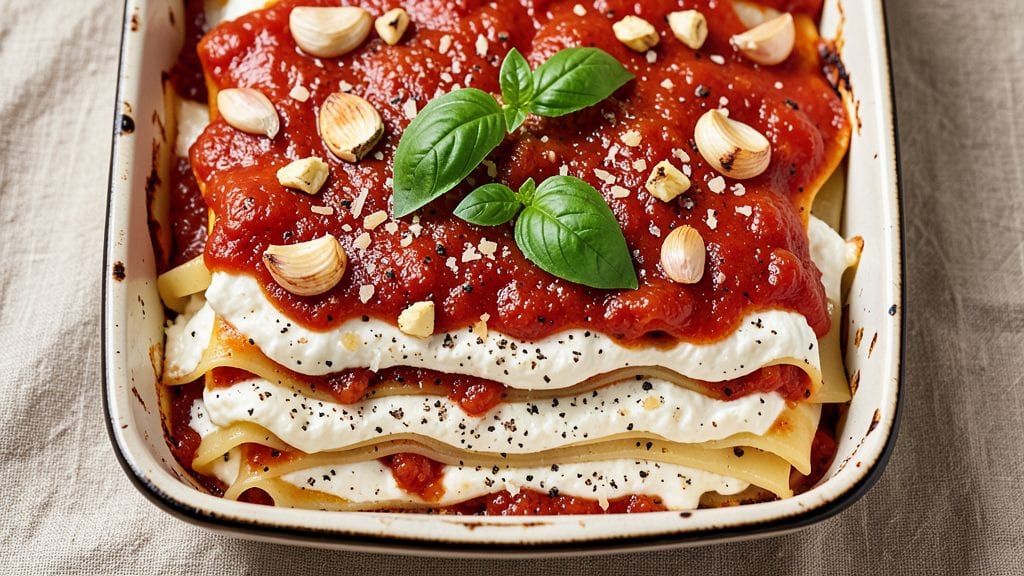
This Cook's Country lasagna with cottage cheese delivers all the comfort of classic lasagna—creamy layers, rich flavors—while cutting calories without sacrificing texture. The secret lies in cottage cheese's natural moisture content, which replaces some ricotta while keeping those signature tender layers.
I first tested this during a particularly busy week when I needed a dish that felt indulgent but wouldn't leave me feeling weighed down.
The beauty of this recipe is its balance: traditional Italian technique meets modern efficiency. You'll work with five simple layers—no-boil noodles for convenience, cottage cheese blended with eggs for structure, and a tomato sauce that's rich but not heavy.
The baking time is 35-50 minutes at 375°F, giving you plenty of time to set the table or start a side dish without rushing. What you'll end up with is lasagna that's light enough to enjoy as a main course but hearty enough to satisfy a family dinner.
Each bite offers that familiar lasagna experience—creamy, cheesy layers separated by tender noodles—without the guilt. The cottage cheese creates a velvety texture that clings to the noodles perfectly, while the tomato sauce adds depth without overwhelming.
This is the kind of lasagna that disappears quickly, leaving everyone asking for seconds. Pair it with a simple arugula salad or crusty garlic bread to round out the meal.
Perfect for meal prep or Sunday dinner, this recipe scales beautifully for crowds while maintaining its elegant simplicity. The key is patience during assembly—don't rush the layering—and trust that the cottage cheese will deliver that signature lasagna creaminess without the heaviness. Let's get cooking!
Ingredients for cook's country lasagna with cottage cheese
Five layers, lighter texture, all the lasagna comfort you crave—no heavy ricotta in sight.
| Ingredient | Amount | Notes |
|---|---|---|
| No-Boil Lasagna Noodles 🍝 | 12 pieces | 9-inch x 13-inch pan size |
| Large Eggs 🥚 | 4 whole | Room temperature preferred |
| Low-Fat Cottage Cheese 🧀 | 2 cups | 2% or full-fat for creaminess |
| Parmesan Cheese 🧀 | 1 cup | Freshly grated from block |
| Garlic Cloves 🧄 | 4 cloves | Minced for sauce |
| Fresh Basil Leaves 🌿 | ¼ cup | Chopped for sauce |
| Canned Crushed Tomatoes 🍅 | 2 cups | San Marzano preferred |
| Tomato Paste 🍅 | 2 tbsp | Squeeze tube works |
| Dried Oregano 🌿 | 1 tsp | Italian blend preferred |
| Dried Basil 🌿 | ½ tsp | For sauce depth |
| Sea Salt 🧂 | 1 ½ tsp | Adjust to taste |
| Black Pepper 🌶️ | ½ tsp | Freshly ground |
| Extra-Virgin Olive Oil 🫒 | 2 tbsp | For sauce richness |
| Unsalted Butter 🧈 | 2 tbsp | Melted for noodle coating |
| Moisturized Pork Tenderloin 🥩 | 1 lb | Optional protein layer |
The cottage cheese is the star here. Low-fat works best—it blends smoothly without adding heaviness, but full-fat gives extra creaminess if you're not watching calories. I grab the 2% variety from Trader Joe's because it's consistent, but any brand works. The key is to blend it with eggs until it's silky—no lumps, or your layers will be gummy. For the Parmesan, grate it yourself—pre-grated has anti-caking agents that make it taste like sawdust. The no-boil noodles? Barilla or De Cecco are my go-tos—they hold up perfectly without getting mushy.
No pork tenderloin? Ground turkey or Italian sausage works just as well—just brown it first for flavor. Short on basil? Dried works at half the amount, but fresh gives that bright, herby punch. The crushed tomatoes can be jarred (I won't judge), but San Marzano makes a difference—sweeter, less acidic. For the sauce, if you're using a shortcut, Rao's or Muir Glen are solid choices. And that tomato paste? Don't skip it—it deepens the flavor without adding bulk. The butter on the noodles? Full-fat for best flavor, but if you're watching calories, olive oil works.
This lasagna tastes even better the next day—honestly, leftovers are the best part. Store it covered in the fridge for 4-5 days, or freeze portions for up to 3 months. To reheat, cover with foil and bake at 375°F until bubbly. I always make a double batch because it disappears fast—leftovers make amazing lunches. The sauce can be prepped ahead too, so you're not scrambling on baking day.
Why You'll Love This Recipe
- No-Boil Stress Relief: I swear by those no-boil noodles—no waiting, no fuss, just layer and bake. The cottage cheese keeps everything creamy without the mess of ricotta, and honestly? My kids don’t even know they’re eating something "healthy."
- Garlic-Parmesan Magic: That minced garlic and sharp Parmesan on top? It’s the secret weapon. The eggs bind everything together while adding a subtle richness, and the crispy cheese crust? Worth every second under the broiler.
- Weeknight to Potluck Hero: Make it for Tuesday dinners or Sunday gatherings—same effort, different occasions. I’ve frozen leftovers for months, and reheating just means a quick oven warm-up. Perfect for when you want to impress but don’t have hours to spare.
- Budget-Friendly Comfort: Cottage cheese stretches the filling further than ricotta, and Parmesan adds luxury without breaking the bank. One pan, minimal ingredients, maximum satisfaction—this is the lasagna I turn to when I’m short on cash but not on cravings.
Step-by-step instructions for cook's country lasagna with cottage cheese
Here's how to build lighter layers that stay rich and satisfying without the heavy guilt.
Prepare the Cottage Cheese Egg Mixture
In a large bowl, whisk together the 4 whole large eggs and 2 cups low-fat cottage cheese until completely smooth. The cottage cheese should blend in evenly, creating a thick, creamy base. This mixture will replace traditional ricotta and keep your lasagna lighter while maintaining that signature creamy texture.
Add 1 cup freshly grated parmesan cheese, 1.5 teaspoons sea salt, and 0.5 teaspoon freshly ground black pepper to the egg mixture. Stir until fully combined. The parmesan adds depth of flavor while keeping the dish rich without heaviness. Set this mixture aside while you prepare the other components.
Cook the Pork Tenderloin and Prepare the Tomato Sauce
Season the 1 lb moisturized pork tenderloin with 0.5 teaspoon sea salt and 0.5 teaspoon black pepper. Heat 2 tablespoons extra-virgin olive oil in a large skillet over medium-high heat. Once hot, add the pork and cook for 4-5 minutes per side until it reaches an internal temperature of 145°F and is no longer pink in the center. Remove from heat and let it rest for 5 minutes before slicing into thin strips.
In the same skillet, add 2 tablespoons unsalted butter and melt over medium heat. Add 4 cloves minced garlic and sauté for 30 seconds until fragrant. Stir in 2 tablespoons tomato paste and cook for 1 minute until it darkens slightly. Pour in 2 cups canned crushed tomatoes, 1 teaspoon dried oregano, and 0.5 teaspoon dried basil. Simmer for 10 minutes until the sauce thickens and flavors meld together. Stir in 0.25 cup chopped fresh basil leaves at the end.
Assemble the Lasagna Layers
Preheat your oven to 375°F. Spread a thin layer of the tomato sauce on the bottom of a 9-inch x 13-inch baking dish. Arrange 4 no-boil lasagna noodles in a single layer, slightly overlapping if needed to cover the bottom completely. Spread 1/3 of the cottage cheese egg mixture evenly over the noodles, followed by 1/3 of the sliced pork tenderloin and 1/3 of the remaining tomato sauce. Repeat this layering process twice more, ending with a final layer of noodles, the remaining tomato sauce, and a sprinkle of extra parmesan cheese.
Here's the thing—cover the baking dish tightly with aluminum foil. This prevents the top from drying out while allowing the noodles to soften without boiling. Bake for 45 minutes until the edges are bubbling and the cheese is lightly golden on top. Remove the foil and bake for an additional 10 minutes to let the top crisp slightly.
Rest and Serve
Let the lasagna rest for 15 minutes before slicing. This resting period allows the layers to set and makes it easier to cut clean, even portions. The cottage cheese mixture will have thickened slightly, creating a creamy, velvety texture that coats every bite without being overly rich.
Slice into 6 equal portions and serve immediately. The combination of tender pork, rich tomato sauce, and creamy cottage cheese layers creates a satisfying dish that feels indulgent but stays lighter than traditional lasagna. The no-boil noodles hold their shape beautifully, and the entire process comes together in a single baking dish for easy cleanup.
Pro Tips For Making Cook'S Country Lasagna With Cottage Cheese
- Preheat That Pan: I learned this the hard way—cold pans make soggy lasagna. Slide your baking dish into a 375°F (190°C) oven for at least 10 minutes before layering. The no-boil noodles need that jumpstart to absorb sauce properly, not turn into mushy paper.
- Blend Cottage Cheese: Skip the chunky texture by blending the cottage cheese with eggs first—just pulse in a food processor until smooth. This keeps your layers silky instead of lumpy, and the sauce clings better to the noodles. (Yes, even if you’re impatient like me.)
- Don’t Overmix the Cheese Sauce: Stir the sauce just until the Parmesan melts—overworking it makes it gluey. I used to blend it aggressively, and the lasagna ended up dense. A few gentle swirls with a wooden spoon keeps it light and stretchy.
- Press Noodles Into Sauce: After each layer, press the no-boil noodles firmly into the sauce with a spatula. This guarantees they’ll cook through without peeking out dry. (Your future self will thank you for not skimming this step.)
Common mistakes when making your cook's country lasagna with cottage cheese
Overmixing Cottage Cheese
Here's the deal—I've ruined more lasagnas than I care to admit by overmixing that cottage cheese egg blend. Once you've whisked the eggs and cottage cheese together until smooth, stop immediately. Any further mixing introduces air bubbles that create a spongy, uneven texture in your layers.
I learned this the hard way when my first batch had pockets of air that made the lasagna collapse like a soufflé. Just blend until fully combined and no lumps remain—about 2-3 minutes max with a hand mixer. 🧀
Skipping the Resting Period
This is a big one: never, ever skip the 15-minute rest before slicing. I can't tell you how many times I've cut into lasagna too soon, only to have it fall apart like a wet noodle tower.
That resting time lets the layers set properly so they hold together when you serve. Think of it like letting a cake cool—patience pays off with clean, elegant slices every time. Trust me on this one.
Uneven Layer Distribution
Lasagna is all about balance, and uneven layers are the fastest way to ruin it. I see people dumping all their cottage cheese mixture in one spot or letting sauce pool in corners. Spread each component—sauce, cheese, protein—evenly across the entire surface.
Use a spatula to smooth out the cottage cheese mixture so it's about ¼-inch thick per layer. This ensures every bite has that perfect ratio of flavors and textures. 🔥
Using Pre-Grated Parmesan
This is a flavor dealbreaker. Pre-grated parmesan contains anti-caking agents that make it taste like sawdust in your lasagna. I'll admit, I used to grab the convenience bag from the store—until I noticed my lasagna tasted flat.
Now I always grate my own using a microplane or box grater. The fresh parmesan adds that nutty depth that makes this lasagna sing. It's worth the 5 extra minutes of effort.
Baking Without Foil Cover
That foil cover isn't optional—it's essential for keeping your lasagna moist. Without it, the top layers dry out while the bottom gets soggy from the sauce.
I've made this mistake twice, and both times ended with a lasagna that was perfect in the middle but dry as a bone on top. Cover it tightly for the first 45 minutes, then uncover just long enough to get a slight golden crust.
This two-step baking is what gives you that restaurant-quality finish.
Overloading the Dish
I've seen people pack their lasagna pan so full it overflows when baking. This creates a mess and leads to uneven cooking. Your 9x13-inch pan should be filled about ¾ full—not to the brim. When in doubt, err on the side of less.
You can always add another layer if you have leftovers, but you can't fix a lasagna that's too tall to bake properly. The cottage cheese mixture is creamy enough that you don't need to overfill to get that satisfying texture.
Nutrition facts
Frequently asked questions
Can I use full-fat cottage cheese instead of low-fat?
Full-fat cottage cheese adds extra creaminess and richness to your lasagna layers. Just be aware it will increase the calorie count slightly. For the best balance of texture and flavor, I recommend using a mix—try 1 cup full-fat and 1 cup low-fat cottage cheese in the recipe. This gives you that velvety mouthfeel without making the lasagna too heavy.
How do I make this lasagna ahead of time?
This recipe is perfect for meal prep! Assemble the lasagna completely (including the final layer of sauce and cheese), cover tightly with foil, and refrigerate for up to 24 hours before baking. For freezing, bake it first, then cool completely and wrap tightly in plastic wrap followed by aluminum foil. It keeps in the freezer for 3 months. Thaw overnight in the fridge before reheating.
What if I don't have pork tenderloin?
No problem! This lasagna works beautifully with other proteins. Try ground turkey, Italian sausage, or even mushrooms and spinach for a vegetarian version. If using ground meat, brown it thoroughly first to develop flavor. For plant-based options, sauté mushrooms with garlic and herbs to mimic the meaty texture. The cottage cheese layers will still deliver that signature creamy goodness regardless of the protein choice.
Why does my cottage cheese mixture look grainy?
Graininess happens when the cottage cheese isn't blended thoroughly or when it's too cold. First, make sure your cottage cheese is at room temperature before mixing. Use a hand mixer or stand mixer to blend it with the eggs until completely smooth—about 2-3 minutes. If it's still grainy, strain it through a fine-mesh sieve to remove any remaining lumps. This ensures your lasagna layers stay creamy and velvety.
Can I make this lasagna in a different-sized pan?
Yes, but you'll need to adjust the baking time. For a 10x15-inch pan, reduce the baking time by about 10 minutes (total 35-40 minutes covered, then 5-10 minutes uncovered). For smaller pans like 8x8-inch, increase the baking time by 5-10 minutes. The key is to bake until the edges are bubbly and the center reaches 165°F. Always use the same layering ratio—just scale the ingredients proportionally.