Main Courses
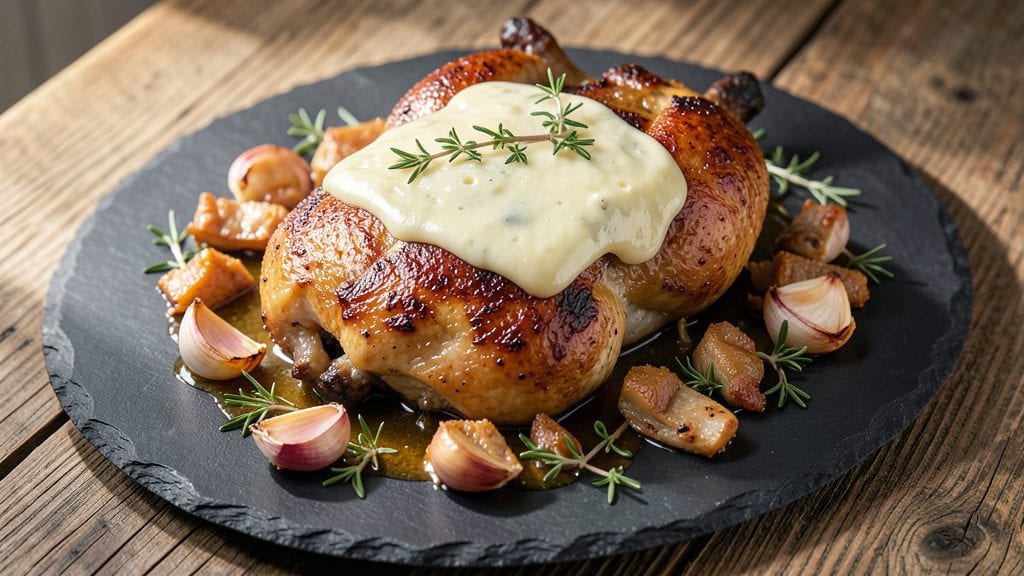
This duck cheese stuffed chicken recipe transforms ordinary roasted chicken into a showstopper with crispy skin and rich duck fat magic that’ll have everyone asking for seconds.
The secret lies in using duck confit—not just for stuffing, but as the star flavor carrier that renders into golden crispness while keeping the meat impossibly tender inside.
What makes this recipe truly special is the dual-layer technique: first, we render duck fat in the oven to create a flavorful crust, then we stuff the cavity with duck confit and cheese for a melt-in-your-mouth surprise.
The combination of crispy skin, creamy cheese, and duck-infused richness creates a dish that feels both rustic and refined—perfect for special occasions or when you want to impress without spending hours in the kitchen.
The result is a crispy, golden-brown chicken with a cavity packed with melted cheese and shredded duck confit, creating a contrast of textures and flavors that’s impossible to resist.
The duck fat bastes the chicken continuously, ensuring every bite is infused with its deep, savory notes while the cheese adds a velvety contrast that balances the richness.
This recipe works beautifully for holiday dinners or elegant weeknight meals when you want to elevate simple chicken into something extraordinary. The preparation takes just 30 minutes, but the flavor development happens during the slow roast—meaning you’ll have a restaurant-quality dish with minimal active time. Let’s get cooking!
Ingredients for duck cheese
Four pounds of chicken plus duck confit and cheese—this is the magic combo for crispy skin and rich flavor.
| Ingredient | Amount | Notes |
|---|---|---|
| Whole Chicken 🍗 | 4 lb | Bone-in, skin-on preferred |
| Duck Confit 🦆 | 1 cup | Shredded, store-bought or homemade |
| Gruyère Cheese 🧀 | 1 cup | Freshly grated, aged variety |
| Duck Fat 🫒 | ½ cup | Rendered from duck confit |
| Garlic Cloves 🧄 | 6 cloves | Minced, fresh preferred |
| Fresh Thyme 🌿 | ¼ cup | Chopped, stems removed |
| Olive Oil 🫒 | ¼ cup | For initial coating |
| Salt 🧂 | 1 ½ tbsp | Kosher or sea salt |
| Black Pepper 🌶️ | 1 tsp | Freshly ground preferred |
| Fresh Rosemary 🌿 | ⅛ cup | Chopped, for stuffing |
| Butter 🧈 | ½ cup | Unsalted, softened |
| Dijon Mustard 🍯 | 1 tbsp | For under the skin |
| Lemon Zest 🍋 | 1 tbsp | Freshly grated |
The duck confit is non-negotiable here. Costco sells pre-made packs, or you can DIY by slow-cooking duck legs in their own fat. Look for confit that's still moist and richly flavored—none of that dry, rubbery stuff. Gruyère is my go-to cheese because it melts beautifully and has that nutty depth, but Comté or Emmental work too. If you can't find duck fat separately, render it from the confit by simmering it gently in a pan until the meat falls apart. That golden liquid? Pure flavor gold. The chicken should be fresh—ask your butcher for a whole bird with good marbling in the skin for maximum crispiness.
No duck confit? Substitute with extra duck fat plus a handful of shredded chicken thigh—it won't be identical, but close. Gruyère too pricey? Sharp cheddar or fontina handle the heat well. Fresh herbs wilt fast in the oven, so dried thyme at half the amount works in a pinch. The Dijon mustard is key for that tangy kick under the skin—don't skip it. For the lemon zest, organic lemons have more flavor, but conventional works too. Just make sure it's freshly grated (the good stuff, not the pre-zested kind). The butter? Full-fat only—it's what gives that golden crust its richness.
This chicken reheats like a dream—just warm it in the oven with a splash of water for 10-15 minutes. The stuffing stays gooey and delicious. Store leftovers in the fridge for 3-4 days, but honestly, it's so good it won't last that long. For make-ahead prep, stuff the chicken the night before and refrigerate uncovered so the flavors meld. The duck fat can be stored in the fridge for up to 6 months—it's one of those ingredients that only gets better with time. Portion the stuffing mix ahead if you're feeding a crowd, but leave the chicken whole until serving for maximum drama.
Why You'll Love This Recipe
- One-Pan Magic: I swear by this trick—just toss the chicken, confit, and cheese on a sheet pan, and let the duck fat do all the work. No chopping, no fussing, just golden, melty perfection with minimal cleanup.
- Rich, Deep Umami: That duck confit? It’s like liquid gold—salty, tender, and packed with flavor. When it melts into the Gruyère, you get this insane balance of creamy, crispy, and savory that’ll have you licking the plate.
- Weeknight or Weekend Star: Between us, this is my go-to for when I don’t want to slave away in the kitchen. Throw it together for a lazy Sunday brunch or impress guests with zero stress—it’s equally at home on a weeknight or holiday table.
Step-by-step instructions for duck cheese stuffed chicken
This method delivers restaurant-worthy crispy skin and a rich, flavorful center every time.
Prepare the Chicken for Maximum Crisp
Start by removing the chicken from the refrigerator and letting it sit at room temperature for 30 minutes. This ensures even cooking. Pat the chicken completely dry inside and out with paper towels—moisture is the enemy of crispy skin. I can't stress this enough: really dry it, especially under the wings and in the cavity.
Next, make a small incision on one side of the breast and gently loosen the skin from the meat using your fingers. This creates a pocket where we'll tuck our flavorful stuffing. Season the cavity generously with 1 tablespoon of salt and ½ teaspoon of black pepper. Then, spread 1 tablespoon of Dijon mustard evenly under the skin—this adds tangy depth and helps tenderize the meat.
Create the Duck Cheese Stuffing
In a medium bowl, combine the 1 cup of shredded duck confit, 1 cup of freshly grated Gruyère cheese, 6 minced garlic cloves, ¼ cup of chopped fresh thyme, ¼ cup of chopped fresh rosemary, and 1 tablespoon of lemon zest. Mix gently with your hands until everything is evenly distributed but not overworked.
This stuffing is the heart of our dish—it's where the duck fat and Gruyère create that rich, creamy center. I like to use my hands for this step because it helps distribute the duck fat evenly throughout the mixture. If you're nervous about handling raw duck confit, wear gloves or use a silicone spatula.
Stuff and Sear the Chicken
Spoon the duck cheese mixture into the pocket you created under the chicken skin, pressing it gently to fill the space. Then, carefully tuck the stuffing into the cavity as well. Tie the legs together with kitchen twine to help the chicken cook evenly, and place the chicken breast-side up on a rack set in a rimmed baking sheet.
Heat ¼ cup of olive oil and ¼ cup of duck fat in a large skillet over medium-high heat until shimmering. Carefully place the chicken in the skillet, skin-side down, and let it sear undisturbed for 8-10 minutes until the skin is golden brown and crispy. Flip the chicken and sear the other side for another 5-6 minutes. This step is crucial for developing that beautiful crust.
Roast to Juicy Perfection
Preheat your oven to 375°F. Transfer the seared chicken to the oven and roast for 45-55 minutes, or until the internal temperature reaches 165°F when measured in the thickest part of the thigh. The skin should be deep golden brown and crispy, and the juices should run clear when you pierce the thickest part of the meat.
About halfway through roasting, spoon any accumulated juices from the baking sheet over the chicken. This keeps the meat moist and adds extra flavor. I like to check the temperature after 30 minutes to make sure it's on track—ovens vary, and you don't want to overcook this bird.
Rest and Serve with Confidence
Remove the chicken from the oven and let it rest on a cutting board for 15-20 minutes before carving. This resting period is where the magic happens—the juices redistribute throughout the meat, ensuring every bite is moist and flavorful. Don't skip this step, even though it's tempting to dig in right away.
Once rested, carve the chicken and serve immediately. The crispy skin should contrast beautifully with the rich, creamy duck cheese stuffing inside. Garnish with extra chopped fresh thyme and a sprinkle of flaky sea salt to elevate the presentation. Pair with roasted vegetables or a crisp green salad to complete the meal.
Pro Tips For Making Duck Cheese
- CRACK THE CONFIT FIRST: That duck confit isn’t just flavor—it’s the sauce. Shred it roughly (no need for precision) and mix it into the duck fat while the chicken roasts. The fat renders into the meat, and the confit bits crisp as the chicken finishes. I used to save this for plating, but now I fold it in early—it’s what makes the skin actually crispy instead of greasy.
- SAUTE GARLIC IN DUCK FAT: Don’t use olive oil for the garlic. Heat 1 tablespoon of that rendered duck fat in the pan first, then add the minced garlic. It’ll bloom deeper and sweeter, with none of that bitter burn. The fat’s high smoke point lets you get it golden without turning the garlic to ash—trust me, your nose will thank you.
- DON’T SKIP THE CHEESE REST: Gruyère straight from the fridge melts unevenly and turns gloppy. Let the block sit at room temp for 20 minutes before grating—yes, even if you’re in a hurry. Cold cheese clumps and won’t coat the chicken properly. I learned this after serving a guest a sad, lumpy cheese crust. (They ate it anyway, but still.)
- USE THE DUCK SKIN AS A CRUST: After roasting the chicken, let the skin cool slightly, then press it directly onto the cheese-topped breast before broiling. The fat in the skin renders down, creating a golden, crackly shield that keeps the cheese from sliding off. It’s the thing that makes this dish look restaurant-worthy with zero effort.
Pro cooking tips for duck cheese
Duck Fat Magic
The secret to that irresistible crispy skin and rich flavor lies in the duck fat—it’s the star ingredient that transforms ordinary chicken into something extraordinary. I always render extra fat from the duck confit by simmering it gently in a saucepan until the meat shreds apart.
Strain out the solids and reserve the golden liquid—this is liquid gold for basting. Brush it under the skin before roasting, and you’ll get that signature crispiness with a deep, savory aroma. 💛
Stuffing Prep
Don’t just shove the stuffing into the chicken—prepare it like a pro. Mix the shredded duck confit and Gruyère with minced garlic, thyme, and rosemary, but stop before overworking the mixture. Overmixing releases too much moisture, which can make the stuffing watery instead of creamy.
I like to use my hands for this step—it helps distribute the duck fat evenly. If you’re nervous about handling raw duck, wear gloves or use a silicone spatula.
Searing Technique
Searing isn’t just about browning—it’s about building layers of flavor. Heat ¼ cup olive oil and ¼ cup duck fat in a skillet over medium-high heat until it shimmers.
Place the chicken skin-side down and let it sear undisturbed for 8-10 minutes—this creates a deep golden crust through the Maillard reaction. Flip carefully and sear the other side for 5-6 minutes. The key? Patience.
Rushing this step means a pale, soggy skin instead of the crispy masterpiece you’re aiming for. ⚡
Oven Temperature Control
Your oven isn’t a microwave—it’s a precision tool. Preheat to 375°F and keep it steady. I use an oven thermometer to confirm accuracy because home ovens often run hot or cold. Roast the chicken for 45-55 minutes, checking the internal temperature at 30 minutes.
The thigh should reach 165°F—any higher, and the skin risks burning before the meat is done. If the skin starts browning too fast, tent it loosely with foil to slow the process.
Resting Like a Pro
Skipping the rest is the fastest way to ruin your chicken. After roasting, let it rest for 15-20 minutes on a cutting board. This allows the juices to redistribute, ensuring every bite is moist and flavorful.
I know it’s tempting to carve immediately, but trust me—this step makes all the difference. The stuffing will stay creamy, and the skin will stay crispy. Pro tip: Place the chicken on a wire rack over a tray to catch any juices that might pool underneath.
Garnish for Impact
Presentation matters, especially for a dish this rich. Before serving, garnish with fresh thyme sprigs and a sprinkle of flaky sea salt to highlight the flavors. A drizzle of extra duck fat or a squeeze of lemon adds brightness.
Serve with roasted root vegetables or a crisp salad to balance the richness. The contrast of textures and temperatures—crispy skin, creamy stuffing, cool greens—is what makes this dish unforgettable. 💫
Nutrition facts
Frequently asked questions
Can I use chicken breast instead of whole chicken?
Whole chicken works best for this recipe because the cavity provides space for the duck cheese stuffing. However, you can adapt it for bone-in, skin-on chicken breasts by butterflying them and stuffing the center. Just reduce the oven time to 25-30 minutes at 375°F to avoid overcooking. The skin won't be as crispy as a whole bird, but it'll still deliver great flavor!
What if I don't have duck confit?
No problem! Substitute with 1 cup of shredded duck breast (cooked and shredded) plus ¼ cup of duck fat. If duck isn't available, use chicken thigh meat mixed with 2 tablespoons of butter and 1 tablespoon of olive oil to mimic the richness. The cheese will still shine, but the duck fat is what gives this dish its signature depth.
How do I prevent the cheese from leaking out?
Press the stuffing firmly into the cavity and under the skin, then secure it with kitchen twine or skewers. For extra insurance, place a small piece of parchment paper over the cavity before tying. The cheese won't leak if packed tightly, and the twine helps keep everything in place during roasting. Pro tip: Use a meat thermometer to check doneness—165°F in the thigh ensures perfect results without overcooking.
Can I make this ahead of time?
Stuff the chicken the night before and refrigerate it uncovered (this helps flavors meld). On cooking day, sear and roast as directed. The stuffing stays creamy and delicious when reheated. For leftovers, store in an airtight container for 3-4 days or freeze for up to 3 months. Reheat in a 350°F oven for 20-25 minutes to restore crispiness.
What's the best cheese alternative for Gruyère?
Gruyère's nutty flavor is key, but Comté, Emmental, or sharp cheddar work well too. For a creamier texture, try fontina or brie, but they melt faster. Avoid pre-shredded cheese—it contains anti-caking agents that prevent proper melting. Freshly grate your cheese for the best results! The duck fat will complement any melty cheese beautifully.