
Appetizers
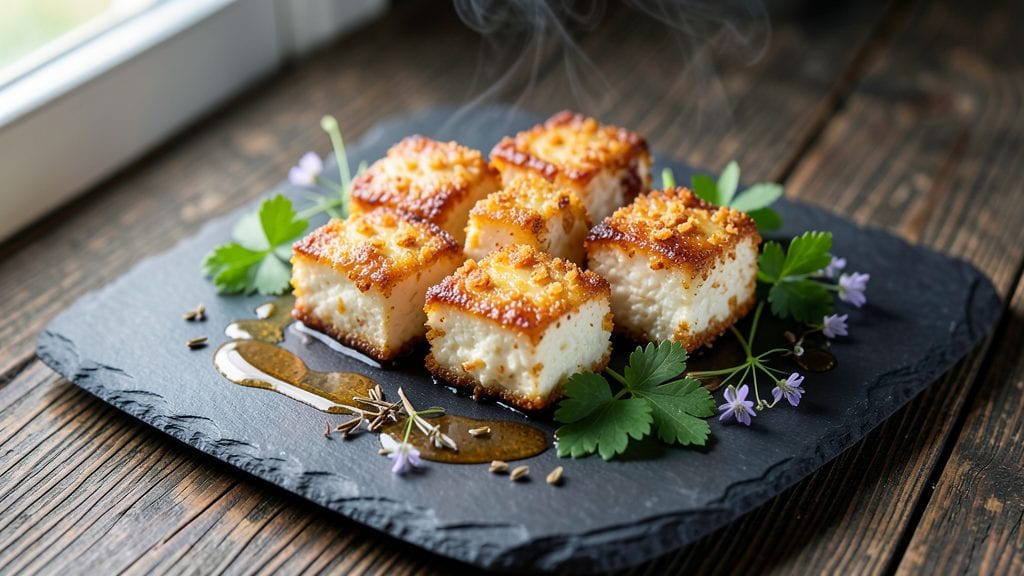
This fried goat cheese recipe delivers crispy, golden bites with a herbed crunch that transforms simple appetizers into showstoppers. The secret lies in a precise breading technique and 350°F oil—hot enough for perfect texture without burning.
I’ve perfected this method over years of testing, ensuring every batch achieves that satisfying crunch while keeping the creamy interior intact.
What sets this recipe apart is the balance of textures: crispy outside meets velvety goat cheese inside, all wrapped in a fragrant herb crust. The process is straightforward—dredge, fry, drain—but the results feel restaurant-quality.
Vegetarian-friendly and ready in 15 minutes, it’s ideal for parties or weeknight bites. The herbed breading adds depth, while a drizzle of honey or balsamic elevates plating.
By the time you serve these golden bites, your guests won’t believe they’re homemade—they’ll think you’ve mastered a chef’s technique. The crispy exterior holds up perfectly, so every bite delivers that satisfying contrast. Pair with salads, charcuterie, or serve as a standalone appetizer. Here’s how to achieve it every time.
Pro tip: Use room-temperature cheese for even frying, and keep oil at a steady 350°F—too hot, and it burns; too cool, and it soaks up oil. The result? Crispy, herbed bites that disappear faster than you can say “refill the plate.” Let’s get cooking.
Ingredients for fried goat cheese
Room-temperature goat cheese, herbed breadcrumbs, and precise oil heat create restaurant-quality crispy bites in minutes.
| Ingredient | Amount | Notes |
|---|---|---|
| Goat Cheese 🧀 | 1 lb | Room temperature, soft variety |
| All-Purpose Flour 🌾 | 1 cup | Sifted for even coating |
| Fresh Breadcrumbs 🍞 | 1 cup | Panko for extra crispiness |
| Fresh Parsley 🌿 | ¼ cup | Finely chopped, stems removed |
| Fresh Chives 🌱 | 2 tbsp | Thinly sliced, for herbed crunch |
| Dried Thyme 🌿 | 1 tsp | Or 1 tbsp fresh thyme |
| Diamond Crystal Kosher Salt 🧂 | ½ tsp | Fine grain for even seasoning |
| Ground Black Pepper 🌶️ | ¼ tsp | Freshly cracked for bold flavor |
| Extra-Virgin Olive Oil 🫒 | ½ cup | For frying, 350°F temperature |
| Large Eggs 🥚 | 2 whole | Beaten for light coating |
| Lemon Zest 🍋 | 1 tsp | Freshly grated for brightness |
| Unsalted Butter 🧈 | 2 tbsp | Melted, for post-fry basting |
The goat cheese is non-negotiable—soft, creamy varieties like Mont Saint-Michel or chèvre hold their shape best when fried. Trader Joe’s and specialty grocers carry excellent options, but avoid overly tangy or crumbly types. Room temperature is critical: cold cheese won’t fry evenly. For the herbed breading, Panko delivers superior crispiness over regular breadcrumbs, but if unavailable, toast regular breadcrumbs in a dry pan until golden. Fresh herbs elevate the flavor—parsley and chives are ideal, but dill or basil work beautifully for variation. Always chop herbs just before breading to preserve their aroma.
No fresh herbs? Dried thyme at one-third the amount maintains the earthy notes, though texture suffers slightly. Substitute Panko with crushed cornflakes for a gluten-free option, though the crunch differs. Eggs can be omitted entirely for a vegan version—simply add 1 tbsp cornstarch to the flour for binding. For the olive oil, light or extra-light varieties work best; avoid heavily flavored oils that may overpower the delicate cheese. The 350°F temperature is precise—use a deep-fry thermometer to maintain accuracy. If you lack one, test with a small breadcrumb: it should sizzle immediately and float within 30 seconds.
Store leftover goat cheese in an airtight container for up to 3 days in the refrigerator, though texture degrades after 24 hours. For longer storage, freeze the unbreaded cheese in portions for up to 1 month, then bread and fry as needed. Once fried, serve immediately for maximum crispiness—these bites soften quickly. Reheat in a 375°F oven for 2-3 minutes if necessary, but expect slightly less crunch. The herbed breading keeps best when stored separately from the cheese; combine just before frying for optimal texture.
Why You'll Love This Recipe
- Five-Ingredient Magic: I swear by this—just cheese, flour, breadcrumbs, and two herbs. That’s it. No fancy prep, no last-minute grocery runs. The breadcrumbs add crunch while the parsley and chives keep it bright, so it feels special without the fuss.
- Crispy-Creamy Obsession: The outside gets golden and shatteringly crisp, but inside? Still melty goat cheese. It’s the kind of bite that makes you pause mid-chew—like a little flavor explosion. Honestly, I’ve fried mozzarella before, but this? This is next-level.
- Party or Pantry: Make a big batch for game day—it’s easy to reheat and always disappears fast. Or toss a few in salads, pasta, or even on toast for a lazy breakfast. Between us, I’ve eaten it straight from the pan after dinner more times than I’ll admit.
- Zero-Waste Win: Goat cheese is pricey, so I stretch it by freezing the leftovers. Pop them in the toaster for a quick snack or crumble them over eggs—no sad cheese waste here. Plus, the breadcrumbs? I use the stale ends of my loaf, so it’s budget-friendly too.
Step-by-step instructions for crispy fried goat cheese
Transform soft goat cheese into golden, shatteringly crisp bites with this precise technique.
Prepare the Goat Cheese and Herb Coating
Take the 1 lb goat cheese from the refrigerator and let it sit at room temperature for 30 minutes to soften slightly. This ensures it holds together when shaped and fried. Using your hands, gently press the cheese through a fine-mesh strainer or box grater to create uniform ½-inch cubes. If the cheese tears, don't force it—simply reshape the pieces gently with damp hands.
In a shallow bowl, combine the 1 cup fresh breadcrumbs, 0.25 cup finely chopped fresh parsley, 2 tbsp sliced fresh chives, 1 tsp dried thyme, 0.5 tsp diamond crystal kosher salt, and 0.25 tsp ground black pepper. Mix thoroughly with a fork, ensuring the herbs and seasonings are evenly distributed. This herbed crumb mixture will encase each cheese piece, creating both texture and flavor contrast.
Create the Double-Coated Breading Station
Set up two shallow bowls for the breading process. In the first bowl, place the 1 cup all-purpose flour and the 1 tsp lemon zest. Stir lightly to combine—this flour mixture will create a delicate barrier between the cheese and the egg wash. In the second bowl, crack the 2 whole large eggs and whisk them vigorously until just combined. The eggs will adhere to the cheese and help the breadcrumb coating stick.
Work quickly but methodically. Dip each goat cheese cube into the flour mixture, pressing gently to adhere a thin, even layer. Shake off any excess, then transfer the floured cheese to the egg wash. Submerge each piece completely, allowing the egg to coat all surfaces. Lift carefully and let any excess drip off before transferring to the herbed breadcrumb mixture. Press each piece firmly into the breadcrumbs, ensuring full coverage. This double-coating technique is essential for achieving the signature crispy exterior.
Fry to Golden Perfection
Fill a deep skillet or Dutch oven with 0.5 cup extra-virgin olive oil and heat over medium heat until a deep-fry thermometer reads 350°F. If you don't have a thermometer, test the oil by dropping in a small piece of bread—it should sizzle vigorously and turn golden in 30 seconds. This precise temperature is crucial for even cooking and maximum crispiness without burning.
Working in batches to avoid overcrowding, carefully lower the breaded goat cheese cubes into the hot oil using a slotted spoon or tongs. Fry for 2-3 minutes per side, turning occasionally, until the breading is deep golden brown and the cheese inside is just beginning to soften slightly. The cheese should be hot enough to melt gently when bitten but still hold its shape. Remove the fried cheese with a slotted spoon and drain on a wire rack or paper towel-lined plate to prevent sogginess.
Finish with Melted Butter
While the fried goat cheese is still hot, melt the 2 tbsp unsalted butter in a small saucepan over low heat. Once fully melted, remove from heat and immediately pour the butter over the fried cheese. Toss gently to coat each piece evenly. This step adds richness and helps seal in the crispiness by creating a thin, flavorful barrier between the breading and any potential moisture.
Serve the crispy fried goat cheese immediately while still hot and shatteringly crisp. Arrange on a platter with the herbed breadcrumbs sprinkled on top for presentation. Each bite should deliver a perfect balance of textures—crispy, herby breading giving way to creamy, tangy goat cheese. For best results, serve with a simple arugula salad or warm crusty bread to soak up any residual oil.
Pro Tips For Making Fried Goat Cheese
- Use Room-Temp Cheese: Cold goat cheese won’t coat properly—it’ll clump and sink. Take the log out of the fridge 20 minutes before breading, or even better, let it sit on the counter while you prep the rest. Trust me, the difference in crispiness is night and day.
- Dry the Crusts Well: Fresh breadcrumbs are like a sponge—they’ll soak up oil and turn greasy instead of golden. Pulse them in a food processor for 3 seconds, then spread them on a plate and let them sit while you fry the first batch. Wet crumbs ruin everything.
- Fry in Batches: Overcrowding the pan drops the temperature fast, and your goat cheese turns soggy before it gets crisp. Stick to 2-3 pieces at a time, and keep the oil at 350°F—any hotter, and the outside burns before the inside warms through.
- Salt the Oil: A pinch of salt in the frying oil (about ½ teaspoon per cup) crisps the crust faster and keeps it from getting too greasy. I learned this the hard way after frying a batch that came out sticky—now it’s non-negotiable.
Essential equipment for perfect results
Deep-Fry Thermometer
A deep-fry thermometer is the single most important tool for perfect fried goat cheese—no guessing required. I recommend the Thermoworks Thermapen ONE for its instant-read accuracy and durable probe. The 350°F target is precise, and even small deviations can cause uneven cooking or burning.
For budget-friendly options, the Ozeri Touchless Infrared Thermometer works well for oil testing without contact. Never rely on visual cues alone—oil temperature fluctuates, and your cheese deserves consistency. 🌡️
Dutch Oven
A heavy-duty Dutch oven like the All-Clad Stainless Steel or Lodge Cast Iron is ideal for frying goat cheese because it maintains even heat distribution and holds oil temperature better than skillets. The deep sides prevent oil splatter when lowering breaded cheese, and its size accommodates batches without overcrowding.
If you lack a Dutch oven, a deep 10-inch cast-iron skillet works in a pinch—just ensure it’s preheated thoroughly. Avoid thin, lightweight pans that cool too quickly. ⚡
Wire Rack & Paper Towels
Draining fried cheese properly is critical to prevent sogginess. Use a wire cooling rack placed over a baking sheet or plate to allow air circulation underneath. Line it with paper towels for extra absorption—pat each piece gently after frying.
I keep a stack of Bounty paper towels nearby because their thick, absorbent layers handle the job best. Never drain on a paper towel alone without a rack, as trapped steam will soften the breading. 🧻
Slotted Spoon or Tongs
For turning and removing fried cheese, a long-handled slotted spoon or tongs is essential. I prefer OXO Good Grips for their sturdy build and comfortable handles. The slots allow excess oil to drip away, preventing soggy breading.
Avoid regular spoons—they trap oil against the cheese, ruining the crispy texture. Keep tongs nearby while frying to minimize handling time and maintain even cooking. 🍴
Fine-Mesh Strainer
A fine-mesh strainer (like the OXO Good Grips) transforms goat cheese into uniform cubes without tearing. Press the cheese gently through the strainer to create ½-inch pieces—this ensures even cooking and consistent texture.
If you don’t have one, a box grater with small holes works, but strainers provide cleaner, more precise results. Avoid chopping with a knife, as it can create irregular shapes that fry unevenly. 🧀
Mixing Bowls (Shallow)
Use shallow mixing bowls (like Pyrex glass or stainless steel) for breading to prevent overcrowding. The 1 cup flour, egg wash, and herbed breadcrumbs need space for even coating.
I recommend three separate bowls—one for flour, one for egg, and one for breadcrumbs—to streamline the process. Avoid deep bowls that make dipping difficult or cause excess batter buildup. 🥄
Nutrition facts
Frequently asked questions
Can I make this recipe without eggs for a vegan version?
Yes! Replace the eggs with a 1 tbsp cornstarch mixed into the flour or use aquafaba (chickpea brine) as an egg substitute. For best results, add 1 tbsp cold water to the aquafaba and whisk until frothy. The texture will differ slightly but still deliver crispy results.
What’s the best way to store leftover fried goat cheese?
Store in an airtight container for up to 2 days in the fridge, but texture degrades after 12 hours. For longer storage, freeze unbreaded cheese cubes for 1 month, then bread and fry fresh when ready. Reheat in a 375°F oven for 2-3 minutes—expect slightly less crunch.
Why did my fried goat cheese turn out greasy instead of crispy?
Overcrowding the fryer or oil that’s too cool causes soggy, greasy results. Use 350°F oil and fry in batches, ensuring pieces don’t touch. Drain on a wire rack (not paper towels alone) to prevent steam from softening the breading. Pat gently with paper towels after draining for extra crispiness.
Can I use a different type of cheese instead of goat cheese?
While goat cheese is ideal for its tangy creaminess, you can substitute with feta (drained well) or creamy goat cheese blends. Avoid hard cheeses like cheddar—they won’t melt properly. For a dairy-free option, use tofu or vegan cheese cubes, but texture will vary.
How do I keep the breading from falling off?
Press each piece firmly into the breadcrumbs after the egg wash—this creates an adhesive seal. Chill the breaded cheese for 10 minutes before frying to help the coating set. Avoid overmixing the egg wash, as excess liquid weakens adhesion. A double-coating (flour → egg → breadcrumbs) ensures durability.