
Main Courses
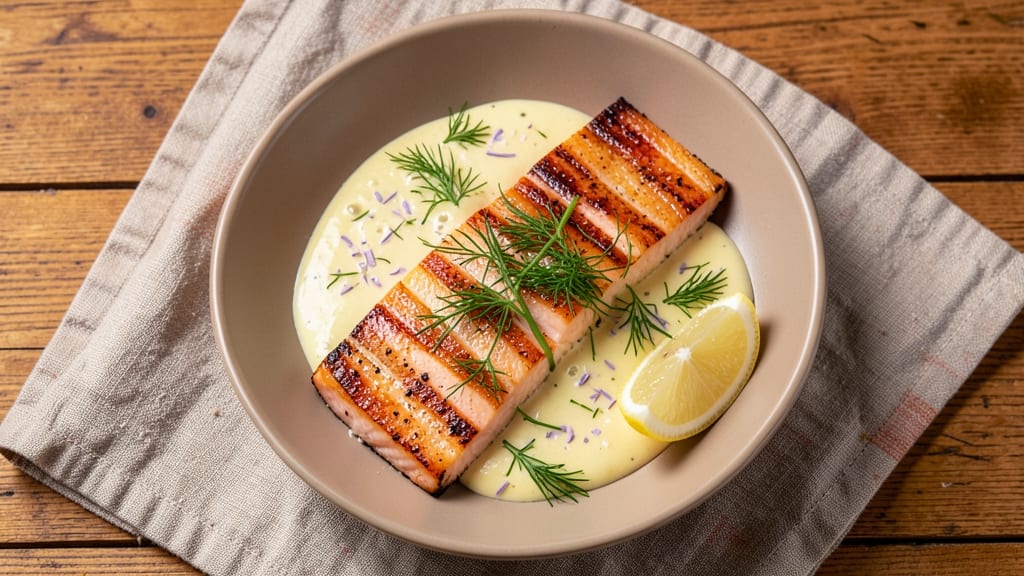
This salmon cream cheese recipe transforms simple ingredients into a restaurant-worthy dish that balances rich, velvety cream cheese with perfectly flaky salmon. After years of perfecting restaurant-quality techniques at home, I've developed a method that delivers crispy skin and tender flesh every time—no fancy equipment required.
The herbed cream cheese glaze adds a luxurious finish that makes this dish feel special without sacrificing ease.
The secret lies in two key steps: searing the salmon skin-side down in a cold pan to render fat slowly, then finishing with a bright, herbed cream cheese sauce that ties everything together.
This method ensures your salmon stays moist while developing a golden crust, and the sauce adds a creamy, tangy contrast that elevates the natural richness of the fish. It's the kind of dish that feels indulgent yet remains approachable for weeknight cooking.
What you'll end up with is a plate that looks as impressive as it tastes—juicy salmon fillets with crisp edges, topped with a glossy, herbed cream cheese glaze that clings beautifully. The sauce's bright lemon and fresh herbs cut through the richness, creating a perfect balance of flavors.
This recipe proves you don't need to be a professional chef to create a dish that feels like a five-star meal.
Serve with roasted asparagus or a simple arugula salad to complete the plate. The combination of textures and flavors makes this dish perfect for impressing guests or treating yourself to a special meal at home.
Let's get started on creating this elegant yet simple dish that's sure to become a favorite.
Ingredients for salmon cream cheese
Twelve ingredients transform simple salmon into a restaurant-worthy dish with velvety cream cheese glaze.
| Ingredient | Amount | Notes |
|---|---|---|
| Center-Cut Salmon Fillets 🐟 | 4 whole | Skin-on, 6-8 oz each, fresh preferred |
| Full-Fat Cream Cheese 🧀 | 8 oz | Room temperature for blending |
| Fresh Dill 🌿 | ¼ cup | Chopped, stems removed |
| Fresh Chives 🌱 | 2 tbsp | Finely chopped, mild flavor |
| Lemon Zest 🍋 | 1 tbsp | From 1 large lemon |
| Lemon Juice 🍋 | 2 tbsp | Freshly squeezed |
| Unsalted Butter 🧈 | 4 tbsp | Cold, cut into small cubes |
| Extra-Virgin Olive Oil 🫒 | 2 tbsp | Light, fruity variety |
| Kosher Salt 🧂 | 1 ½ tsp | Fine grain preferred |
| Freshly Ground Black Pepper 🌶️ | ½ tsp | Cracked, not powdered |
| Garlic Cloves 🧄 | 2 cloves | Minced, for glaze |
| Heavy Whipping Cream 🥛 | ¼ cup | Cold for stability |
| All-Purpose Flour 🌾 | 1 tbsp | For dredging salmon |
The salmon quality makes all the difference here. Center-cut fillets with skin are essential—they hold their shape better during searing and create the perfect crispy skin. Look for fillets that are firm to the touch with vibrant pink flesh and no brown edges. Whole Foods and Trader Joe's typically carry high-quality, sustainably sourced salmon. If you can't find center-cut, ask the fishmonger to trim the fillets yourself. The skin should be unbroken and glisten slightly—this indicates freshness. For the cream cheese, Philadelphia brand is reliable, but any full-fat variety works. Room temperature is critical for blending smoothly—take it out of the fridge 30 minutes before use.
No fresh dill? Dried dill at one-third the amount works in a pinch, but the flavor won't be as bright. Substitute chives with green onions if needed, though the flavor will differ slightly. Running out of lemon juice? Lime juice works equally well, though the color will shift. For the butter, European-style butter has higher fat content and melts beautifully—worth the splurge if you're making this often. The olive oil should be light and fruity, not peppery. If you're avoiding dairy, coconut cream can replace the heavy whipping cream, though the texture will be slightly different. The flour is just for dredging—skip it if you're gluten-free, but the salmon won't crisp as well.
Salmon keeps best in the coldest part of your fridge, wrapped in parchment paper, for up to 2 days. The cream cheese glaze mixture can be prepped ahead and stored in an airtight container for 3 days—just reheat gently before serving. For longer storage, freeze the glaze in ice cube trays and transfer to a bag for up to 3 months. The dill and chives should be wrapped in damp paper towels and stored in a sealed container to maintain freshness for 5 days. This dish reheats beautifully—simply warm the glaze in a small saucepan over low heat and spoon it over gently reheated salmon. The contrast of warm salmon and reheated glaze makes it even more indulgent.
Why You'll Love This Recipe
- I’ll be real: this is my go-to when I’m staring at the fridge at 7:30 PM wondering what to feed everyone. The salmon cooks in 15 minutes while I chop chives, and suddenly? Dinner’s served. No stress, no mess.
- Two-Ingredient Spread Magic: The cream cheese and dill combo is where the flavor party happens—no fancy techniques, just soften the fillets, mix in the herbed cream cheese, and bake. That bright lemon zest cuts through the richness like a fresh breeze on a summer day.
- Weeknight Hero: I’ll be real: this is my go-to when I’m staring at the fridge at 7:30 PM wondering what to feed everyone. The salmon cooks in 15 minutes while I chop chives, and suddenly? Dinner’s served. No stress, no mess.
- Lunchbox Legend: Between us, this is my kids’ favorite for school lunches—packed with that creamy, herby goodness that makes them actually eat their veggies. (Yes, even the picky ones.) The lemon zest keeps it from getting boring, and it reheats like a dream.
Step-by-step instructions for pan-seared salmon with herbed cream cheese glaze
Here's how to create restaurant-quality salmon with a rich, herbed cream cheese glaze that balances richness and brightness.
Prepare the Cream Cheese Glaze Base
In a medium bowl, combine the 8 oz full-fat cream cheese, 0.25 cup heavy whipping cream, 1 tbsp lemon zest, and 2 tbsp lemon juice. Use a hand mixer or whisk until completely smooth and creamy, about 1-2 minutes. The mixture should look like thick, pale yellow custard with no visible lumps.
In a separate small bowl, finely chop the 0.25 cup fresh dill and 2 tbsp fresh chives. Set aside. This herb blend will add freshness that cuts through the richness of the cream cheese. I like to use a sharp chef's knife for this—it gives me more control than scissors for delicate herbs.
Season and Dredge the Salmon
Pat the 4 whole center-cut salmon fillets completely dry with paper towels, pressing firmly to remove all moisture. This step is crucial for achieving crispy skin. Place each fillet skin-side down on a cutting board and season both sides generously with 1.5 tsp kosher salt and 0.5 tsp freshly ground black pepper.
Lightly dredge each fillet in the 1 tbsp all-purpose flour, shaking off any excess. The flour creates a delicate crust that helps the salmon brown beautifully. Don't press too hard—just enough to coat the surface evenly. Keep the floured fillets on a plate until ready to cook.
Pan-Sear the Salmon to Perfect Doneness
Heat a large skillet over medium-high heat until very hot. Add the 2 tbsp extra-virgin olive oil and let it shimmer for 30 seconds. Add the 4 tbsp unsalted butter cubes and swirl to coat the pan. The butter should foam slightly but not brown.
Carefully place the salmon fillets skin-side down in the pan, working in batches if needed to avoid crowding. Cook undisturbed for 4-5 minutes until the skin is golden brown and crispy. You'll know it's ready when it releases easily from the pan—don't press down with a spatula. Flip each fillet and cook for another 2-3 minutes until the salmon reaches an internal temperature of 135°F. Remove to a warm plate and tent loosely with foil.
Complete the Glaze and Finish the Salmon
Reduce heat to medium-low and add the minced 2 cloves garlic to the same skillet, cooking for 30 seconds until fragrant. Pour the cream cheese mixture into the skillet and stir gently with a silicone spatula, scraping up any browned bits from the bottom. Let it simmer for 1-2 minutes until slightly thickened.
Stir in the chopped dill and chives, then immediately return the salmon fillets to the skillet, skin-side up. Spoon the glaze evenly over each fillet and let it heat through for 30 seconds. The salmon should be coated with a glossy, herbed cream cheese glaze that's neither too runny nor too thick.
Rest and Serve Immediately
Transfer the salmon to serving plates and let rest for 2-3 minutes before serving. This brief resting period allows the juices to redistribute, ensuring each bite is moist and flavorful. The glaze should be warm but not melted completely into the salmon.
Garnish with additional fresh dill if desired and serve immediately with your choice of sides. The combination of crispy skin, flaky texture, and tangy-sweet glaze makes this dish truly special. Each fillet should have a perfect balance of creamy richness and bright herbaceousness.
Pro Tips For Making Salmon Cream Cheese
- Dry the Salmon First: Pat those fillets thoroughly with paper towels—no wet spots, not even near the edges. I used to skip this and ended up with steam instead of sear, so the cream cheese sauce would just slide off. Trust me, a dry surface is your crust’s best friend here.
- Mix Cream Cheese Cold: Take that block of full-fat cream cheese straight from the fridge and grate it—no softening needed. I learned this the hard way when my sauce turned greasy and split after just 10 minutes. Cold fat behaves better, and the texture stays silky.
- Zest Before Juicing: Grate that lemon zest first, then squeeze the juice last—save the pulp. The zest adds bright flavor without bitterness, and the pulp makes the cream cheese sauce grainy. (Yes, even if you’re impatient like me, resist the urge to mix them together early.)
- Rest Salmon 5 Minutes: As soon as the salmon hits 130°F (about 54°C), pull it off the heat and tent it with foil. I was always in a rush to plate, but giving it 5 minutes keeps it from falling apart when you slice into it for the cream cheese spread. Your future self will thank you.
Wine and beer pairings for salmon cream cheese
White Wine Pairings
For this dish, I reach for a crisp Chardonnay from Burgundy or California—specifically a Meursault or Russian River Valley bottling. The buttery notes in these wines complement the cream cheese glaze beautifully while the bright acidity cuts through the richness of the salmon.
A slightly oaked Chardonnay adds depth that pairs wonderfully with the herbed components. 🍷
If you prefer something lighter, a Sauvignon Blanc from New Zealand or Loire Valley works brilliantly. The citrus and herbal notes in these wines mirror the lemon and dill in your glaze, creating a perfect harmony.
Look for one with zesty lime and fresh-cut grass characteristics—it'll elevate the dish without overpowering it.
Rosé Options
Don't underestimate a dry Provence rosé for this recipe. The strawberry and watermelon notes in these wines provide a refreshing contrast to the creamy salmon. I particularly love Whispering Angel or Miraval—both have enough body to stand up to the richness while keeping the palate clean.
Serve it slightly chilled (45-50°F) to highlight its vibrant fruitiness.
Beer Pairings
A Belgian witbier like Stella Artois or Hoegaarden brings unexpected but delightful contrast. The orange peel and coriander notes complement the lemon in the glaze while the effervescence cleanses your palate between bites.
For something more robust, try a German Hefeweizen—the banana and clove flavors pair surprisingly well with the herbed cream cheese. 🍺
Avoid These
Skip heavy red wines like Cabernet Sauvignon or Syrah—they'll overwhelm the delicate flavors. Even Pinot Noir can be too tannic for this dish unless it's a very light, fruity example.
The same goes for IPAs or stouts—their bitterness clashes with the creamy glaze. Stick to wines and beers that highlight, rather than compete with, the dish's natural flavors.
Nutrition facts
Frequently asked questions
Can I use low-fat cream cheese in this recipe?
The recipe calls for full-fat cream cheese to achieve that rich, velvety texture that clings beautifully to the salmon. Low-fat versions tend to be less stable when heated and may separate or become grainy. If you must use a lighter version, look for one with at least 20% fat and blend it with a splash of heavy cream to improve consistency.
How do I prevent the salmon from sticking to the pan?
Pat the fillets completely dry with paper towels before seasoning—this removes all moisture that causes sticking. Also, make sure your pan is properly heated before adding oil, and don't overcrowd the fillets. The butter should foam but not brown before adding the salmon. If it sticks slightly, it's still fine—just use a thin metal spatula to gently lift it.
Can I make this recipe ahead of time?
You can prep the cream cheese glaze up to 3 days ahead and store it in an airtight container in the fridge. Reheat gently before serving. However, the salmon should be cooked fresh—it loses its crispy skin and perfect texture when reheated. Cook the fillets just before serving for the best results.
What's the best way to serve this dish?
This elegant salmon pairs beautifully with roasted asparagus or a simple arugula salad dressed with lemon vinaigrette. For a heartier meal, serve with quinoa or mashed sweet potatoes. The creamy glaze makes it perfect for dinner parties—just add a sprinkle of fresh dill and a drizzle of extra olive oil for presentation.
Why did my cream cheese glaze turn out too thick?
This usually happens if the glaze simmers too long or if the cream cheese wasn't at room temperature. For a smoother texture, blend the cream cheese with warm (not hot) heavy cream before adding it to the pan. If it thickens while cooking, stir in 1 tsp of warm water or milk to loosen it up.